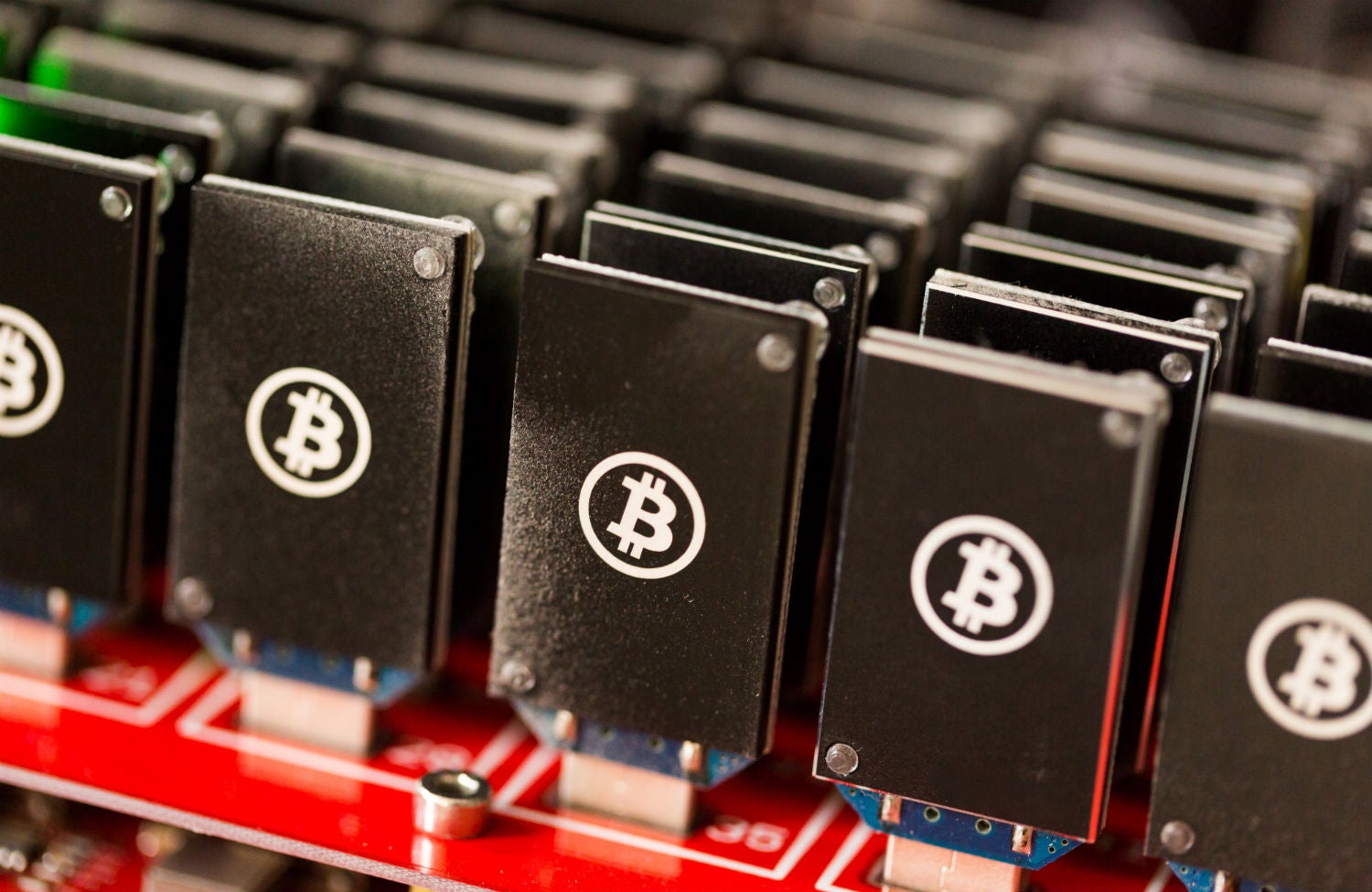
Is Bitcoin the Future of Money?
Libertarians and leftists alike predict a world of competing digital currencies.
The Nation
36 points · by pmcpinto · 12y ago · 81 comments
- it's inflation safe
- no corrupt bankers or politicians can manipulate it (easily)
- there are no men in the middle (edit: or only for a short time. Of course you should not save your bitcoins in a marketplace for a long time frame)
- it's cheap for all sorts of transactions
- it doesn't know borders (in democratic nations)
When the next bigger inflation of Euro or Dollar will arrive bitcoin exchange rate will skyrocket. Though that only means you should invest in it maybe it will also become money with exchange character in future.
The increased transaction costs in current cards is transparent, and I get 1.5-5% cash back as a result of those fees. Anonymity is almost never a concern of mine, and if it is, there are simpler ways of moving dollars around, as either cash or one time debit cards.
Inflation is not an unalloyed evil, and as clumsy as Fed manipulations might be, I just don't feel that a free market deflationary Bitcoin wouldn't have as many (but different) downsides.
I can definitely see the value to countries unstable or hyper inflated currencies, but Bitcoin requires a substantial first world infrastructure undergirding it.
And from my emotional perspective, I resent that the inventors will pocket millions from being at the top of the pyramid.
Also, you get 3% cashback on anything on Amazon by buying with bitcoin through gyft. That's better than any credit card I've seen even if it costs you 1% to buy the btc.
I get 5% cash back from my credit card when buying on amazon. And any points I earn can be used via amazon without an extra step. And I get fraud protection vs losing a gift card.
So you have no real argument, you just can't handle that early investors in anything do better than late comers. It's not a pyramid, it's a technology, and you're simply being emotional and irrational.
The first 3 things you list can happen to bitcoin since bitcoin is just another currency.
The idea that it's intrinsically cheaper doesn't hold water compared to any other currency. Just because some transactions cost money on existing currencies doesn't preclude the exact same thing happening to bitcoin. Again, just another currency.
The idea that it's somehow free of national regulation is patently false. The currency may be "virtual" but so are all other currencies, I can send you money without mailing you paper. But the point is that the holders of the currency exist in the real world, not as entities in cyberspace, and those bitcoin holders and dealers can be regulated just like other currencies, unless they want to go to jail.
It's not a wet dream. It's reality. You can't control Bitcoin. You can only control people and even that is not done very effectively in the real world, as proved by numerous criminals, tax evaders and expats. Bitcoin makes doing stuff government doesn't like easier. That is all you have to know.
Basically, you can only ever keep bitcoins without the IRS knowing about it if you never spend those bitcoins. When you spend them, the IRS will eventually know about it.
There are many reasons why the value of a currency might go down. Printing too much money (increasing the supply) is one of them, but it is not the only possibility. Decreasing the demand is just as effective.
Imagine that someone just found a critical flaw in the algorithms used by bitcoin. Everyone wants to sell and move to dogecoin a.s.a.p. But nobody wants to buy those bitcoins anymore! Bang, that's inflation right there.
As long as there are alternatives to bitcoin, the fact that the total number of bitcoins is limited cannot prevent inflation from happening.
It isn't inflation "safe"; there's no inflation. And that isn't necessarily good. The money supply needs to grow as the demand for money grows (yes, the demand for money changes over time and circumstance).
>no corrupt bankers or politicians can manipulate it (easily)
They sure will, as will corrupt vendors, hackers, salesmen, etc. Corruption is a human trait, not confined to "bankers or politicians".
Let's just say it's completely transparent in it's inflation. That is an objective advantage. You can argue that the inflation model is bad, but it is at least completely deterministic.
>> They sure will, as will corrupt vendors, hackers, salesmen, etc. Corruption is a human trait, not confined to "bankers or politicians".
> They sure will, as will corrupt vendors, hackers, salesmen, etc. Corruption is a human trait, not confined to "bankers or politicians".
Crypto-currency can at least remove one piece in the chain of corruption that was often exploited before. Just like cryptographic communication does not prevent against all attacks, it does prevent against some.
Not actually true until all coins are mined in like 100 years; for now it's undergoing quite predictable inflation and will be for quite a while.
> The money supply needs to grow as the demand for money grows (yes, the demand for money changes over time and circumstance).
Divisibility solves the liquidity problem, the only real issue is deflation and there's other ways that could be stabilized as money supply manipulation is certainly off the table in this case.
HFT markets would use off-chain transactions, like all current Bitcoin exchange markets, so wouldn't be affected by this in the slightest.
However, Bitcoin's going to stick around for a long while, even without mass appeal, and cryptocurrencies will eventually win as the dominant form of money. There's one thing we still need to wait on; zSNARKs for arbitrary computations[0] have to become faster, somehow.
After that, it's trivial to build a network of block chains which incentivise distributed storage of the chain, and allow for entirely arbitrary, complex computations and transactions to be mined. Much safer currencies, with complex rulesets, that any 50 cent microcontroller can use and verify, can be built on top of that.
You could set up cryptographic guarantor or proof-of-funds systems built on whatever infrastructure you like (whether semi-centralised or varying levels of decentralised), so that entities that you are transacting with have proof that you can't scam them by way of double-spends, for in-person and digital goods transactions, while using the regular double-spend-resistant confirmation system for all other transactions. This system can also be modified and extended without ever changing the protocol, depending on its users' needs for security.
Credit card transactions take months to confirm, simply broadcasting the transaction to the Bitcoin network and ensuring a few nodes saw it without waiting for a single confirmation is far faster and far more likely to be confirmed than any credit card transaction. To claim that's a problem with Bitcoin is to ignore the problems the current system has.
Find a 50 cent microcontroller that can mine bitcoin.
The bitcoin faq regarding deflation basically says "we don't know what's going to happen", and regarding volatility the current solution for merchants to cope with volatility appears to be "convert everything to fiat ASAP".
Examples are peercoin and Nxt.
I read the wikipedia page but i am not 100% i really understood it correctly.