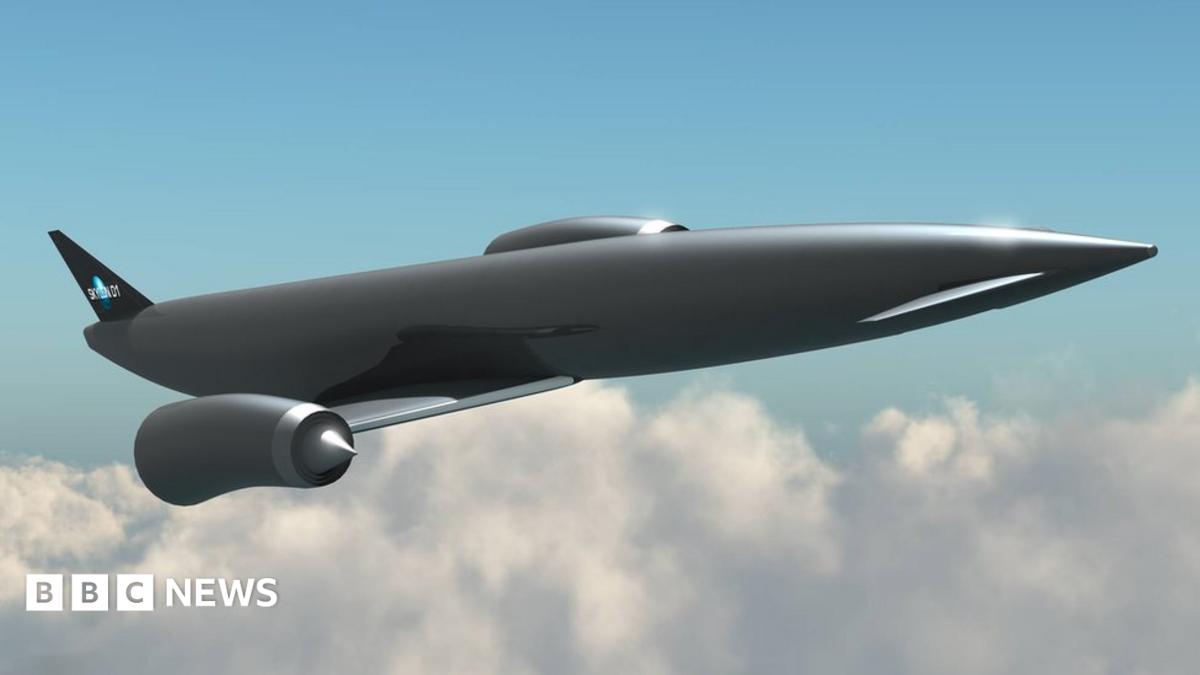
Skylon ‘spaceplane economics stack up’
A report commissioned by the European Space Agency finds the economics of the UK-conceived Skylon spaceplane to be feasible – assuming its technology development is successful.
BBC News
75 points · by timthorn · 12y ago · 52 comments
Should a production SABRE engine prove to be low maintenance enough, it won't just be a matter of "stacking up", this will be huge. However, if the maintenance is costly, then it's the Space Shuttle all over again. In contrast to the shuttle, tho, there's no costly thermal protection system, the skin and some water cooling should be enough. Also, no astronauts, Skylon is supposed to be fully automated.
A fully reusable spaceplane for small payloads and a big dumb booster (SpaceX) should complement each other very well.
https://en.wikipedia.org/wiki/Skylon_%28spacecraft%29#Overvi...
So similar sized as the two-stage Delta IV Medium, with exactly the same mass fraction (23.3 - 23.5):
-- Wikipedia http://en.wikipedia.org/wiki/Skylon_(spacecraft)#Fuselage_an...
A corollary of the Shuttle being designed to transport classified payloads during re-entry was that at no stage during re-entry must the shuttle overfly "hostile" (Soviet or Chinese) territory, lest a disintegration result in classified payload fragments falling into the wrong hands.
Consequently the shuttle was designed with that outsized (spysat-friendly) payload bay which seldom got used to maximum effect, and with a short, fast, hot re-entry profile (so that it could commence and complete re-entry after leaving hostile airspace). Hence the need for an exotic, high-specification thermal protection system.
(This mission requirement probably contributed to the loss of the Columbia as well.)
http://en.wikipedia.org/wiki/JATO_Rocket_Car
More seriously, there is a proposal to use a version of SABRE called SCIMITAR to power an airliner, which could be a more accessible testbed:
http://en.wikipedia.org/wiki/Boeing_X-37
The last one was sent up on Decemember 2012 and its still up there. Probably not as cost-efficient, but, there is an unmanned spaceplane in production, but its a secretive DoD project so we don't know too many details nor will it be used for non-military applications.
One interesting thing is that they then envisioned this to happen in phases: a "type I" partially reusable vehicle (with expendable fuel tanks and maybe expendable boosters), then a type II fully-reusable rocket-propelled vehicle (probably two winged stages which both fly back), and finally a type III air-breathing vehicle (Skylon-style air liquefaction was talked about already then).
The more advanced concepts cost a lot of money to develop, but reduce the per-launch cost. So the hope was to start with a type I vehicle (the eventual Space Shuttle) to reduce launch cost and grow the market, until there are plans for so many launches that it makes sense to fund the advanced types.
In hindsight, the Space Shuttle unfortunately kind of botched the reuseablity. But with SpaceX we finally seem to be on track to having a working partially resuable launch vehicle. Maybe this will "unfreeze the future"---with a bigger launch market and commercial pressure people might be tempted to go for something like Skylon rather than more of the same in follow-up Arianes...
http://youtu.be/4-HOvQUL2zI?t=21m20s
https://en.wikipedia.org/wiki/Land_of_the_Lost_(1974_televis...
They have the airframe building technology, and the commercial vision for affordable space access.
Come on Branson, bring this British invention to life!
It's the BBC, so I'd say it's an averagely written article in their context.
Noticeably, the point of the Skylon and SABRE is that it's possible to use a common engine core in airbreathing and pure rocket mode, thus potentially generating weight savings.
I'm sure someone sat down and did the calculations. I have this feeling that a lot of the times when you actually sit down and work out the math for a range of assumptions, you generally come down to 'eh, maybe A, maybe B, so may as well try A'.
"power units that work like jet engines at low altitudes and slow speeds, but then transition to full rocket mode at high altitudes"
and
"Skylon itself is designed only to go a few hundred km above the Earth, so it would need an additional "upper-stage" module to push the satellite into its final, 36,000km-high orbit."
I've occasionally considered writing something with a better aerodynamics sim in ...
Ferram Aerospace[1] adds much more realistic aerodynamics and TAC fuel balancer[2] adds a fuel balancer.
[1] http://forum.kerbalspaceprogram.com/threads/20451-0-22-Ferra...
[2] http://forum.kerbalspaceprogram.com/threads/25823-0-23-TAC-F...
The article pegs the total development cost of the plane at the cost of developing an Airbus plane. That's about $10-15 billion, or more than an order of magnitude more than all of the money that has ever been raised in Kickstarter history. Probably more than all the money that has ever been raised by crowd funding period.
Sorry for the naive question, but any ideas on why it costs so much? Wouldn't putting 100-200 top engineers on it for a few years be enough? What do they need 300 million for?
This build-test-debug loop costs millions and may take months or years, and a single spectacular failure can sink the entire project (e.g. DC-X).
Most engineering is not like software! For example, most of the cost of a bridge is not the civil engineering to design the structure...
To maybe put that in perspective, $100 million a year is the budget of one of the smaller F1 teams.
A fully reusable single stage to orbit "plane" completely changes the dynamics of putting stuff in orbit both on cost and turn around time.
The Falcon 9 is privately funded as is the Merlin engine it uses however pretty much all the materials science, initial engineering etc required to design and build a merlin was publicly funded.
There are times when a public/private partnership makes sense and this is one of them.
Hell he could take the engine and build a new spacecraft based on it.
Most significant leaps of technological innovation in the history of civilization required public support. And as we move on the leaps will become harder and riskier still which means even less willingness of the private investors to put up the money. So brace yourself :P