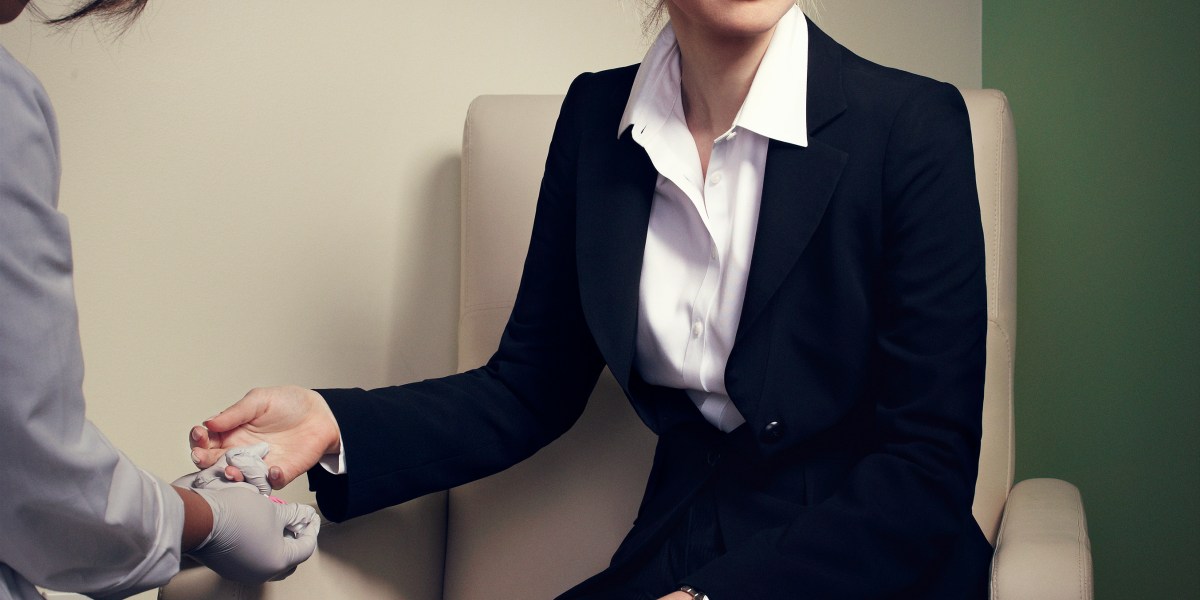
This CEO is out for blood | Fortune
Elizabeth Holmes founded her revolutionary blood diagnostics company, Theranos, when she was 19. It’s now worth more than $9 billion, and poised to change health care.
Fortune
202 points · by dsr12 · 12y ago · 94 comments
> Though Theranos is largely unknown even in Silicon Valley, that is about to change.
> Precisely how Theranos accomplishes all these amazing feats is a trade secret.
> The analyzers look like large desktop computer towers. Holmes declines to explain how they work, or even allow them to be photographed, citing the need to protect trade secrets. The company manufactures them at an unmarked facility I toured in a research park across the South Bay from Palo Alto, in Newark, Calif.
> the single most accomplished board in U.S. corporate history. It includes former U.S. Secretary of State, Treasury, and Labor George Shultz; former Secretary of Defense Bill Perry; former Secretary of State and National Security Adviser Henry Kissinger; and former U.S. Senators Sam Nunn and Bill Frist
> In a rare if not unprecedented rout this past March, the patent holders unconditionally surrendered midtrial, stipulating to the invalidity of their own patent. As a kicker they agreed–though the presiding judge would have been powerless to order such a thing himself–to bring no additional patent suits against Theranos for five years.
> retired U.S. Marine Corps Gen. James Mattis, explaining why he signed up last fall as another of Theranos’s strikingly illustrious outside directors. Mattis had stepped down just months earlier as commander of the U.S. Central Command–the chief of U.S. military operations in the Middle East and Central Asia
... zombie ... apocalypse
> As a bonus, board meetings are also attended by the company’s de facto legal adviser at large, trial lawyer David Boies.
Boies represented the DOJ in the Microsoft antitrust proceedings and Al Gore in Bush v. Gore.
What an odd cast for a startup board. I wonder what connects all these people, other than all being high-profile.
Government relations. Influence with policymakers and thought leaders. Makes total sense for a med-tech company. This is an industry where "non-market factors" (government regulation, threat of competitive lobbying or lawsuits by incumbents, etc.) play an enormous role. If I were starting a med-tech company that threatens a $60B+ industry with hundreds of millions of dollars in lobbying efforts every year, I'd love to have a board featuring policy elites, ex-government officials, and a legendary trial lawyer who's argued successfully in front of the Supreme Court on multiple occasions.
The only person she's missing here is Bill Gates. (And it would be quite interesting to see him and Boies on the same side after all these years.)
Boies is an attorney, he doesn't display his own point of view, he is (one of the best in the world) professional presenter of clients' point of view.
Coming from wealth doesn't hurt but somehow the articles always leave that bit out ...
It's not a "sexy" PR piece if the story reads "Wealthy people get Wealthier", now is it? ;-P
> And we could put a cellphone chip on it, and it could telemeter out to the doctor or the patient what was going on.
It's very doubtful she understood how any of that works, or would work in her product/patent.
Underlying story seems it's absurd this was patent-able.
Beyond that, I'm not sure if the patent is absurd or not...but I definitely don't think its absurd for a 19 year old woman to write up and be awarded a patent.
https://www.google.com/patents/WO2005025413A3?cl=en&dq=ininv...
Here's a search of all the patents with Holmes as an inventor: https://www.google.com/search?tbo=p&tbm=pts&hl=en&q=ininvent...
I hope this helps ground the discussion in fact to some extent.
While you may stereotype young people as being unready to write and file patents--and perhaps many are--at least some have developed the right skills and technical knowledge to do so.
Judge the patents on their own merits, not their authors.
There is rarely an invention 101. Many people can teach themselves.
When you file a patent application you can say it's pending, raise funds on it, get yourself a decent engineer, and file a continuation later with more "meat".
Patents are an expensive game.
You might find some under-20s that could be in the same category as Elizabeth Holmes.
I'm not quite sure if I understand you right, do you mean to suggest she should not be able to apply for patents because she's young or because she's a woman or both?
TL;DR: founder met/convinced one well-connected DC insider in 2011, and he brought all his buddies along for the ride.
As others noted these board members appear for another purpose such as government issues or attracting others by the halo of their importance.
Well, there's also Shultz, who was "a director at biopharmaceutical company Gilead Sciences," according to this article.
But you're right that those people are mainly on the board for their influence in Washington. The importance of that when taking on an entrenched and heavily regulated industry can't be overstated.
Uncynical interpretation: well-funded med-tech company quietly grows to become an inspiring success, thanks to game-changing technology and a brilliant founder.
I see both of these interpretations as compatible. In fact, #1 can often follow from #2. In either or both cases, this seems like the kind of company we should root for: using new approaches to technology to solve big problems. As another commenter in this thread put it: this is a lot more than just "Yo."
Or Holmes is an alien who wants to inject everyone with vegan mind control spiders.
Either way it's likely good for humanity in the long run.
NORTHCOM maybe (they're the geographic combatant commander in charge of DSCA planning for pandemic influenza). But despite the horror show portrayed about the military in all the zombie/pandemic movies, the military wants badly to avoid anything to do with this mission at all, so it wouldn't surprise me if they're trying to get contractors to do the heavy lifting for response planning.
Everyone knows that English is spoken in Singapore, right? I'm not saying Mandarin wouldn't look good on a resume, but very few Singaporeans with the education to work in that facility would not also be fluent in the international language of science. Even if her work took place in community clinics, Mandarin wouldn't have been as helpful as e.g. Hokkien.
EDIT: Since it's kind of lame that such a nitpick is still at the top, I'd like to address this also:
Its advances relate to "optimizing the chemistry" and "leveraging software" to permit those conventional methods to work with tiny sample volumes.
IANABiochemist, but they're talking about statistical methods here, right? My intuition is that a particular test performed at "nano"-scale might not be very accurate, but that a series of such tests could be as accurate as required.
The premise appears to be that they take extremely small samples ("25 to 50 microliters") and run lots of tests ("as many as 70 different tests from a single draw") using "the same fundamental chemical methods".
This compares with standard blood tests which require 2 orders of magnitude more blood ("numerous tubes of blood, each containing 3,000- to 5,000-microliter samples").
How does one produce reliable output with the same sensitivity/specificity using the same chemistry with so much less blood? I find it hard to believe that the existing lab procedures left that much efficiency on the table...
On the specifics, I'm afraid nobody can for now. They have refused to peer-review their protocols and validation data, so their assays are essentially a black box. So far, incredibly, they have managed to get away with this thanks to a glaring regulatory loophole (as the article explains); but sooner or later they'll have to open up if they want their assays to be taken seriously by the medical community.
In broader terms, however, there's been a lot of recent work in the well-established microfluidics [1] literature on whole-blood assays [2], so that can give you a good guess about how they go about their implementation: most likely some form of "lab-on-a-disk" centrifugation for plasma separation and subsequent transport to separate microfluidic optical chambers preloaded with colorimetric reagents for readout, using perhaps a digital camera and some non-kosher/black-boxy form of curve-fitting DSP to increase "sensitivity".
In all I'm very skeptical until they open up and provide peer-reviewed validation data for their assays. There are already several companies doing patented blood microfluidics like Abaxis [3] with peer-reviewed validation, and the enabling technologies have been out in the open in the literature for years, if not decades; so the whole "we are doing a super duper secret awesome thing we can't tell you anything about" sounds rather D-Wavey and fishy to me.
[1] http://en.wikipedia.org/wiki/Microfluidics
They have a couple microfluidics assays that are profitable and they suspect these might be patent encumbered (even beyond the troll that they have already brought into the fold by giving him a board position.). Secrecy buys them two things:
1. Their competitors won't know what their loss leaders are. If assays A,B, and C have been optimized to profitability but D and E are still loss leaders, a competitor could use that knowledge by subsidizing demand for D and E (e.g. by undercutting them and forwarding the assay work, whereby the competitor spends $1 to force them to spend $10).
2. Patent trolls (are they really trolls if they spent money to develop the technology and make a product based on it?) won't know what to sue them for.
http://www.rsc.org/ej/LC/2009/b911553f/b911553f-f1.gif
Here's an early paper to use as a root for citation-chasing:
http://www.sciencedirect.com/science/article/pii/09254005908...
Here's a conference that has been going strong for 7 years:
http://www.microtas2013.org/general.html
The technology has already been developed and proven in an academic setting. It's mature enough that you can find cheap textbooks for it. Microfluidic assays (which can be combined, like circuits, on a silicon chip) for every conceivable metric of interest have been developed, debugged, and sold to incumbent diagnostics companies. It was only a matter of time before someone integrated them, but the "usual suspects" were tripped up by market kinetics:
No academic group has been sufficiently capitalized to pursue an "Integrate All The Assays" (IATA) project. A lab typically pursues 2 or 3 assays at a time, which they will often integrate into a "µTAS" which is academic slang for IATA but should get its own term because typical µTASs measure 2 or 3 things which is far below the potential of the technology (what I'm terming "IATA").
Industrial groups that were in a position to go IATA already had hard-won silos in the payola+bundling ridden rat's nest of the medical supply industry. They wanted to keep those (payola+bundling = low competition and high margins) and they didn't want to fight the war-on-many-fronts that would arise if they tried to invade everyone else's silos at once. The big risk is that their competitors in every silo could undercut/outmaneuver them in individual silos faster than they could weave a political network to unify purchasing across silos.
Well, now someone has figured out how to do just that. Strategy: lots of money, lots of connections, and a killer entry strategy. It's all in the execution, as always.
Two interesting questions to keep in mind as this plays out:
1. Now that someone has gone IATA, will the medical device supply industry become truly competitive again? I think there's a nonzero chance of that happening. That would be a dream come true for consumers and medtech startups alike.
2. How much of the proceeds will filter back to the people who actually developed the technology? Obviously the answer will be "a teeny tiny fraction," but the amount in absolute terms will be an important indicator (to me, personally, and I suspect others) as to how well the patent system works in this sector. Will it be like the software sector (patents discourage implementation AND don't encourage innovation) or will it be like the drug sector (patents function more or less as they were intended albeit with the caveat that a lion's share of the proceeds flows, as it always does, to capital)?
To IT people, this is counterintuitive. You don't vertically integrate, you go for a horizontal slice. Intel won by making chips, not making whole systems (like IBM did).
I guess vertical integration might make more sense in healthcare though, for regulatory and market reasons. I guess the market might be a bit more like IBM renting out mainframes than Intel selling CPU to OEMs. Also, making the tests cheaper (which is the main thing she's doing) might be unattractive to labs, if cost-plus pricing is popular - existing providers might not want to cut their prices.
Along with the rest of the weirdness being mentioned by others, some of this really doesn't begin to make sense to me. o_O
Custom compilers have been a thing a few times in the past, but in the late 90s, what possible reason could there be for this?
Sounds fishy tbh
And I think very much deserved, not for most of the details mentioned in the article, but because of their pricing page: http://www.theranos.com/test-menu -- it's freaking cheap.
On another note, I wonder why all except one of their testing centers are in and around Phoenix?
In any case, I'm pulling for Theranos to be successful. I've had to have a lot of blood work done recently and I've been underwhelmed by every medical lab so far. If Theranos can use a smaller blood sample AND run more tests with it, then I can't wait to be a customer.
"“The movie goal is absolutely core to what we’re working to do,”... We’re building an early-detection system,”
The board is quite impressive; I suspect they have gotten at least some DoD money, i.e. DARPA, through which perhaps some of those connections were made...
Here's some more information about Theranos... I interviewed with these guys recently. One of the things the interviewer stressed is that the programmers there typically work 60-hour weeks, and would I be okay with that. He said he was very proud of the fact that they used to work 80-hour weeks but had gotten it down to about 60. I passed on them just for this one reason...
The interview coding challenges were fairly well-designed and somewhat fun to do, though.
A look at their website (and the profiles they're hiring for) gives a clear idea of where she is going. You don't need iOS/Android developers, or ASIC/FPGA designers, or hardware and mechanical engineers, to support Walgreen's Wellness centers.
She's clearly going after the last mile. Blood tests for the masses. In your phone. No need for prescriptions, or visits to Walgreens.
This is way bigger than a $90 billion dollars blood test industry.
The article also mentions how they do it is trade secret but I'm curious what the innovations are here. They throw some things out there though, like bypassing FDA hurdles and shrinking equipment and blood sample size down. It sounds like they're just streamlining a sleepy, well entrenched industry? A noble endeavor but the juicy details would be nice if we could get them.
Some day I hope that we can get these tests small and cheap enough that they could be purchased OTC and run easily and frequently at home. Collect a few hundred samples points while you check your weight in the morning and ship the data off to Amazon for data mining. It would wipe out surprise "I've had diabetes for the last 10 years and didn't realize it" diagnosis and that's a huge, huge win. Not to mention what the QS crowd would do with it.
Not sure what to make of that bit about the restaurant. If she's really testing her blood after every meal, then I don't see how she could miss the impact her veggie, carb, low-protein, no-fat diet.
But at the end of the day, we need better tests, not better ways of testing. Looking through their test menu, it's the same old diagnostic blood tests we've been using for the last 30 or even 50 years. Hopefully there is something revolutionary behind the hype. I don't think it will be consumerization - none of those listed tests is going to help early detection of anything by getting yourself tested at Walgreens while you're buying toothpaste. Similarly, most of the tests are only useful when applied in a well fleshed out diagnostic process that involves collecting data about symptoms and medical history to generate a prior probability of the disease. Otherwise the false positive rate is high, and the false negative rate difficult to deal with. The utility of serial monitoring as a marker of health is also far from proven, but is an interesting idea. At the moment though, if you go to your doctor and say your homocysteine levels are fluctuating strangely, they won't have a clue what to do about it...
I would also add that proving that a test can be used to detect a disease early, and that early detection leads to a measurable improvement in disease outcomes takes a very long time, a lot of patients and a lot of money. So if they have made some great advance in microfluidic chemoproteomics that can actually detect the early traces of a disease process then that would be amazing, but one must remain skeptical.
Inspiring.
she definitely learnt a lot from her parents. At least how to navigate politically charged [mine]fields
some people have been decrying it as an "here is an idea" style with no substance, would help to have the thing available.
https://www.google.com/patents/WO2005025413A3?cl=en&dq=ininv...
edit: can't print it, does not work with ghostery/adblock, loads different articles after scrolling, ...
Really?
I hope this CEO chose the right partner... :-)