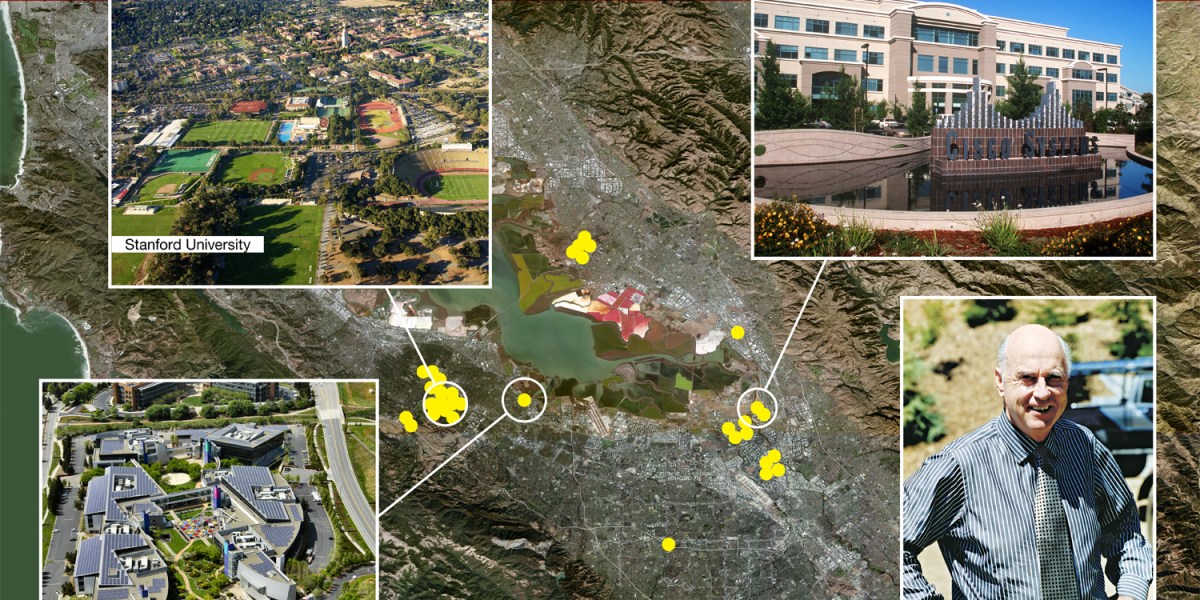
The secretive billionaire who built Silicon Valley | Fortune
How John Arrillaga Sr. transformed California fruit orchards into high-priced office space for Google, Apple, Hewlett-Packard, and Cisco.
Fortune
175 points · by aluciani · 12y ago · 21 comments
They were electronic (vacuum tube) whizzes who staked their entrepreneurialism to advanced instrumentation.
Then world war broke out again and government contracts were very good to them.
Later, solid-state electronics came along, and eventually computers and these were adopted early by HP simply because they were . . . well . . . electronic, and HP was a (non-consumer) electronic leader by then.
Computers were definitely not their main thing when the company was still in possession of its true greatness.
That's awesome; "built it and they will come" - an approach I have recently overcome the fear of, due to them never coming on a couple projects I learned from.
I appreciate how they disliked borrowing in the early stages, too.
Online mindshare, on the other hand, is basically infinite and unless there's a path to discovery, there's not really any reason for people to show up.
1. https://news.ycombinator.com/item?id=8001224
EDIT: may just be coincidence, but they're pretty close together.
The government's involvement with the early history of silicon valley prompted the need for more buildings, which these guys supplied. I mean they were smart, they saw a demand and filled it, and then they got lucky when silicon valley became massively successful.
I think the more interesting thing is that they are using slightly different connotations of the word built. The government "built" silicon valley as a conceptual place. And these guys literally built it.
This man added no value other than as an intermediary; he may have added value to Stanford (questionable) but he got rich off land. Nothing more.