Kickstarter project spent $3.5M to finish a working prototype—and ended in disaster
A login-managing USB key won awards, was covered everywhere, never materialized.
Ars Technica
189 points · by tmflannery · 12y ago · 149 comments
Why is it a shock that Kickstarter projects fail? No one is shocked when VC backed companies fail, and these projects are just as likely (if not more likely) to fail. There's no more due diligence than watching a video and reading over some text frequently in funding a project.
Even projects with competent people in well funded companies fail all the time and get shut down (see Google Buzz, Google Health, etc). There is no such thing as a promise that things will succeed.
I wish Kickstarter would put big lettering near the 'support' button that says in big red letters, "Kickstarter is not a store"
I bet they would have been more successful with less money. Money gives you freedom(to start over, to feature creep, to bikeshed, to grow faster than you can manage, etc) and security (which makes you less "hungry" and desperate).
I thought long and hard before posting this, because obviously hindsight is 20/20, but I went back and looked at the product description again and I stand by my opinion. IHMO it was a turkey from the word go.
    1. The actual project.
    2. The rewards doled out to supporters of the project.
    1. The rewards are a contract. If you fail to deliver
       the rewards on whose terms the backers supported
       you, you're legally liable.
    2. The rewards may be delayed, as long as regular
       communication about the actual progress happens.
The fact that most project are confident/stupid enough to offer rewards that can only become reality if the project succeeds has muddled this reality in the mind of the average person, but the rules and legal realities are crystal-clear.
Example: $100 Dollar Level, tshirt + coupon for discount on items that we sell, available for use on target completion date (which just happens to be projected cost of baseline project item)?
Edit:
Found the answer...
> Discounts, coupons and gift certificates - Offering a reward at a lower price than what it may cost post Kickstarter is fine, but a future discount or coupon as reward is prohibited. Additionally, vouchers in exchange for a particular item (a meal, a book, etc.) are fine, but monetary gift certificates are prohibited.
A little disappointing, but I can understand why they'd take this stance. (Likely because of money transmitter laws.)
(It's possible you could still phrase it as equivalencies, eg, "one X, OR two Y, subject to availability")
However the rules state one thing clearly ( https://www.kickstarter.com/rules ):
Projects must be honest and clearly presented.
VCs back huge numbers of companies and expect most of them to fail, hoping that the few which succeed make back enough money to compensate for all the failures. Kickstarter backers pay money in exchange for a specific product of value roughly equivalent to the amount they paid. We can't expect people who back Kickstarter projects to accept VC-level failure rates because Kickstarters simply don't - and can't - give enough back when they succeed to make up for the failures.
The only differences between VC-invested projects and Kickstarter projects is that no one does due diligence on Kickstarter projects. Kickstarter backers should expect VC-level failure rates as a lower bound.
True, but it's even worse than that. VC funded companies sometimes have an upside. E.g. Oculus Rift got over $2 billion from Facebook. The Kickstarter "backers" received exactly zero percent of that upside.
(I know, it's rhetorical. VCs get a lot more information and have a lot more experience than Kickstarter backers.)
Another difference is a lot of Kickstarter projects are well below the scale that VCs would notice, and are offered by businesses that are going concerns as a way of mitigating risk -- there not all startup firms using Kickstarter as an alternative (or supplement) to VC funding.
Then they're doing it wrong. Supporting a project on Kickstarter is a donation. A vote of confidence. That people are using it as a store and a ridiculously high-risk low-return investment vehicle is completely absurd. The blame should probably be put on Kickstarter themselves for what seems to be a major failure to establish the right expectations.
Look at r/shutupandtakemymoney. Of the 25 posts on the first page right now, 11 are either kickstarter or indiegogo. Is it Kickstarter and Indiegogo's fault that individuals are using that form of venue to market and sell a product that doesn't exist yet? Is it reddit's? Or, is it the creator's fault for submitting the link?
I pose that it is inevitable that these sort of sites are used this way. People want to market their crowd funding opportunity to enable their company to get off the ground. It is easier to market a future product compared to a donation, so creators and marketers are going that route.
It actually is a promise. The Kickstarter terms of service require successfully funded projects to deliver the rewards that backers have paid for. If a project can't guarantee that they can deliver a finished hardware product, they shouldn't offer it as a reward.
Shouldn't that be:
If a project can't guarantee that they can deliver a finished hardware product if the project is successful, they shouldn't offer it as a reward.
Otherwise surely no project can offer the product as a reward to backers as success is never guaranteed.
Project Creators are required to fulfill all rewards of their successful fundraising campaigns or refund any Backer whose reward they do not or cannot fulfill.
from:
https://www.kickstarter.com/terms-of-use
So it talks about the fundraising succeeding, not the project.
But it also says that is one of the terms of the contract created between the project and backer, don't pester Kickstarter about it.
It basically is, or at least a market -- a place where buyers and sellers meet and form contracts and where the sellers get the money from the buyers in exchange for the promise of some specified future delivery.
Sure, some sellers would like to have store-like inducements to the buyers to hand over money, but not store-like obligations to provide the offered goods to the buyers.
> Why is it a shock that Kickstarter projects fail?
Its not a shock when projects fail. Its a breach of contract when people accept money in exchange for a promise of future goods and then fail to deliver the future goods.
Sellers shouldn't be shocked that projects should fail -- and so shouldn't offer rewards that depend on success to be deliverable.
This is actually an excellent point, but...
The reasoning behind this "pre-sale" approach is about the perceived value of the reward. An traditional gift might be acceptable (T-Shirts, etc) but there is something unique about being offered something that's not on the market yet. It makes the customer feel special, something they might be able to brag about if the product is a success.
Something akin to the concept of "Collector Edition" in the game industry.
That will add value to a reward, will attract more customer an in turn increase the chances of a successful campaign (even though successful campaign does not mean successful product).
It is a good way to kickstart a business.
Riskier? Yes. Short sighted? Yes and no (Actually no).
Short term cost is 0 (great), long term cost is your manufacturing cost + distribution cost (ouch).
That doesn't seem right? Actually it is.
You're actually paying for: + User acquisition + Early product validation (Lean Startup) + Momentum + Beta testing for the whole product pipeline and the product itself
I think that as a company it is definitively worth the risk. You have to be able to take risks sometimes in order to be successful.
My 2 cents.
But let's not quibble over what Kickstarter is. There is obviously a lot of value in having some kind of market where people hand over money with the risk of project failure, in order to potentially get a new product that they want to exist built.
How would you create such a marketplace and communicate clearly that that's what it is? I ask because I thought Kickstarter was exactly this, but apparently you don't agree, so I wonder where our difference of opinion stems from..
My view is based on things like Kickstarter's terms of service and contract law.
And the complaints about failed delivery of rewards indicate that it is also consistent with the way many backers see Kickstarter.
Certainly, I can see why each individual project team would like the idea of getting funding without giving up either equity or an obligation to pay money later (as they would in traditional financing) or an obligation to provide product (as they would in a preorder, or in Kickstarters existing terms if they offer the product as a reward), while still using the product as an inducement.
> There is obviously a lot of value in having some kind of market where people hand over money with the risk of project failure, in order to potentially get a new product that they want to exist built.
And Kickstarter can be that without product-as-reward -- after all, if the project is for a product to be offered to the public, people who back the project can "potentially get" the product (contingent on project success) when it is offered to the public.
Competent technical people. The non-technical leaders of for example Google Wave did not really show any apparent competency, leading to a project that has been excitedly received to stall just because someone thought it a good idea to do a closed beta (the closed beta worked for Gmail because the early Gmail users could communicate with any E-mail user, but competent people would have anticipated that this would not work with Wave; they effectively created a super-nerd ghetto, which obviously no sane person wanted to be part of after the beta was over).
One of the problems with this is that our brain tricks us into believing that we're better guessers than other people, because hey, look at all the times we were right in the past! Except we weren't right - it's just our memory deceiving us.
All of this is to say - Google hires extremely smart people. I would really hesitate to call them incompetent, both because what you say was "sure to happen" is a big dose of hindsight, and also because you have no idea what their goals were - for all you know, they took a risk that the project would either stall or become super-successful, so they shot for the moon. That's a legitimate option.
I can't see that happening. Though, I'm not sure what if anything has changed since I was discussing this [1] on HN over a year ago.
Every VC backed company, or big company project that fails without any shock has shipped. If a kickstarter campaign ships the product and it falls short of expectations, no matter how short it is, it is ok. But if it says it is all set and done to ship, get the money and don't ship, that is a problem.
Kickstarter should really emphasize "The risk of failure is high, and you stand a good chance of never receiving anything for your money"
Because regular people aren't equipped to evaluate risk and projects go out of their way (often dishonestly, even if understandably) to minimize the perception of risk.
It's a system that takes advantage of suckers. Some folks find that to be okay, but it bothers me even as I consider using it (because of not having any other real choices for funding a game in 2014).
I mean, even if you don't agree with that sentiment, you can see that other do, right?
I think it would be wise for hardware companies to collectively start lowering expectations from campaigns like the one described here.
The team at Spark Devices did a great job with this process. Their first project, the wi-fi bulb socket [0], had a large funding goal and a more realistic timeline. When the campaign failed to materialize they shifted directions to the Spark Core [1], which was much more successful and delivered very close to the projected timeline if I remember correctly. Now they are closing a sizable series A [2] to build an operating system for the internet of things.
If they had originally made the Spark socket goal $100k they would have reached their goal and then likely failed to deliver with the cash they raised, which would have pulled them down into the mess that is described in this article.
Maybe more hardware teams should take a good hard look at how they view failure and decide if they want to be the next Spark or the next myIDkey.
[0] - https://www.kickstarter.com/projects/sparkdevices/spark-upgr... [1] - https://www.kickstarter.com/projects/sparkdevices/spark-core... [2] - http://techcrunch.com/2014/07/08/spark-io-raises-4-9-million...
I'm not sure whether it's because the community thinks "Oh, hardware is so much easier than software! This will be a snap!" or if it is the more subtle "We haven't done this before, so we aren't aware of the pitfalls"
I've literally never heard anything say or think that. Myself included, nearly every software developer I know is intimidated by how hard hardware seems.
I'm not sure how people could think this. Hardware is a much less forgiving medium than software:
- If your web application requires three times the resources you thought it would, you can easily add more servers. But a device that needs to fit in a USB key has hard limitations on size, memory, power dissipation, etc. You can't ask people to carry around a briefcase-sized device (or even another phone-sized device) to hold their passwords.
- If your web application has a horrible bug, you can wake up your developers and have them fix it at 3:00 AM. If you find a bug in your embedded software after you ship, it can only be fixed by getting all your users to upgrade their software (assuming your embedded software is in flash memory, not in ROM). If you find a bug in your hardware after you ship, you need to send everyone a new device.
People like to think that their discipline is the hardest discipline- that means they are smart just by association.
Also, if you are a software guy you might never have even heard of key steps like DFM, DFT, etc, which makes it easier to say "hardware seems so easy"
I think "Hardware won't be THAT much harder" is more like it
This kind of project needs something like 2 engineers max who really know what they're doing. Unfortunately, very few people know what they're doing.
Anything more than that and you are doomed. The hardware is about $100K to develop if you know what you're doing. Probably closer to $250K if you don't.
Everything else is time--software, debugging, user testing, etc.
Andrew "bunnie" Huang's blog is great for understanding all the crap you are going to wade through to do production. http://www.bunniestudios.com/
The discussions about what goes into producing the DEFCON badges each year are also fascinating: http://www.nutsvolts.com/uploads/magazine_downloads/DEFCON-1...
The DEFCON discussion is always especially interesting because it is a VERY constrained problem: low volume overall (for electronics <50,000 is low volume) but high volume in terms of units-per-time, tight cost constraint, generally a tight battery constrain, and a desire for hackability.
Operations is hard. Let's go shopping.
There is a reason why there is a Chief Operations Officer in manufacturing companies ...
The exception was DEFCON 19's non-electronic, titanium badges, which were not just on time but arrived so early that the DEFCON staff hadn't taken over the conference location yet, so they ended up getting stored in someone's hotel room.
Whether or not you agree with the outcome of their decisions, you can't simply huff that PayPal has no "right" to decide whether to take on those kinds of risks. They clearly have skin in the game.
How ridiculous is this. People paid for a product (support) in order to receive what they were presented. The creator could then release version 2.0 after a year with updated features instead of making this decission. It would be like person would buy an Iphone 4 in shop and after he paid the guy behind the counter would say "sorry, I changed my mind, you will get Iphone 5 in 1 year because its better. Your money is ours now, so good bye and see you in a year."
The decisions made behind this seems to be immature - similar unfortunately to pretty large chunk of Kickstarter startups.
The Kickstarter seems to replaced government grants for some, where people would risk it to achieve success, but if they fail cause of issues/bad decision they don't care because it wasn't their money anyway. To many people with no prior life experience starting projects and businesses.
I think a large number of people starting projects like this is necessary. True, many of them fail. However, it is in the process of failing at a first attempt that many people will gain the experience necessary to help them in later projects. So there is nothing inherently wrong with failure.
My interpretation of the article is that the developers did not handle their failure correctly. They were not clear in communicating and responding to the difficulties they were facing. The failure was left unaddressed, and only compounded over time; this was the fault of the developers. A more adequate solution would have been to recognize that changing the product to quickly was not the right approach; releasing a project without all of the desired features at a sooner date may have been preferable.
You're not paying for a product, you are helping fund a company or project who has no legal obligation to give you anything.
If you are donating to a KickStarter just because you want the reward they are offering then you should do sufficient research on the company and their founders to ensure that you trust that they will deliver what they promised.
Is a creator legally obligated to fulfill the promises of their project?
Yes. Kickstarter's Terms of Use require creators to fulfill all rewards of their project or refund any backer whose reward they do not or cannot fulfill. (This is what creators see before they launch.) This information can serve as a basis for legal recourse if a creator doesn't fulfill their promises. We hope that backers will consider using this provision only in cases where they feel that a creator has not made a good faith effort to complete the project and fulfill.
https://www.kickstarter.com/help/faq/kickstarter+basics
This isn't just hypothetical: http://www.pcworld.com/article/2150780/firstofakind-kickstar...
From that same FAQ: "Kickstarter does not guarantee projects or investigate a creator's ability to complete their project. On Kickstarter, backers (you!) ultimately decide the validity and worthiness of a project by whether they decide to fund it."
In court it's probably about as valid as a Terms of Service agreement on a website or a "by reading this you must keep the contents of this email confidential" at the bottom of an email.
Beyond that budget everyone will focus on engineering it to work with every authentication system ever, rather than creating a simple USB HID device that types a username, the tab key, a password, and presses enter.
Problem: Users cant remember their passwords.
Actual Solution: Device that stores and recalls their passwords.
Engineering Solution: A bunch of crypto stuff, tempest hardening, pen testing, some more crypto, a provably secure RNG, 3 different interfaces and drivers to integrate the device with Linux, OSX, and Windows crypto systems, a bunch more user installable software for 3 platforms, tamper resistant chips, etc.
Call me crazy, but how about Kickstarter clamps down on ambitious hardware products like this? I don't think they are doing enough and it's tarnishing their image as a credible crowdfunding platform (at least to me anyway). It's obvious that there are very few exceptions here that a hardware Kickstarter campaign will not fail (Oculus Rift comes to mind and a few other smaller ones).
Definitely hardware failures are a PR challenge but kickstarter's margins aren't affected by COGs and hardware projects tend to require more money (as you pointed out). They've got lots of motivation to make it work.
Personally, I very much doubt they ever had a working prototype.
It's in tabloid's interests to stroke controversy by suggesting it's a store whenever projects fail.
Clickbait articles like this will continue to be made as people are gullible and easily manipulated.
From their FAQ:
Is a creator legally obligated to fulfill the promises of their project?
Yes. Kickstarter's Terms of Use require creators to fulfill all rewards of their project or refund any backer whose reward they do not or cannot fulfill. (This is what creators see before they launch.) This information can serve as a basis for legal recourse if a creator doesn't fulfill their promises. We hope that backers will consider using this provision only in cases where they feel that a creator has not made a good faith effort to complete the project and fulfill.
It's valid to question the Kickstarter model, because sometimes, projects don't deliver.
I still think it's a great model, but I understand the risk. It is valid to inform people of the risk, though. That's news.
1 (of a person) surprised and confused so much that they are unsure how to react: he would be completely nonplussed and embarrassed at the idea. 2 informal (of a person) not disconcerted; unperturbed.
usage: In standard use, nonplussed means ‘surprised and confused’: the hostility of the new neighbor's refusal left Mrs. Walker nonplussed. In North American English, a new use has developed in recent years, meaning ‘unperturbed’—more or less the opposite of its traditional meaning: hoping to disguise his confusion, he tried to appear nonplussed. This new use probably arose on the assumption that non- was the normal negative prefix and must therefore have a negative meaning. It is not considered part of standard English.
There's an easy way around that for projects, don't offer the output of the project as a reward for backing it.
> I want to fund projects where the creators don't need to be 100% sure their idea will work before having the means to try it out.
Okay, back projects where the creators don't offer the output of the project as the reward for backing it. (Or, projects where the development is already done, and the Kickstarter is just being done for initial production costs, so the product isn't speculative.)
> And I certainly don't want people to be able to sue those creators if it doesn't work out.
The only reason people could sue the creators is if the creators offered something in exchange for money, received the money, and didn't deliver as promised.
The creators are in full control of what they offer as rewards. It seems to me that the problem is that some people want creators to be able to use the promise of a product they don't know that they can produce as inducement for people to give money, but not be obligated to actually follow through.
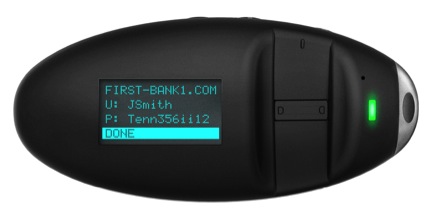
The "Designs" are complete, patents filed, component suppliers selected, the manufacturing process is defined, the CM [contract manufacturer] chosen so all we need is your support in this project as we size the first myIDkey production run and ship product in September 2013. Please make a pledge and receive your myIDkey!
I wonder if this is actually true and if there's any hard historical data on this. It sounds to me like a statistic he just made up.
So far it's been a 99% successful guiding principle (with the big exception early in Internet advertising I wouldn't have enjoyed anyway).
That was never going to be an easy switch. A3 is a microcontroller, A5 is a full blown cpu.
didn't bill gates already say something about it ?
the revenues from IT project investments are so high compared to investment costs, that in the end you never lose money by seeing so many projects crash like that.
Of course if the government would manage those things, it might be a little more efficient and might deliver more results... I guess that's how the silicon valley works... Freedom has the advantage of letting the market decide, but for innovation it's never really obvious...
go and downvote my political comment
What's the alternative?
The economy is an incredibly complicated system. Any top-down model will fail. What we have right now (free-market base and government regulation) kinda works. Or at least, it works better than anything else we tried.
government research, like darpa.
A top-down approach to controlling all aspects of the economy, a la communism, has pretty much been shown to be a disaster. It has to be. How can you create a bureaucracy to track millions of products and expect to 'compete' with a bottom-up approach of free enterprise? Even conceptually, at best, you'll be behind. At worst, you destroy the economy.