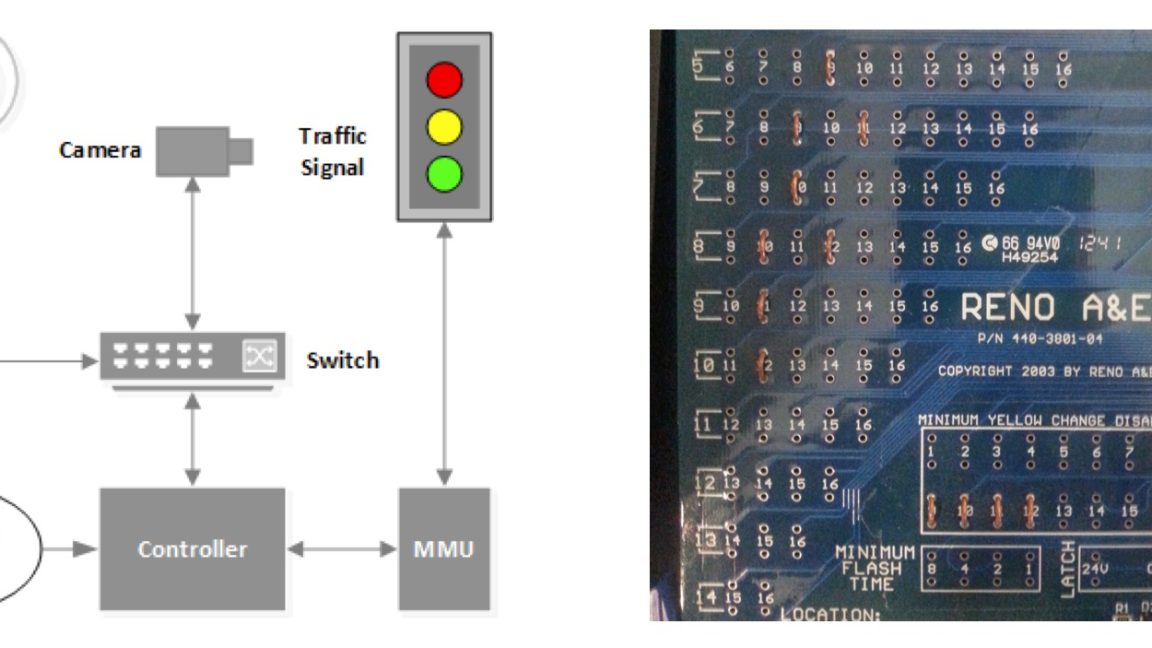
Researchers find it’s terrifyingly easy to hack traffic lights
Open wireless and default passwords make controlling a city's intersections trivial.
Ars Technica
89 points · by privong · 12y ago · 42 comments
So at least an attacker couldn't cause those sorts of accidents, even if they could totally mess up the system.
Example Controllers: http://www.mccain-inc.com/controllers.html
edit: s/opposite/cross/
Nonsense. Even mechanically timed lights can be wired to illuminate any arbitrary set of lamp in either direction. The only difference between then and now is that back then you had to physically move wires, whereas now it's software switched.
I'm pretty sure I've seen this happen once (in NL), at an intersection with a very predictable traffic light sequence (some intersections use sensors, others simply follow a set pattern), an ambulance came by, sirens blaring, and the whole pattern pretty much skipped a "turn".
I'm not sure which method is most common. The wikipedia article says that IR, acoustic, visible lights, and GPS can be used to change the lights. It would be fun to experiment with different methods of changing them, but would undoubtedly be illegal.
Apparently it's not illegal federally to use these devices to change lights, it might be legal in some states.
Allowing green waves in a high traffic, high pedestrian downtown area would be lunacy.
So at $4 per gallon, that suggests that your cost (not the city's revenue) for this absurd scenario is $0.66 per day. If the city has a completely ridiculous 10% gasoline tax, that suggests that it's getting $0.07 per resident per day. Or $25 per year.
This may not be the most difficult way for a city to raise $25/resident/year of revenue, but it's certainly in contention for it.
> According to the paper, the vendor responsible stated that it "has followed the accepted industry standard and it is that standard which does not include security."
Clearly, the 'vendor' lacks a PR team.
Knowing they are all networked, accessible, and controllable from a central computer infuriates me, not because they are hackable, but because the software currently running them is so, so horrible. It's good ol' 'government' software.
That is, as a driver, one isn't in a position to judge whether traffic lights timing make sense, because they're optimized globally to ensure best traffic throughput in the whole city.
After enough short sighted releases, mountains of technical debt, poor coding standards, and general apathy, I do not believe the engineer depicted in the comic is accurate. "Hours of simulation" and "took me a week to work out the timing sequences". No. No government paid software engineer spent a week working out the timing sequences. They hacked out something as quick as they could to meet the ridiculous deadline they were given, and then had a good laugh about fixing the process during the retrospective meeting.
We make security a priority (even with full network access you couldn't control our system) but a lot of third party systems are ridiculously rubbish and a lot of Government agencies only make token efforts at security.
The exercise was conducted on actual stoplights deployed at live intersections, "with cooperation from a road agency located in Michigan."
So this was done with permission.