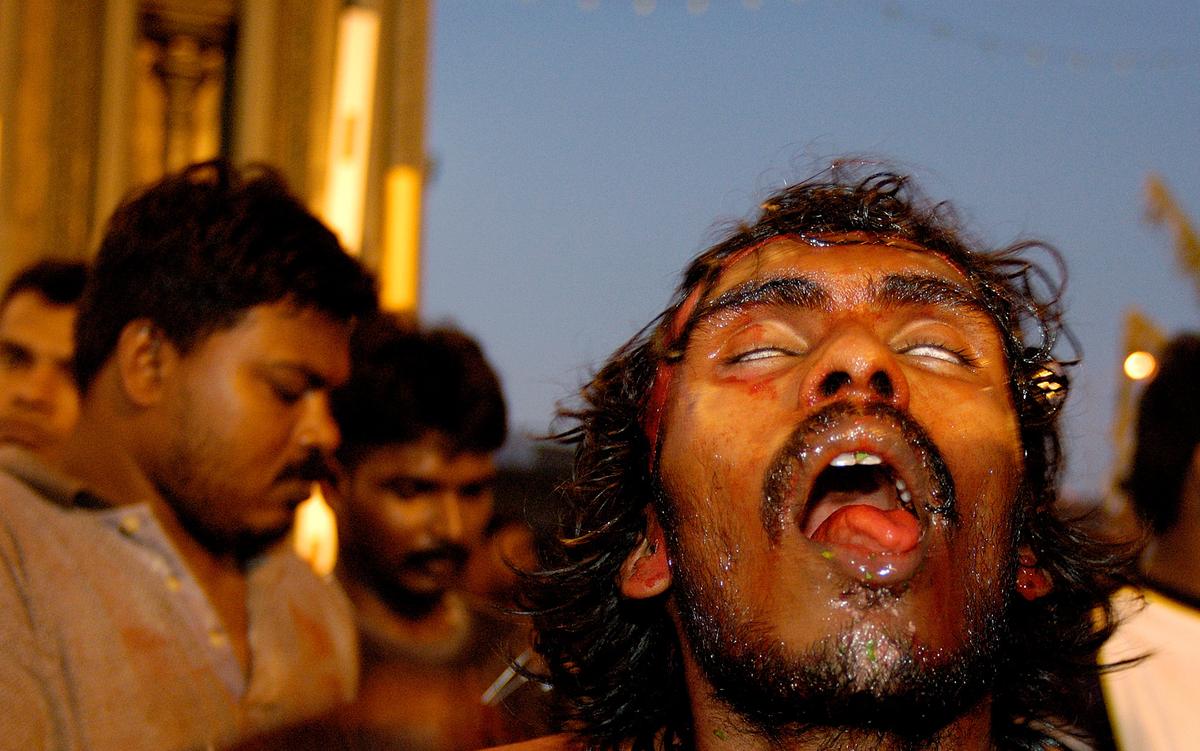
How extreme rituals forge intense social bonds | Aeon Essays
From fire-walking to the ice-bucket challenge, ritual pain and suffering forge intense social bonds
aeon.co
53 points · by Thevet · 12y ago · 42 comments
In the military I learned just how much the cohesion of a group contributes to its success. Two major factors of unit cohesion that I observed were pride in the mission, and emotional bonds within the group. The two combined are almost unstoppable. This is a little uncanny as I stopped from booking a flight to my 10 year deployment reunion just to share this thought with you.
Also, I was in Baghdad during an Ashura. It was a vivid sight to behold. The whole neighborhood was definitely alive with a kind of electricity.
For these types of no-nonsense developers, the kinds of activities that really build teams is simply the day-to-day work interactions. E.g. when John checks in his source code or it's released into production servers, the colleagues know it's high quality and their smartphones won't have a zillion text messages about broken builds or devops alerts on Saturday night.
All the team outings at the bowling alley, paintball battles, etc of "social cohesion" means nothing when a team member isn't pulling their weight and causing everyone else to stress out.
[1]http://www.telegraph.co.uk/news/newstopics/howaboutthat/9063...
The manipulative nature of artificial team building exercises is an insult to the intelligence of any smart person with an analytical mind.
It's not just about pulling your weight as much as it's also about helping your coworkers pull their weight as well.
To put it more simply, less competition and more cooperation builds social cohesion.
I used the "backyard grillout" example because the poster I responded to mentioned it as a tool for unit cohesion in a later comment:
edit: grammar
However, many of these team outings are perceived as "nonsense" by the types of minds that make up a significant percentage of programmers. It doesn't mean that programmers are anti-social. It's just that they'd rather hang out with people on their own terms instead of a corporate sponsored gathering.
Yes, extroverted people are great. Baseball is also great. But going on a team outing to a baseball game might be "nonsense" to them. It's just the way it is. I'm just saying that dev managers need to take personality differences of programmers into account. Instead of team building, the manager is inadvertently causing team members to harbor resentment for wasting their time.
>I also find that teams that function like you describe are terrible for growth,
Can you explain further what you mean by this? Why is there a belief that devs need to firewalk with their coworkers cheerleading on the sidelines to foster growth? That's not been my experience at all.
That's not really it, but it just goes to show what I'm willing to do.
I really pushed them to achieve more than they believed they could. I had several of the guys say they've never worked harder on a project but also never been more proud of what they built. I've heard this many times over the years.
The key is to not just crack the whip. That's so demoralizing. Soldiers are human, you can't get people to do what you want if you're constantly pressing on them. It's no different for programmers. You have to play cheerleader, you have to tell them you believe they can do just a little bit more than they think they can, you have to watch the body language and know when the team is beat. You have to employ your unit in accordance with it's capabilities. Never set them up for a failure. You have to make sure they get fed first, they get rest first. You have to insure that they can explain to others how important or meaningful this thing they are doing is. Shareholder value is a disgusting insult, what innate human need do they have that creating this thing will fill? Strike there. Most programmers just want to make a difference in someones life, make something people will use. I arranged for a team to spend time at a package sorting facility on an airfield in the freezing rain so they could feel the pain and frustration of the people using outdated technology. I arranged for another team to spend time with a group of stressed out next-to-tears "release of medical records team" that had mail come in by the truck load. Inspire the team that what they are going to do actually changes lives, then hold them to a high standard (just outside of what they believe is possible) and lead the charge by working harder than any of them. You have to run interference for them, catch 100% of the bullshit. I once inadvertently let a developer listen in on a call while a customer screamed at me and insulted the team (not present), I stood up for them and made the client apologize. The developer saw how incredulous I was, and was amazed at how much shit I took for them. He told the others and it went a long way to build trust. Trust is a big one, in the military I learned about moral authority. It basically means, if you are ALWAYS doing the "right thing" the good moral honest thing by the group when you ask them to do something hard or painful they will do it because they know you aren't asking out of self protection they know you've done everything to protect them from what you are about to ask them to do. How many times have you had a boss that would lay down his career to protect you from having to do something stupid and painful? So yes, I've been fired plenty, I've also been the guy they send in after everything is shot to hell as well. I love being a snake eater.
I can't say it's always worked out perfect or that I've always been the model leader. I've grown quite a bit over the years and learned from my mistakes. The principles I learned in combat arms do absolutely translate though.
My motto is, get the team to the top of the hill without anyone getting killed. It's a metaphor for doing hard things without it turning into a death march.
I could write so much more. Hopefully I've answered your question.
One question: have you ever had subordinates/employees for whom your approach didn't work?
[1] http://www.tonyrobbins.com/events/unleash-the-power-within/
The thing you seem to miss is that these rituals were not forced on the participants by some manipulative manager trying to observe some group psychological response. The fire-walkers have to choose freely to walk on the coals: it's not like they all get in a line and crack whips at each other, goading one another reluctantly across the coals. It's not forced social cohesion at play here, it's personal determinations of sacrifice.
When you decide which sacrifices I make, it's completely different. Do you not see that? When I notice you intentionally schedule our meetings in the freezing rain, what do you think that will make me think?
Understand that the military background you come from really, really blurs the line of voluntary. I do not wish to 'enlist' just to work on your software team, buddy. I didn't sign my body away, just my 9-5.
I recognize you've had bad experiences in the past. I stopped writing code and got into management specifically to not be the kind of manager that burned you.
If someone is willing to pass an extreme rite of passage (like trial by fire) to be accepted, isn't (s)he already primed to form a stronger social bond, compared to someone who would only be willing to pass through a simple, non-straining ritual (like hand-shaking)? I suspect that most of the "hand-shaking" crowd would simply shun an extreme ritual, instead of being transformed by it.
As a thought experiment, imagine going through situations where you had no choice with somebody who becomes the only person you can count on. Not only can you expect to be able to count on that person in the future, but you have an exclusively shared experience. Both of those happen regardless of whether either of you had a choice.
From experience I can tell you that these things tend to sneak up on you. You don't sign up for one unit of "extreme rite of passage"...it just kinda happens.
Just roll with the punches - absorb, learn, adapt...you'll emerge 10x stronger. I certainly did.
My experiences led me to believe that, while this can be effective, it only works on certain classes of people. That is, I think a person needs a certain amount of naïveté to be drawn in by schemes like this. They need to already be willing to buy into some litany of conquest and glory. To be young and/or dumb.
Perhaps it is an innate human tendency to form stronger bonds under these conditions; but it's certainly not expressed equally throughout all phases of life, circumstances, and the population at large. I'd be very wary of attempting to exploit it by constructing rituals for a software team.
I want to say that the dividing line is whether or not the experience is as likely to break bonds as it is to create them. I don't expect to burn a bridge at a company retreat... but I would expect to burn some doing Survivor with my team.
Basically, yeah, I agree with you that it takes naivete to be drawn into /schemes/... but you can have these experiences without them being machinations. Or, at least, machinations of the sort that "when friends use you, it makes you stronger."
Only if the ritual is superficial.
When we're talking self-flagellation, or hunting elephants as a group, things operate on a quite different level.
Ignoring the physical fitness, isn't this the basic idea behind boot camps for military service?
Student fraternity rituals as well.