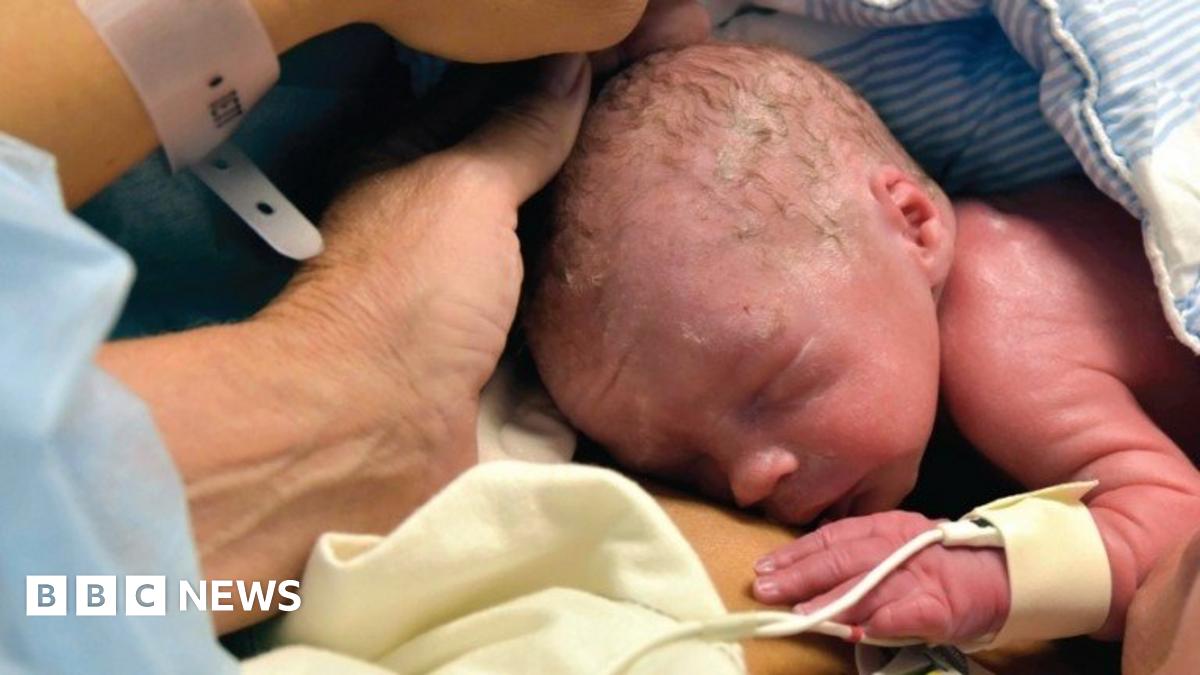
First womb-transplant baby born
A 36-year-old woman in Sweden has given birth to a baby boy using a transplanted womb in a medical first, doctors say.
BBC News
85 points · by forrest_t · 12y ago · 56 comments
I mean, this woman went through a very dangerous and expensive transplant surgery that then required the use of immunosuppressant drugs to prevent organ rejection, when she could have used a surrogate or, gasp, adopted.
I hope they had to pay for this surgery with their own cash. There is absolutely no medical necessity behind it.
Edit: This comment seems to be eliciting some disapproval. I'm curious why; please let me know what you're thinking.
You're attacking people for their inherent wish to be 'normal' and just have a kid like every other couple on this planet.
If we throw out the 'insane' label, I'd rather apply that to your position here. There's nothing wrong with adoption, but it's not the same thing (and usually not the first choice). I cannot even begin to imagine what you're complaining about here and why you consider that attitude worth sharing.
It seems pretty simple to me: it's stupid to waste hundreds of thousands of dollars (at least) to satisfy "their inherent wish to be 'normal'".
>and just have a kid like every other couple on this planet.
There are many couples who don't have any kids. This doesn't mean it's not OK to want to have children if you can't; it just demonstrates that it's probably pretty silly to waste a ton of (public?) money and risk your life just for the sake of having children, particularly when you can acquire them in other ways.
I have two issues with your attitude.
1) The 'waste' here is money spent on scientific progress. The most expensive part is probably caused by the leading word in the headline: 'First'. It's probably a safe bet that this will become cheaper with time.
2) You're again calling these people (I assume you target both the couple and the people that made this possible?) stupid because .. you seem to feel different?
>There are many couples who don't have any kids.
Those are obviously not related/not the couples I was referring to.
>This doesn't mean it's not OK to want to have children if you can't; it just demonstrates that it's probably pretty silly to waste a ton of (public?) money and risk your life just for the sake of having children, particularly when you can acquire them in other ways.
That just shows that you're talking about things you aren't familiar with (no offense: I used to be there right with you). Let's just ignore the part where you call others silly again or the part where you judge for others what is worth risking your very own health/body/life for: Getting kids 'one way or another' is not the same thing. It's not like a random gadget and whether you're soldering it at home or order it from Alibaba is really just the same (and .. people _will_ probably disagree with even that statement, deeply caring about some perceived difference in that case).
The mother in this case was able to carry a baby inside of her body for 32 weeks. I (father of two) cannot begin to imagine what that means to a woman and by your comments you're even further away from understanding any of this.
I guess it's fine if you "don't get it". But it seems you attack that report without any clue on that matter AND you seem to imply that this is a stupid thing in general, for everyone. That's the most arrogant thing I've read on this site for a while.
This comment seems to be eliciting some disapproval. I'm curious why; please let me know what you're thinking.
I am making the argument that saying that that particular form of procreation is 'arbitrary' is ridiculous. It's clearly not arbitrary: it is the way healthy, normal humans have children, and is the form of childbirth that was selected by evolution. That may or may not mean that it should be preferred by couples (though in reality, it certainly seems to be) but that's a far cry from saying there is nothing particularly unique about it.
Of course, by assuming it is an arbitrary form of childbirth, which it's not, you fall into the trap of claiming that it should not be given undue weight for couples looking to have children. I'd argue that the burden of proof is on you to show this to be the case, since after all, you are (most likely) living, breathing proof of the multi-generational long term effectiveness of this method.
edit: Also, as an aside, your citation of an appeal to nature logical fallacy is only relevant if the argument being made is that something is inherently good because it is natural, full stop. When it comes to something like procreation, you can clearly make the argument that humanity itself is an existence proof of the effectiveness of that natural mechanism, therefore for that particular case (or really, any case where evolutionary pressure has resulted in a objectively effective solution to a problem) that logical fallacy does not seem to apply.
The failure mode Eliezer used to write about[0] seems to be true - in many, learning about logical fallacies tends to induce dysrationalia. Instead thinking about what other side says, one can just pattern-match anything they disagree with to a fallacy and cry foul.
So since you're curious, wyager, it seems a little hand-wavy to say "she could have used a surrogate or, gasp, adopted." Combining sarcasm and hand-waving makes for poor commentary.
Why is that? A lack of Swedish orphans? Red tape that exists locally but not internationally? That 100/year figure is shocking to me.
Tell that to my insurance company. Bah :(
Almost nowhere (as far as I'm aware) offers taxpayer-funded plastic surgery, except perhaps in cases of extreme congenital deformation.
I don't think the case presented here is comparable. Many people are sterile, and it doesn't tend to have a cripplingly negative impact on their lives.
Or, to put it another way, among gene sequences that attain fixation through sexual selection pressure, any sequence that impels procreation as a terminal goal is going to be fixated more quickly than any other.
There is an awful lot we do not know about what motivates people to want a particular thing. Coping with my genetic disorder has been a long strange journey and has made me aware of a lot of weird potential explanations for why people sometimes go to crazy lengths for something.
We can never know what the path not taken would have led to for this woman. We can never know how her life would have turned out had she simply adopted instead or used a surrogate. We can do studies and we can talk about statistical correlation and so on, but there will never the chance to A/B test this for this specific individual. Maybe she did what was best for her, even if some total stranger on the Internet doesn't approve.
Surely you should be concerned about starving people in Africa or something instead of, say, wasting time on Hacker News?
We all put our time and effort into things that make sense for us. You are free to invest your time, money and effort in those things that matter to you. This mattered to them.
Many women take immunossupressants while pregnant, and many undergo IVF to give birth, some of which to allogeneic embryos (egg donations). This last one doesn't seem to affect significantly implantation, with the main concern being a higher risk of pregnancy hypertension[1]. I expect conceiving with an allogeneic uterus would be similar, since in both the genetic differences between embryo and uterus are comparable.
Succeeding in combining the two is just a matter of probability, which I don't think is that low. Especially if you consider that the uterus had to come from a compatible donor, so the number of HLA mismatches will be lower.
Note that genetics are not 100% in control, and the conditions of the pregnancy affect the outcome of the pregnancy. We don't know the full effects of this, and we certainly don't know which aspects of it are from the womb specifically vs other biological aspects of the mother (e.g. blood chemistry). Health of the mother certainly has correlations with birth weight and developmental progress, but the extent & mechanisms are still pretty opaque.
Edit: usually. As for nuclear DNA, keep in mind all of the weird crossover failures that are rather common in a large population. These typically result in gene dosing problems and can lead to fetus inviability.
Then consider the epigenome, selected immune recognition, and microbiome. These can be/are environmental.
50/50 is the textbook story we teach before undergrad. It's easier to learn and still conveys the central idea of the model.
The identity of the couple in Sweden has not been released, but it is known the mother still had functioning ovaries.
The couple went through IVF to produce 11 embryos, which were frozen. Doctors at the University of Gothenburg then performed the womb transplant.
Which makes it sound like eggs from her ovaries were used for the IVF.
A study on azathioprine use in early pregnancy found an increased risk of congenital malformations which wasn't statistically significant (from 4.7% to 6.2%) , and an association with preterm birth and low-weight[1]. But a later meta-analysis concluded only the increased risk of preterm birth was significant for this class of drugs[2]
It's mentioned in the article that the mother developed pre-eclampsia (simply put, hypertension during pregnancy, which can lead to eclampsia, with seizures and coma). This should also be a concern for the other women in the study[3]: Firstly, immunosuppressants might increase pre-eclampsia, since the risk is about double in women with a kidney transplant (22%). Also, the age of the donated uterus should be considered: the risk increases seven-fold for pregnancies after 50, though it hasn't been shown the problem is in the uterus itself. Finally, the risk is higher for IVF conception.
Given this accumulation of risk, I'm curious how the other pregnancies carry on.To understand what's at risk, being born preterm is associated with increased morbidity and mortality, as well as lower achievement in general. Some papers point towards epigenetic changes (DNA methylation) as the etiology.
1. http://www.ncbi.nlm.nih.gov/pubmed/19343728
2. http://www.ncbi.nlm.nih.gov/pubmed/22434610
3. http://press.thelancet.com/wombtransplant.pdf (original paper)
And follow up, could the womb then be transplanted in someone else??
> The drugs used to prevent the womb being rejected would > be damaging in the long term - so the couple will either > try again or have the womb removed.
Womb is such a weird word to use.
Stem cells-derived gametes (of both types, regardless of the sex of the donor) are also around the corner.
Exciting times :-)
>>> Beatie chose to become pregnant because his wife Nancy was infertile, doing so with cryogenic donated sperm.