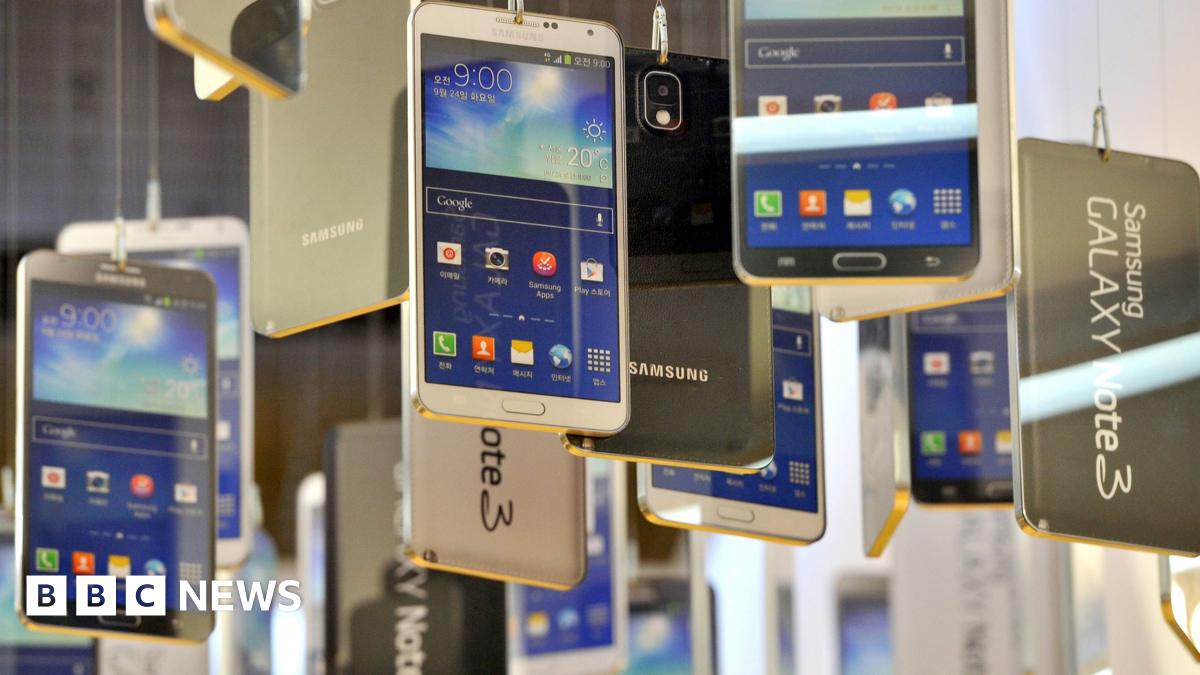
Samsung Electronics forecasts 60% fall in quarterly profit
Samsung Electronics forecasts a 60% fall in third-quarter operating profit, missing estimates, because of slowing smartphone sales.
BBC News
95 points · by davidbarker · 12y ago · 50 comments
So, many mid- to high-level managers in Samsung could be postponing highly visible projects until the new leader steps in and clears up which way the company will be heading. (I once heard, from someone in a different Korean company, that there are implicit agreements to not be "too good" on the book in such a situation: if your company does just as well when the beloved leader is on bed / in prison / whatever, then the leader might not be the reason for the company's success. Can't have that.)
[1] http://blogs.wsj.com/digits/2014/05/25/samsung-chairman-lee-...
Think of it like Steve Jobs-style super-asshole management, and then imagine that Jobs does everything (legal or illegal) to cook the books so that his son (with questionable track record) can inherit the company without paying tax. And imagine reporters who raise the issue in "respectable" news organizations get fired. (One of the leading news organization is led by his brother-in-law.)
* From the latest development, it seems he's not quite brain-dead yet. Sorry about spreading misinformation.
http://koreajoongangdaily.joins.com/news/article/Article.asp...
Xiaomi is not the only reason Samsung's been hurting. But its dirt-cheap pricing strategies have taken a serious bite out of Samsung's position in the crucial Chinese market.
It's like the war of the clones back in the PC days, where Compaq the clone leader was cobbled by other better priced clones when all the clones had essentially the same feature.
Also, Xiaomi is not a very good value. Meizi provides better quality for a similar price if you are into the low end.
Indianizing their offerings for the Indians.
The key markets have changed since the industrial revolution but last century or so it can most clearly be seen in cars and electronics.
Profit isn't everything. Samsumg electronics is investing in semiconductors and also in OLED screens production.
I see OLED as the future and just Samsumg and LG investing on them.
OLED are very expensive today because there is no mass production of them, and because they are so expensive nobody buys them on TVs as they have hi def LCDs way cheaper.
It is catch 22. I for one am waiting for OLED TV prices to be reasonable to buy 4 of them.
Samsumg has a very good position as he is using the phones and tablets market to start mass producing OLED panels.
When people change to OLED, and they will(because it is amazing tech), Samsumg will have a big advantage.
A perfect example is the average consumer doesn't even know what OLED is or what benefits it offers. The fact that you do, means you are not average, and are not considered as the majority buyer group. In fact, the benefits OLED offers, the customer already thinks they have, because screen manufacturing sales lingo is so completely f-ed up. The current top of the line HD LED tv is not backlit. Its edge lit. I did extensive research only to find out actual backlighting, what they call "active matrix backlighting" is only on LED TVs starting around $7k to $15k. All this is an example of 'here is the newest best technology that you need to have'. The bad news is, the customer just spent 2k on a big ass TV 3 years ago and they aren't going to by a new one for at least 3 to 5 more years... OLED is going to take it's sweet time getting here, 3 to 5 years. Meanwhile 2k and 4k is going to arrive in the next year or so because of pressure from distributers.
If Samsung's profits are falling as an Android manufacturer where does that leave users? It's not like Samsung was selling below cost. Without them the others would have a higher market share but would they actually become profitable?
Or is there just a glut of Android devices on the market to the point that no one would have an easy time making a profit in the current environment? Is this just a sign of a shake-up?
Perhaps Samsung's decline has been in part to the success of these other handset manufacturers?
As an outsider to this whole thing (Apple guy with little interest in buying an Android phone at this time) it has always seemed like there was a pretty big oversupply unless you only considered the flagship phones (and even then it's still arguable).
The market share between the various Android manufacturers starting to even out sounds good to me, but I wonder what it would do for prices and how that would effect Android vs. iOS.
Overall, this is much better for Android, rather than having one big company.
Unlikely. Carriers care about their margins. And if there are cheaper phones to sell that customers truly want, then the margins for the carriers can be higher as they can take a percentage of the price differences for themselves. Thus carriers want to have as low priced hardware as possible that still work on the high end networks and that customers want so they can sell more service subscriptions -- which is where they make their money.
Which is strange, since Samsung top of the line are almost as expensive as Apples.
It's very odd to see that talked down as if it was a bad thing on Hacker News as in any story not involving Apple free-market competition would be hailed as the driver of basically all social improvement and technological progress in the last century or so.
Also, that's why it's not surprising that in this particular "race to the bottom" that there would still be high-end models being sold by HTC, Samsung etc., though you would expect them to be putting pressure on competitors to be offering more value and/or lower prices across their entire range.
If they don't innovate dramatically with the S6 there is trouble on the horizon for this behemoth. Samsung also need to position their experimental products (the new edge and the old round) as their lead products and fully get behind them. I always get the feeling they are hesitant like a person testing the water by dipping their toe in, when they just need to take a dive. The development is done and its in production so why not take a leap. If it fails at least they will be known as a company with innovation at its forefront and they can regress to their current practice.
Whoever won the top slot in cell phone biz can get tremendous revenues and profit boost - Motorola, Blackberry, Nokia, HTC, now Samsung. Apple might last a bit longer because of app/iOS infrastructure - but it will be tough to compete with Android.
I wonder how bad the mobile division is doing if the entire electronics company is forecasting a 60% profitability drop?
Sooner is better than later, see whether they can fix it...