41 points · by cturner · 11y ago · 56 comments
On the other hand, there are also people in prison who actually are dangerous criminals, and really need to be locked away from the general population. That is what we created it for in the first place, and why every society has some sort of prison. But nobody writes stories about those types of people, at least not in "intellectual" sites and magazines. When was the last time you read a story about a truly dangerous criminal and what their experience in the legal system has been?
That aside, my personal experience leads me to believe that prison is as horrible as it is because of the people locked inside. Evidence for this can be inferred from the differing degree to which low security prisons are less harsh than higher security prisons.
Do you have a source for this claim?
As I understand it, this is flatly untrue. Jails were, up until quite recently, designed to hold people awaiting trial, not as punishment.
My belief is that imprisonment for decades as punishment is a 20th century phenomenon.
The only book I've read on this specific matter is "Discipline and Punish: The Birth of the Prison" by Michel Foucault, but that was a decade ago; I'm not sure if the details are crisp in my mind.
If you've read anything on it, exactly what were they using for punishment then? Other things I've read of in various places include execution, the stocks, other forms of physical punishments. IIRC, some Islamic societies still recommend cutting the hands off of thieves. All of this stuff makes imprisonment seem rather sanitary and lenient by comparison.
I have a nagging feeling that that represents the feelings of a sizable chunk of the white USA population. Hope I'm wrong.
[1] http://en.wikipedia.org/wiki/List_of_countries_by_incarcerat...
They are loaded with people with whom you would want to keep away from your loved ones. Way more than 1%.
I could tell stories, but what's the point?
Just FYI.
One could say (with the reduction in violent crime since the 70's) that this works. If that's true and it isn't the result of abortion being legalized (not my theory, don't hate me) then we could keep doing it. Could we as a society do better? I think the answer is yes. I think there's a moral imperative to.
So the question is, how might we reduce violent crime and increase the acceptance of social norms within high risk groups?
Both these theories are based entirely on correlation with no good casual mechanism to explain them. The first is particularly impugned - in fact it's reasonable to say disproven outright - by the very high recidivism rate. The second is outlandish on its face.
At least the lead exposure theory passes the straight face test.
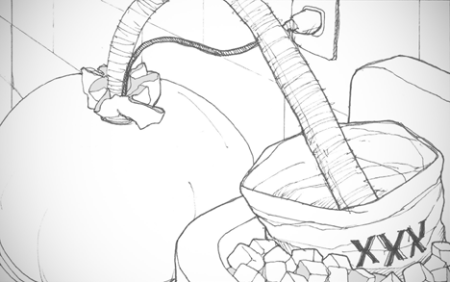
How do they get hold of 5 gallons (~20 litres) of wine?
They made the wine in the manner the article this one references describes. Where 'wine' is just what they call any sugary liquid that has fermented.
Source: brother is in prison.
I wonder how often they make methanol in these stills as well. Even under semi controlled conditions this is a risk.
Better keep them away from the library and internet in general then. There's ideas everywhere! (Said jokingly, I get the parental concern)
> I wonder how often they make methanol in these stills as well.
Every time. The distilling process doesn't make it though, it's a natural product of fermentation.
Making and operating a still isn't hard (clearly!) and the risks associated with consuming "homemade" product are greatly overstated. The risks associated with fire/explosion are greater, but should be reduced in this situation since there's not an open flame. I wouldn't be surprised if the prisoners are tossing the "heads cut", but even if they didn't, there shouldn't be enough methanol to cause toxicity (especially when consumed with the ethanol!). I've read that a lot of the methanol toxicity stories originate from the Prohibition era and were caused by failed attempts to remove methanol out of denatured alcohol sold as degreaser, not due to hooch.
edit: I'm sorry to be blunt about it, but "think of the children" and the appeal for censorship is responsible for the abomination that is the modern chemistry set.
Also if you did make a fruit based wash when you ferment it the methanol will evaporate first (or at a lower temperature than the ethanol if you have that level of control).
This whole article is rather poor as a guide and there are much better and more complete resources on how to build better distilling equipment with a tea kettle, some copper tubing, and a bucket. It is a good article for understanding how prisoners do it, which is its intent.
I mean if you are a prisoner or you are limited to the same resources as a prisoner; then sure, I guess its a guide that you could use. Otherwise a better guide and $20 bucks at the hardware store will have better results, for home distilling experiments.
Keep in mind home distilling is illegal in most states, some have alternative fuel creation exceptions or small allowable amounts.
Isn't it still illegal on the federal level?
For fuel use [0] it is not illegal at the federal level, but does require a permit.
[0] http://www.ttb.gov/industrial/distillation_of_ethanol.shtml
When you think about the fermentation process, there isn't really a mechanism to create large quantities of methanol.[1] Yes, there are often traces of methanol and other longer-chained alcohol, but nothing that would be toxic.
As for your second point, making concentrated methanol from fruits or grains by accident is unheard of.