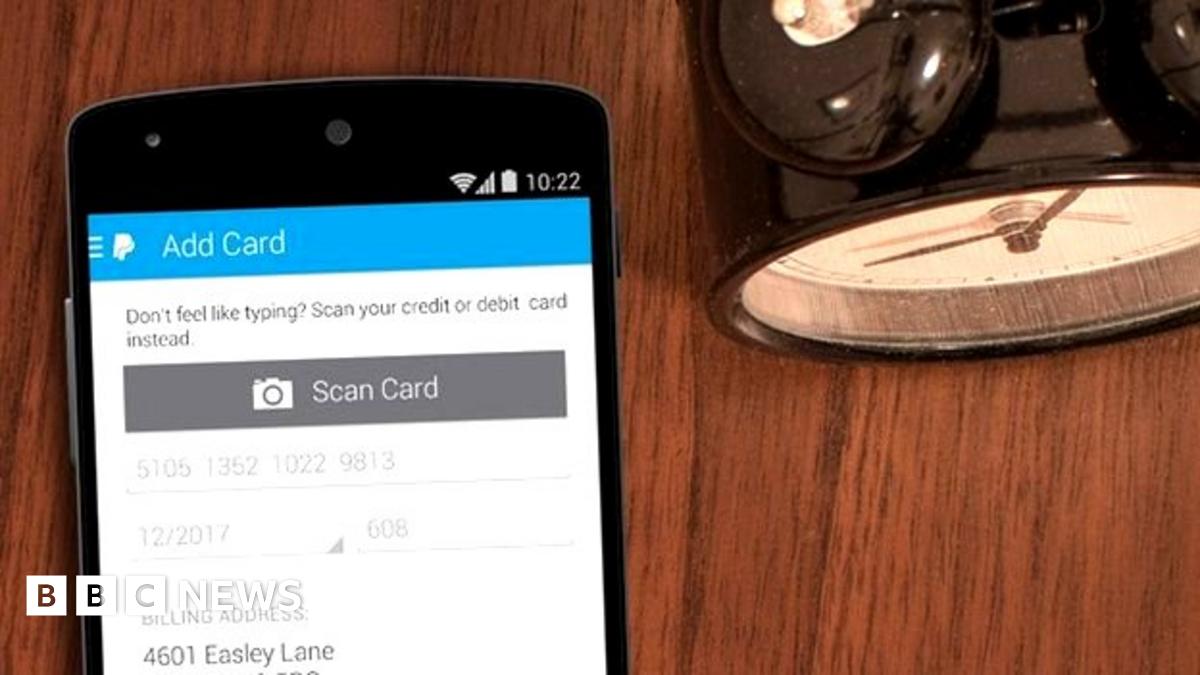
PayPal penalised for 'deceptive' practices
PayPal agrees to pay $25m following accusations that it deceived customers by signing them up to a credit-card-like scheme without their knowledge.
BBC News
380 points · by uladzislau · 11y ago · 217 comments
Half the time the customer support is clearly just improvising, because the system is such a mess that there are no clear processes for fairly common situations. Let me give an example. A customer on our website makes an order for digital goods. We collect photo ID, check their IP, call them. The customer then opens an unauthorized claim. We call in and outline the information we have.
Half the time, the agent will tell us that the information we have collected is irrelevant to an unauthorized dispute. Let me clarify that. The photo ID documents, IP address on file, and phone number of the buyer are considered irrelevant in a claim where the buyer alleges they did not authorize a purchase. Absolutely ridiculous, right?
Then magically, if you call back and connect to the right agent, they will actually look at your evidence and use it to help determine the case. These cases can be upwards of $500, and must be extremely common. And yet, somehow, there is no clear standard for what proof we need to collect in order to win an unauthorized dispute.
The company is a headache to work with. Half our time is spent verifying and doing risk management in our business, simply due to the horror that is PayPal.
Things like that would happen on a pretty regular basis.
That said, what product are you selling that you require a picture of the customer? I see this trend popping up and don't like it.
While I have had problems with PayPal practices-- PayPal employees who don't care, etc., when I have given PayPal a receipt from UPS, or Fedex that proves the package was delivered, I did not have a problem with a dispute. (I don't trust usps when I have a gut feeling a customer will file a dispute.)
So what are you selling? I would never ask a customer for a picture ID. Maybe it's just my generation(grew up in the 70's--80's, but I see this trend of mandatory photo ID popping up lately; and don't think it's the right road to go down. Map the IP--fine. Have a gut feeling the customer won't pay ask for cash(leave it up to the customer on delivery of the cash--wire transfer?). I would not ask for their ID, unless I strongly expected fraud.
If I have to give some company, besides a bank my picture; I don't shop there. Asking for anyone picture is beyond rude these days, along with any Photographer taking my picture without my consent. This whole people picture taking thing is done, because of the Internet, and image databases like Google, and have Bing have developed. I see stores putting up "Happy" employee pictures, and it is just rude, an invasion of privacy, and should be abolished? (I have a friend at Costco who is mortified the company wouldn't take down his picture of him doing his job. It was one of those customer appreciation pictures.) Oh yea, you don't need a Costco card to use the pharmacy.
I looked into buying stoptakingmypicture.whatever and the com is taken. I'm not sure I want to take on another cause; especially because most of you don't seem to care who snaps, asks, or posts your picture? I go on FB, and no one seems to care?
Yes--I understand the need for ID at DMV, Airport, and passports, etc.)
To any store, or company(Home Depot comes to mind) some of us are really tired of the proliferation of cameras, and don't go to your establishment like we used to.
(Plus--most identity thiefs I have run across(just one so far), sent me a perfect scan of her Drivers license without my asking. I didn't place the order, and never heard back. It is so easy to fake an ID these days. I would be suspicious if any customer sent their ID, even if I asked for it.)
I sell digital goods for online games. This means I do not have shipping receipts that will make me eligible for seller protection. The reality is that more and more businesses are providing services and products which are intangible. I'd imagine more than 50% of PayPal transactions these days do not involve shipping labels, yet their entire claim system revolves around them.
What I've noticed in the past 5-8 years is that Paypal has really cut down on real fraud. When I started doing business in 2007, there were kids who couldn't have been older than 15 years old buying stolen PayPal accounts on sketchy forums, and using them to buy digital products like MMO currency. We'd get hit quite regularly with real fraud.
Today, it seems that there are much less of these stolen accounts in circulation. Paypal has clearly cleaned up their act and put a bunch of security measures in place to prevent unauthorized access to people's funds. Nonetheless, unauthorized claims and chargebacks still happen. These days it's just people who spend a bunch of money, and decide later to try and get it all back, everyone else be damned.
There's not much you can do to screen for them placing those disputes. All we can do is collect as much information as possible, from all our buyers, to make sure that no real fraud gets through our systems. I do feel that if we did not have security measures in place, the stolen Paypal accounts might show up again.
But yes, long story short, I really wish there was a better way than collecting people's ID's. Unfortunately, we are in an awkward transition where it is very difficult to prove someone is who they claim to be, without requiring invasive evidence.
Far as I can tell, it only means the scammer was able to copy the photo that was sitting on my computer (likely via the same malware they used to steal my other credentials to begin with). Why was it sitting on my computer to begin with? Because companies like yours demand a copy of my photo ID. Sure I could delete it but we both know most people won't. IMO its a poorly thought out policy to collect photo ID without verifying the person in the photo is in fact the person you're talking to, ala face to face conversation via Skype or similar.
I don't buy things from sites that demand photo ID without verification, I'm not saying you should change your ways, but you're losing customers like me by enforcing that policy.
It used to really frustrate me when we would get stripe disputes. Now I have a collection of materials I go out and get, and then just send it out hoping for the best. I try to look at it more like rolling the dice than a business process. It seems to be consistent (in that sending the same materials for similar disputes yields the same result) but it is not at all transparent or an exact science.
They're a lot more work for the buyer. Filing an unauthorized dispute on Paypal can be done by pressing a few buttons online, and then just hoping for the best. Your bank accounts remain intact, and your Paypal account is restored within 24 hours.
Nowadays we have all our clients using Stripe for their CC processing, but back in the day, our clients could use anyone they want. One poor soul choose to use PayPal against our insisting he not. Three days before he had to give the security deposit to the convention center where his organization was hosting their conference, PayPal froze the account. I can't express the stress and despair this poor guy had in voice while talking to him, explaining there was nothing that I could do on my end and that he would have to contact PayPal and try to explain the situation and get the funds released. Ultimately the conference went on, but I never followed up to find out how, if he got the funds released, worked something out with the convention center or something.
If the company would not have been on vacation at that time they would have sent the goods and we would have gotten both the things and our money back. I ended up transfering the money via the bank as normal and got the stuff about $100 cheaper than over Paypal.
Haven't used Paypal since.
If it was a credit card payment, most likely PayPal had just placed an authorization and was holding off on capturing. That would explain their aggressive timing -- if they let the auth hang for too long that would result in higher interchange fees, and eventually the auth would expire.
They do however own the money on your account as long as you keep the money on your paypal account. They had just pulled the money back from the sellers account and gave it back to me again (much later). At that time the SEK->UK pounds exchange rate was much lower and the bank transfer usually ends up a few percent cheaper that paypal too.
Something else happened here, a 2 day dispute process is not a standard PayPal dispute.
Disclaimer: not affiliated with them. Just genuinely curious.
Maybe second. Nestle still wins worst place with their infant formula scandal.
It's a combination of a bad UX that won't confirm the price of the order until you've confirmed and service that's lacking compared to using a credit card.
This is not unreasonable behavior on their part, and is part of a very consistent pattern of response: they don't let you use their service to sell promises of any kind. This actually leads to PayPal being very user-focussed--essentially always protecting users from even having to think about whether something might end up stealing their money--which is actually good for those for users, and by proxy, good for those of us who use PayPal to sell legitimate products.
(FWIW, you can use PayPal to sell event tickets, but be prepared to appreciate what is happening in the mind of PayPal--which should hopefully cause you to not being unreasonable or abrasive in your communication, though even if they were being bad that isn't an excuse to get angry at them--and reach out to their underwriting department to prove you are financially solvent in a way that doesn't rely on the success of the event, and preferably also provide evidence that your event will also work.)
Alternatively you have always solutions like https://gumroad.com/ or https://simplegoods.co/ of which you can see a real world implementation here: http://foundersgrid.com/sponsor (No affiliation with any of these, just found it the other day.)
It took 4 months, many exchanges with PayPal via their "dispute center" and many phone calls to have my purchase refunded. They even closed my dispute at one point claiming that I hadn't returned the merchandise because their support staff was too incompetent to check the DHL tracking # on DHL's web site to verify that I had indeed returned the merchandise (at my expense).
I will never make a major purchase with PayPal again.
It's really bad. I complained but got no response, and it's not a surprise. I'm glad that this (among other things) didn't fly.
That's rich. PayPal's business has primarily been based on obfuscating the difference between card payments and bank drafts, and steering consumers to a choice that is not in their best interests.
Bank drafts (ACH) are almost all profit for PayPal but much worse for customers, as the consumer protections are weaker, reward programs are nonexistent and there is a risk of overdraft and associated bank penalties. But every time you sign into your PayPal account that you've linked to your bank account, it defaults to paying by bank draft. Every time. There is no preference.
They are just hoping that a percentage of their customer base won't notice or bother to switch to paying by card (which is not as easy as it could be).
Why must there be a fund? Paypal knows exactly who they gave the service to by default, and exactly what interest and other charges they received from them. So why can't they just be ordered to immediately return the full amount to each affected user?
Even here, who knows what data paypal has retained about who used the feature and when?
They will have records of how they get their income for accounting and tax purposes. If they don't, I expect they'd be in far more trouble with the tax authorities.
They still try to trick me into using back account instead of credit card, even though I've set credit card as default... I know CC processing costs them more, but It's so annoying.
I thought I was the only one.
> PayPal is accused of making the service the default option for new sign-ups without making clear that it was doing so.
Different but related: No matter how many times I tell them that I want to pay with my real credit card instead of "direct bank transfer", it never persists. I must have set this as the default in my settings a hundred times. No luck.
I wrote them a complaint and changed the default but never heard back. FUCK YOU Paypal, you MUGGED me and stole money from me.
I am CERTAIN they end up getting more than $25m out of this scheme. This settlement just means they have to share the profit with the UK Gov.
We need a class action suit in the U.S. demanding they return the late fees they criminally charged people like me.
For a long time I refused to add a bank account to my PayPal account simply so my credit card would be my default payment option. Then BillMeLater had an attractive promotion, so I used it 1x and paid off my balance before it accrued any interest.
Since then, BillMeLater and now PayPal Credit are my default payment options. There's no way to change this, and it's a very consumer-unfriendly practice.
I'm glad they're getting fined, and I sincerely hope this results in their allowing user-defined default payment settings.
I never thought I'd be on the receiving end of the Paypal horror-stick, as I am a consumer and not a merchant, but wow.
Actually not the UK govt. The fine was levied by the CFPB:
"The Consumer Financial Protection Bureau (CFPB) is an independent agency of the United States government responsible for consumer protection in the financial sector."
Why the hell would anyone ever use credit when they have funds in their Paypal balance‽ Because they were tricked into it and then assume that they are done… until they get the late fee.
Anyway, a while later he disputes that I didn't do the work for him (I did, with evidence) and Paypal take the money back, freeze both mine and his and that's that. They won't re-open my account because it's been associated with a fraudulent account.
They tell me that this guy had been using someone else's account and that I should go to the police. The police say that the guy doesn't live at the registered address, never has. And that was the end of it. Even though Paypal knew it wasn't my fault they wouldn't unfreeze my account.
That was about 8 years ago and it's only recently I've setup a new account to accept donations for my project. And I did that begrudgingly...
I NEVER use Paypal for accepting payments online, it's always Stripe.
Anyone who accepts payments of any kind is taking that risk. Stripe/Square/whoever operates the same way. Even cash is a risk - if you get passed counterfeits and don't catch them at first, the secret service will confiscate them and you won't be compensated.
I've used PayPal to:
    * Buy/sell things from eBay (~$2k in transactions)
    * Send money/receive money from friends (~$5k in transactions)
    * Use their PayPal card abroad as a pair of primary cards
      (one in my name, on in my girlfriend's name) ($~2k in
      transactions in various foreign countries)
I had trouble before with paypal holding onto funds for months nearly killing my business, when I contacted the Financial Services Ombudsman, their reply was along the lines of "they are a private limited company in this country, they can do what they want"
It's hard to imagine there being more oversight than the over 200 governments regulating them currently, including ~55 separate agencies in the US.
https://www.paypal.com/webapps/mpp/licenses
PayPal is a fully licensed and regulated bank in some regions including all of the EU, and is licensed and regulated by each US state it operates in.
Many of the startup alternatives people recommend seem to be operating on a "try to grow fast enough that we can afford to operate legally when states start suing us" basis, as they aren't similarly licensed.
What more oversight would be needed?
Despite the fact that the PayPal button is tiny compared to the credit card form, a full 2/3 of customers use PayPal to complete the purchase.
That's why people use PayPal, because a large percentage of customers prefer it over credit card payments.
Also, I prefer PayPal disputes because they don't charge a chargeback fee like credit cards.
And the fewer places I have my card the better. You might get the same results with Amazon Payments, unless you have an international audience.
This is exactly why I use PayPal. I would far rather use a more reputable interface system, but I am NOT keen on handing my CC info out to every shop online.
Credit cards have become more common here recently but for a long time it was either Paypal connected to the customers bank account or plain old bank wire transfer. Sure, there are some niche services like Sofortüberweisung, but they never gained the status of Paypal.
I like giropay since then I'm only dealing with my own bank.
1. They are small, and don't get good exchange rates 2. My location makes for a long money route, so I pay between 4% - 8% in cross border fee on every transaction
The above fee doesn't even include the final transaction and conversion fee when I withdraw the USD balance to my home currency.
From where I stand, I would be saving 3% - 5%, or more with PayPal, on every transaction. I am willing to take the risk.
I'm getting REALLY sick of this shit. Wish normal people could just pay off the government to avoid facing consequences for their actions...
Paying money is a consequence for the actions, and "normal people" enter into civil settlements or criminal plea bargains where the only consequence is a cash penalty/damage payment/fine, sometimes, in the criminal case, taking a lesser charge (that admits such a fine) than the original charge (which may not allow a fine instead of imprisonment) in the course of such a settlement.
In the case of civil offenses, settlements without admission of guilt are fairly normal; this is not possible in the case of criminal charges, where the imposition of a penalty (even as a plea bargain) requires a plea of guilty. However, when both civil and criminal offenses are potentially chargeable, settling the civil charges and the government dropping the criminal charges is, again, not unheard of.
So, really, there's nothing out of the realm of what is possible for normal people here.
Not if its a civil settlement.
> It would be more like if you could write the gov't a check to 'pretend this never happened', with nothing on your record, and probably a written promise from the gov't that they'll never say anything bad about you.
The government says negative things about firms that enter into a settlement without admitting to guilt all the time, including about the specific conduct that led to the investigation that was settled.
In fact, in this specific case, the CFPB said all kinds of negative things about PayPal and the actions that led to this settlement in the press release announcing the settlement. [0]
So, its hardly at all analogous to "a written promise from the gov't that they'll never say anything bad about you".
The consent decree also includes additional restrictions (beyond those in the law) on and oversight of PayPal's behavior going forward, so its also very much not analogous to "pretend this never happened".
[0] http://www.consumerfinance.gov/newsroom/cfpb-takes-action-ag...
Most of the complaints that I've read about, concerning PP, have to do with the eBay side of the equation. And it probably helps in my case that I sell a tangible good at a pretty modest price. I don't have an eBay store, but sell through my personal web page and hand-crafted web order form. Simply based on the my little corner of the market, it wouldn't break my heart if eBay and PP split up.
Two benefits of PP for me, both are kinda weird:
1. I can just download the entire year's list of transactions, dump it into a spreadsheet, add some more columns, and it becomes my ledger. I spend no more than a few hours a year on accounting.
2. PP has a deal with the post office. You can generate a first class shipping label from your transaction, whereas the post office website only offers priority mail and above, so PP reduces my shipping costs. And I've also had fabulous service from the post office, so maybe I'm just a freak. ;-)
With all this said, I can't discount the horror stories. It's useful information, since I certainly wouldn't want a decline in PP's reputation to affect the trust that people put into my own business.
I've never worked for a company that was shady, so this really does fascinate me that companies do this and think they can get away with it (assuming, of course, that this simply was not incompetence).
The problem with Paypal is they are too big to care. They've essentially become a bank, nobody knows what is going on, you get passed on from department to department when you need answers and they are always quick to freeze your Paypal balance when they want you to do something or want to insinuate you have done something wrong.
I would have slapped them with a $100m penalty, $25m is just too little to make any kind of impact or different to Paypal.
After they made a payment I would ask for a photo-copy of their ID, or to wait 3-days to make sure the payment went through properly (Paypal's normalized way of handling this was to mark the Payment as confirmed leaving the seller thinking everything was okay only to reverse it say 3 days later, screwing the seller). If I recall one of the buyers even offered to try a different account when I told them the payment got flagged.
In about a week's time I had received $5000 or so worth of transfers (all of them from stolen accounts!) Subsequently Paypal froze my account. I never was able to sell that World of Warcraft account either.
Paypal did freeze my account some time around 2003, it took major faxing to get it to unfreeze.
Paypal is more convenient/safer for casual buyers than most other payment options starting from CC ending with Bitcoin(I use/own BTC). I don't mind paying with Paypal for some small item from China but would be hesitant to use a CC.
At least that is the perception that Paypal has worked hard to cultivate.
Also, as much as we would love to say companies are responsible for the security of our accounts, losing credentials is also a user issue.
Though really, paying for crap is different than selling it. More of an eBay domain problem than PayPal. Two totally different businesses.
Wonder what he thinks?
I also bought an iPhone on Ebay using PayPal weeks before. It turned out to be stolen (i.e. it was killed) and returned it back to the seller immediately. The seller issued me a refund via PayPal using an e-check that not surprisingly bounced. Took me hours on the phone over a few weeks, being transferred back and forth between PayPal and eBay (both parties told me to take it up with the other), in order for PayPal to finally open a ticket to dispute the transaction and force a refund to me.
Never again.
This is no difference than being caught with $100MM bag of heist outside the bank and giving cops $1.5MM as a form of penalty.
What is also very interesting, is that, yes PayPal is probably one of the most hated tech company in the world, right after Comcast, which I don't believe offers anything outside US. Then why we glorify those like Musk that made its initial fortune off of PayPal sale?? I never heard pointing fingers at PayPal founder, but ultimately should't those in charge be accountable??
The "PayPal mafia" is such an ironically apt title for the group that founded it. So proud of their anti-fraud tech which is actually horrid - just sweep up anyone's account for whatever reason and call it successful fraud prevention.
Having looked at my transaction history, I don't seem to have been charged anything for the service. Where might I check to be sure?
If you are using the service intentionally, then you aren't affected.
On another note, I have been using PayPal for years and haven't had any real issues with it. I mean it takes a while for eBay to get the money to me after a sale, but other than that its not bad. Have I just been lucky? Or is anyone else not experiencing problems that others are?
They run consistently obviously illegal spam/marketing practices. Why do they get a free pass? Is the "mafia" part of PayPal mafia too strong? Too many cross-bred investor attachments all the way down making some services "untouchable" no matter what they do?
We need something like the EFF but for out of control tech companies needing to be denounced for the public good.
What are the complaints with LinkedIn? As far as I know, it's more of spammy contacting behavior. Which I get that's annoying, but not even in the same ballpark as PayPal.
Personally this is not my perspective, and it doesn't bother me because when I receive these messages it's pretty obviously automated mail from linkedin, and it's pretty obvious that LinkedIn got it from the person's email contacts. It doesn't cause me to think the person actually necessarily took any action or sent that to me themselves. I also haven't been bothered by the volume of it. To me, it's the kind of thing that's a small price to pay for hacking a network of connections together, which is probably a benefit to everyone in it. we need more social networks, not fewer.
and that is a federal crime. Why do they go unpunished?
There sure are a lot of products and services I'd like to create if I knew laws were just suggestions. Every massive-growth startup seems to have some underlying "we did these five illegal things to get started" backstory.
Almost every garbage social media company either directly tries that (password-proxy to other services for scraping) or they use a scam to trick you into "consent" by offering so many forced options to click through you eventually accidentally hit a "yes don't not contact my un-friends with not my unconsent" button. (Or the super jerk version: "If you don't opt-out of this feature within two days of creating your account, we will take actions X, Y, Z on your behalf" in fine print.)