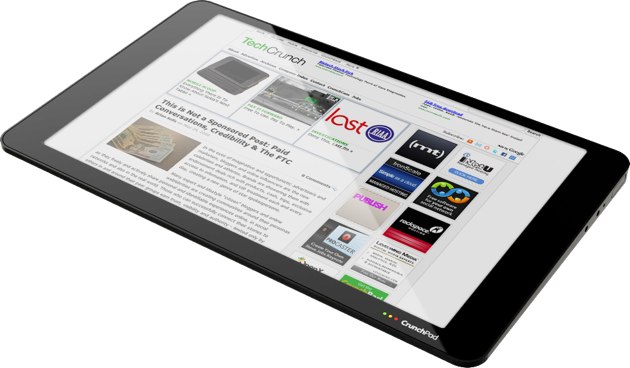
435 points · by AndrewWarner · 16y ago · 138 comments
Why? because when you say up front (with no experience in hardware/manufacturing design) that you're going to sell it for $x the scramble then becomes "how can each party squeeze margin out?" When theres very little margin, parties are more willing to bluff knowing that they can walk away and there was almost no $ on the table.
Hardware has this problem, and I've seen it so many times, that the founder prices the hardware at only a bit (say ~30%) above the parts cost, not realizing the tons of NRE expenses, ballooning BOM, contractor costs, and the hundreds of other ways the price can easily double. Then they're stuck: the investors/contract manufacturer/designer/customer hates them. That leads to abandonment.
Please please please, if you decide to do any kind of hardware, add an extra 40% margin on top of whatever you pick. If you don't need it, you can always cut the price later! :)
You pretty much have to have deep expertise on the piece of hardware you are building for this work well, and on a "complex" device like this, I don't think it can ever be done properly.
If you're successful at selling that, you'll see healthy returns. I heard a recent blurb that Apple took 90% of the profits on laptops costing more than $1,000. They certainly didn't sell 90% of the laptops in that bracket.
We think they were attempting to renegotiate the equity split on the company behind CrunchPad, which was to acquire Fusion Garage. Renegotiations are always fine. But holding a gun to our head two days before launching and insulting us isn't the way to do that.
Sounds like Chandra started with a very heavy-handed offer at renegotiation, part of the implied threat being "you can't back out now that you've made such a public commitment to this project". The only way to respond to a heavy hand with with your own heavy hand - and this post is it, it's all just part of the renegotiation. Another point I don't buy:
I never envisioned the CrunchPad as a huge business. I just wanted a tablet computer that I could use to consume the Internet while sitting on a couch. I've always pushed to open source all or parts of the project. So this isn't really about money. It was about the thrill of building something with a team that had the same vision. Now that's going to be impossible.
It's a great story we all know - the "unhyped cool side project" hype, Linux being the best example. From the looks of the demo shot [1], whether anyone "envisioned" it, or not, it will be a huge business, especially with no competitors. Arrington knows it and Chandra knows it. I just hope their lawyers can come to an agreement before christmas, so I can get one :)
1. http://cache0.techcrunch.com/wp-content/uploads/2009/06/cdba...
Even assuming that all the manufacturing, the shipping, the wholesaling, et cetera are done and the product is sitting in the back of the stores waiting to go out tomorrow -- which I seriously doubt -- there's the little question of marketing. There's just no time for it before Christmas, in a crowded market filled with companies grasping for marketshare. The ad space is sold. The magazines have gone to press. So nobody on Earth is going to know about the CrunchPad before Christmas, let alone want one, except for Techcrunch readers and their Twitter followers. Any plan to sell a lot of CrunchPads within a few weeks of launch necessarily relies on the pre-release marketing that has been performed by Techcrunch. But that has just been blown sky high. Are many Techcrunch readers going to be fool enough to buy the product, even if a BUY link appears tomorrow? Even putting aside all notion of reader loyalty, I don't like spending money on products that turn out to have been built by unreliable companies with legal threats hanging over them.
You're gonna need a better conspiracy theory. How about "the Chinese secret service loved the CrunchPad so much that they placed an order for 1 billion units and demanded an exclusive..."
I don't share any of the hate the author probably does; however, I do feel extremely sad about the entire ordeal.
(ps: I, with a friend of mine, had already started programming to make some applications we thought would be perfect for it.)
On the upside, thanks to my Boss foolishly putting enough faith in this project to bet on it's eventual existence (and write several blog posts he's probably embarrassed by now) I'm now $100 bucks richer.
I truly don't understand the appeal, but I'm curious... Are there any hackers out there who think that TC provides any form of intriguing technical commentary? Or that he's a legitimate "visionary/evangelist" in things dot-com?
If the answer to both is "no", what's left? Why do we have so many TC stories?
Are there any hackers out there who think that
TC provides any form of intriguing technical commentary?
You are making two assumptions here:
1. Hackers are only into technical commentary
2. TC promises technical commentary and under deliversI don't think either of them are true. For a lot of us, particularly those doing startups, an article on TC about our company can be worth many times more than frontpage NYT story. I say that from experience.
Even if you dislike TC's content, dismissing its potential value to your business would be stupid.
I'd be very surprised if $300 would've been impossible today, even with a larger screen, though of course that depends on the rest of the specs. Especially given the specs of my new $500 laptop. Sure, it lacks a touch layer, but its also spec'ed far higher than you'd need for a pad like this.
A 12" device for $300 might be hard, but under $500 is doable for sure (even with a capacitive touchscreen).
(Edit: another version, without Android support for $211: http://www.dealextreme.com/details.dx/sku.27441)
he's demonstrating his value as "visionary/evangelist/whatever"
Arrington mentioned that the deal being contemplated involved a new entity buying Fusion Garage. I'm sure that would have required the approval of FG's shareholders, who don't currently seem to be strongly behind Chandra.
If that's all actually the case, then perhaps the mistake was failing to recognize early enough that Chandra wasn't the final decision maker.
My guess is that Arrington was overwhelmed with how out of control the project got. He jumped at the best opportunity to get out of the whole thing, without looking like he just flat out gave up.
Like some people do in relationships they want out of. "Oh, fine, don't want to see that movie? Well let's just break up then!"
I want to learn from the issues they faced.
From my experience, they didnt respect or understand all the work that I had done on my end. And I blame the fact that I was so far away that I didnt realise that this was the case. I also owned a big part of the equity in that relationship.
And similarly it happened just when we were about to sign a big contract.
I however think that Arrington can fix this. Printing this on his website was probably the stupidest thing he could have done w.r.t trying to get the relationship back on track.
"I have to applaud Michael Arrington for going out of his comfort zone and taking on a sizeable project that is not guaranteed to be successful but if fairly successful, will make a small impact on the tech industry, rather than just reporting on it (like he does now)."
I wrote that comment 5 months ago, and I think Michael Arrington has a better understanding of the tech industry now. I don't think he will give up on launching a product.
Does anyone see a problem here? You think TechCrunch would be able to honestly report on these "partners" while being in such close relationship with them?
and http://wholesale.alibaba.com/product-gs/268087366-10-2-inch-...
It's a 10.2" screen, but the rest of the specs look pretty similar. $288 each for 50 orders.
Just take the prototype to Foxconn or one of the other firms that would be happy to do what Fusion Garage won't.
It sounds like both TechCrunch and Fusion Garage have rights to different parts of the IP. So TechCrunch can't go to Foxconn (and neither can Fusion Garage) w/o violating the IP rights that the other party has.
If the product has technical or cost-of-production flaws that undermine its commercial viability, the feud provides time and cover to work them out -- or abandon the project entirely, blaming the failure on the other side as a face-saving measure.
It's win-win!
I'd actually view this as a slight positive signal of the CrunchPad's viability, especially if lawsuits are filed. Battles are more serious over things of real value.
http://www.popularmechanics.com/technology/upgrade/4332415.h...
Update: On Nov. 30, 2009, CrunchPad’s Michael Arrington announced that the product introduction was being canceled, owing to a business dispute. By giving an award to a prototype, PM took a risk: that a promising product created by a smart group of people might fail to be realized. In this case, it seems, we were a bit too quick to act on our enthusiasm for an innovative idea. While this product is not coming to market, Popular Mechanics anticipates that tablet-style devices for consuming media will represent an important trend in the coming year.
Probably missed a few, so if you know of any, let me know.
but it currently redirects to a page on my other site( http://styleguidance.com/the-life-and-death-of-crunchpad ), but once I have some free time I'll make it a proper page.
But for this, basically the name came up in the comments, in the first post(on 07/21/2008). When it was just an idea. They didn't start calling it a CrunchPad until the 2nd prototype, 6 months later.
" Is the CrunchPad really dead? Honestly? I'd put my money on no. Arrington is way too "powerful", and did too much, to just roll over for a few bad apples. My guess, is that, at this very moment, his mailbox is exploding with tons of emails from Fusion Garage competitors, offering to finish the project for him.
And if they aren't...then their CEOs need to be kicked out.
Where else, will you find a partner, who has the connections to have a major retail chain(most likely Best Buy) who not only are willing to help you with shipping costs by letting you use their planes, but will also sell your product with zero margin and will pay upfront?
Where else, will you find a partner, who has the connections to get your people advice from the guys at Intel? And a huge discount on pricing?
Where else, will you find a partner, that already has investors lined up for the project?
Where else, will you find a partner, that already has brand recognition, with millions of people? "
And it's about to be eclipsed by a silly (or not silly...) rumour of a tablet that has hardware and software with a serious reputation behind it and a marketing program that involves billions of people.
There was excitement around $300. This can't be made in low volumes and have margin for everyone involved for $300. And who is going to pick up the phone to help me network it to my router? Who is going to pick up the tab for replacing my exploding battery?
Someone got nervous when they all looked around in their three way agreement when it came time for one of them to write the check to make the first couple thousand.
It looks like the Crunchpad just runs fusiongarage software. Maybe they just didn't like the terms to run their software on the device. This seems like a strong possibility.
I'm the kind of guy that loves to be connected (reading HN/Greader/Twitter), mostly when I'm out from home (that can be anywhere). I can wait to contribute (hey, it's okay to not have a physical keyboard when I mostly read webpages), but I just can't stay more than two days without checking the mail or opening Twitter (I'm addicted, I know...)
The iPhone is good enough for that, but I need something bigger with multitasking (or at least some decent browser-tab management). That can be used outside. And the CrunchPad looks much like what I want (indeed Chrome OS does!).
I'm sure that Arrington knows the potential of this project. So this is probably not its dead note, but a resurrection note. about:phoenix :-)
...makes me think there were handshakes where there ought to have been contracts (or the contracts should have been more tightly specified). It wouldn't be the first time people have cooperated in a spirit of mutual benefit without fully appreciating the efforts and value demanded of each other other, and both sides end up honestly feeling they've been ripped off - the engineering guys had to solve tougher problems on narrower margins than is economically feasible, the creative and marketing people having made expensive brand and financial commitments based on optimistic engineering estimates.
All the same, it would have been wiser to announce that the project had run into a legal hurdle and leave it at that, saving the complaints for a court filing rather than taking them public. Too bad. I would have happily bought this product at $400 :-/
Im a little surprised it ended in an internal dispute - my thinking was the funding would run out and the product wouldn't be good enough to sell well. (and then either Apple launch a tablet or the market just fizzles out). With that said this could still be the cause - it's at this point people would probably start to look really hard at the sale point economics.
Also how would he ever let Fusion Garage "jointly own" part of the IP? That sounds like a terrible idea. The only way that happens is if his "team" couldn't actually make the thing work (which is what I'm reading between the lines). So he's over a barrel because he promised WAY too much and couldn't actually make it happen.
(Also, I think open source hardware contains a fundamental contradiction: "anyone can build one themselves" goes against the economy of scale you need to get reasonable production costs.)
If they both have ownership rights, as Mike says in the article, then they can both decide how to use them. Fusion Garage has decided to use them to produce the Tablet on their own and TechCrunch has decided to opensource it and allow any manufacturer to produce them.
For Mike, it was an ego thing. He promised the crunchpad for less than the price of just the screen when this all began. Perhaps FG didn't want to cash that particular ego cheque.
If Apple did come out with a tablet you can be sure it'd be $1500+. So it'd be a totally different market anyway.
Yes.
If Apple did come out with a tablet you can be sure it'd be $1500+.
Speaking of unfounded rumours... This may be an educated guess, it may be an excellent hunch, it may be a brilliant prognostication. But unless you're quoting a source or have inside information, it's still an unfounded rumour.
Look at the Macbook Air - $1499. A tablet would be pretty much an Air but without the keyboard. I don't think it's likely therefore that the price would be too much different.
I stopped there. Why give this man more attention?
Normally I avoid TechCrunch and their drama. But this one is shaping up to be pretty good. If it happened the way Arrington said it did, then the company he chose to partner with is monumentally out-of-touch. But I've got a feeling that there is going to be more to it than that.
It's always those very late night posts that are the most interesting.
I've noticed, and I think other hackers here will agree, that tech crunch is like the spoiled brat of tech blogs these days. Nothing more than tech-pop TMZ. Move on.
"Crunchpad was canceled simply because google arrived on his market, and arrington decided to drop the ball". It seems a reasonable possible explaination, at least
We even hoped to have devices hacked together with Google Chrome OS and Windows 7 to show people that you could hack this thing to run just about anything you want.
I don't think Arrington was afraid of ChromeOs.