If a poor farmer shoots a raiding orangutan, who is to blame? | Aeon Essays
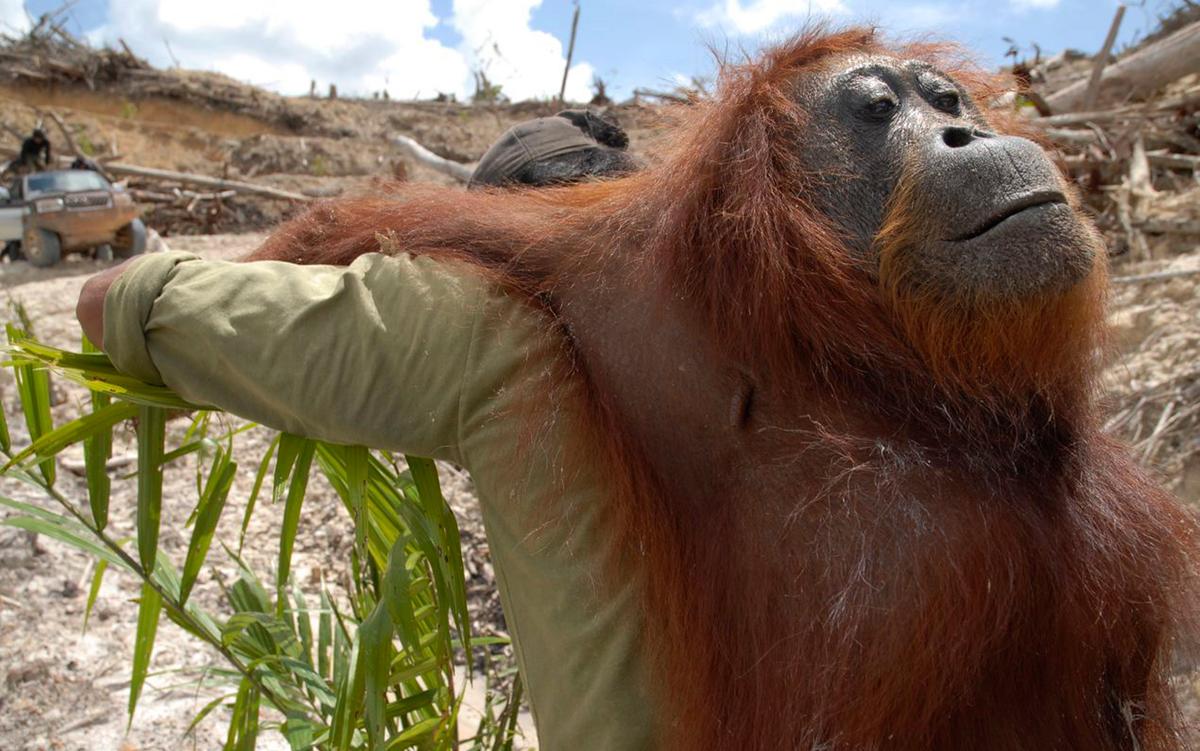
An orangutan steals crops from a poor farmer in Indonesia and is shot in retribution. Who is to blame?
aeon.co
33 points · by benbreen · 11y ago · 32 comments
[1] 1.B4 Opening https://www.youtube.com/watch?v=o9jaaKUWwBI
> why can't we justify caging people who have the mental capacity of a 6 year old.
They do that all the time in psychiatric hospitals. They are just a bit nicer about it these days.
No, it makes a lot of sense. Treating all species the same would make very little sense. Do bacteria have the same rights as lice which have the same rights as mice which have the same rights as dogs which have the same rights as whales?
In reality, it is a scale. How much we care about an animal varies depending on how big it is, how intelligent it is, what it is capable of and how it interacts with our lives. To pretend every species is the same is just wilfully naive.
In regards orangutans we can certainly do a better job of ensuring both can exist.
According to what scale?
The rise in the use of palm oil has more to do with people thinking that because it's natural, it's "healthy" for you (which is really only true if your baseline for comparison is eating tubs of margarine) thanks to folks like Dr. Oz.
So, since you can't see my eyeroll at the downvotes, here are citations:
NPR piece noting that transfat usage has dropped by 86% before the ban: http://www.npr.org/sections/thesalt/2015/06/16/414906829/fda...
And somewhat surprisingly the wikipedia article on the nutritional & health effects of palm oil is pretty well cited: https://en.wikipedia.org/?title=Palm_oil#Nutrition_and_healt...
tl:dr; Transfats are bad for you. That's why they don't sell them. Palm oil isn't vastly healthier than other oils. Eat less fat.
Also, the use of an oil doesn't contribute linearly to the trans fat content of whatever is fried in it. Users of hydrogenated oils for frying, for example, are purchasing gallons and gallons of the stuff on a regular basis, with most of that being discarded as waste. Yes, most of the big name fast food chains in the US have switched to other oils, but it's not clear whether all have or to what extent. There may still be a sizable bump in purchases of replacement oils, including palm.
Finally, even if the 86% number is ironclad and extends across the entire prepared food and food service industry, it represents a relative drop against an unknown whole. It says nothing about the absolute volume of hydrogenated oils still in use. IMO this validates the parent's concern.
This plus the general flippant snark of your comment and the weird Dr. Oz reference is why I downvoted you.
The only way to give animals right is to give them a voice literally.
https://en.wikipedia.org/wiki/Great_ape_language#Apes_that_d...
None of the apes learned "grammar", but they did communicate using language. Did that make a difference to the rights of apes? Of course not.
Whatever you get an ape to achieve, will be immediately defined as not quite sufficient to prove that they are human-like enough to have any rights. The only way to solve this argument is not to give them language but to realise that it is our responsibility to better treat other denizens of this world we share - irrespective of whether they meet some arbitrary criteria of human-ness.
There's a very simple self-interested reason for this too: if we ever encounter aliens, we currently would not have any viable argument to convince them that they should treat us any better than we treat apes.
For instance, Jules Verne wrote about lots of 'impossible' journeys, which made for good science fiction. Trying any of those things before the technology was there would have not led anywhere, it would have wasted time and or killed people. And even when the technology was there it took some pretty hard thinking to make the journeys a successful reality.
What you are proposing is so far beyond the current state of the art that it is not science (yet, maybe never will be) but fiction. Trying it will simply not work and won't advance science at all.