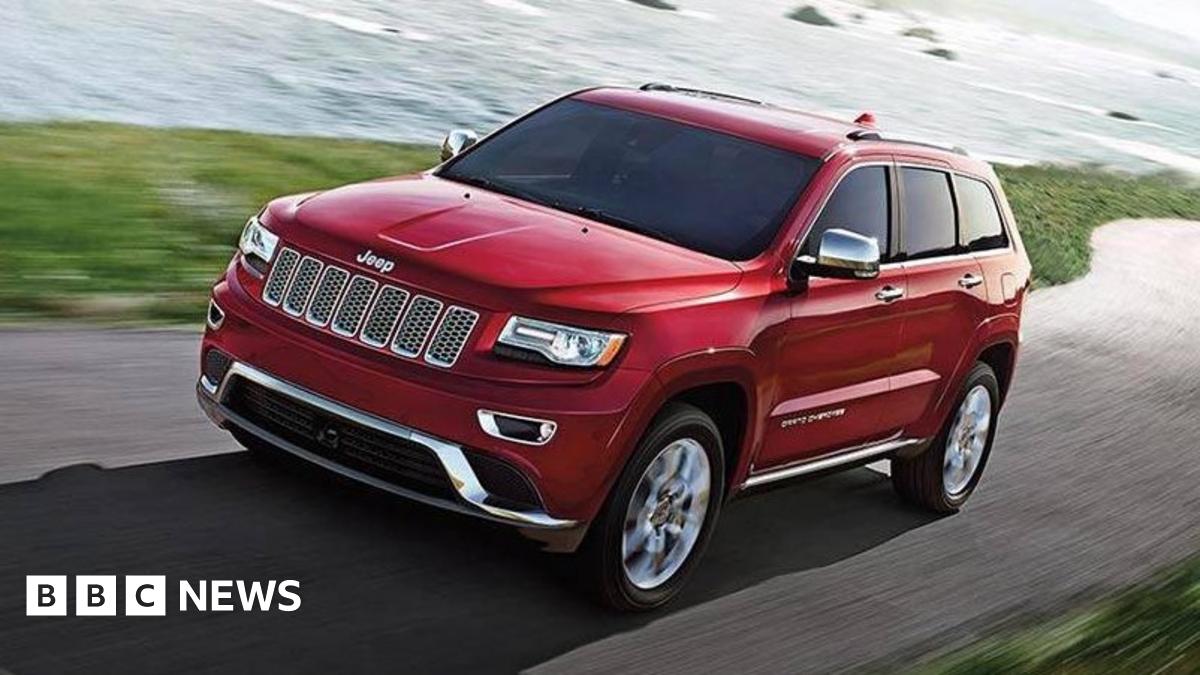
Fiat Chrysler recalls 1.4 million cars after Jeep hack
Car giant Fiat Chrysler recalls 1.4 million vehicles in the US after security researchers showed that one of its cars could be hacked.
BBC News
251 points · by vvanders · 11y ago · 289 comments
The real fix will require much more intervention than just a firmware flash at the garage.
We'll see at Def Con how much Chrysler really screwed up.
It's the only one available to them. They can't just refit all existing cars with a new design on a short timeline. Hardware has permanence.
With that in mind, how would you fix the issue for existing vehicles?
The problem is access to the CAN bus is necessary to change various vehicle settings from the infotainment system. I know for a fact that changing the door lock settings in my car requires the infotainment system to access the CAN bus to apply settings to that system.
This is not an unsolvable problem; this is basic software engineering. Processes should be isolated from each other. I imagine everything in the infotainment system effectively runs as "root" because they consider the whole thing a singular black box.
So often though a designer will say "We really want to help people who call in for roadside assistance, we just want to read the CAN bus, we don't need to write it." And some complex function will be created that only "reads" but then a overflow attack or some other exploit lets arbitrary code get run and since its possible to write code with a write function your security is toast.
So what actually will happen (I hope) is that a bunch of things will no longer be possible from the infotainment system because that system doesn't have access to the CAN bus at all. And any UI that does have access to the CAN bus won't have any wireless access to it at all. Which will make some car features, less featurefull.
It could be it's own CAN bus completely separated but you probably also have the CC on the wheel too. So do you put the CC on the same one? But wait, there's the SRS there too, oh man that plays ball with the self diagnostics.
Hmm looks like we need a high priority CAN in the wheel, might as well use it for everything.
That's how it goes...
No, it's the only easy option they have.
Take all the vulnerable vehicles off the road. That's another option they have.
> How would you fix the issue for existing vehicles?
Have dealers yank the cellular connection in every vehicle and refund the customers something for removing a feature the product sold with.
Nothing else will fix it in a short timeline.
We recommend layered security to protect people's cat pictures – doesn't it seem like a good idea for something which could literally result in casualties?
That automobiles are recalled for reasons other than hardware replacement is a recent phenomenon.
However a software patch would keep Def Con busy while replacement hardware is developed.
Sure, but how often are they doing major surgery vs. replacing a part / doing a patch? It sounds to me like properly fixing this issue would be a fairly sizable undertaking.
We need to communicate that this isn't a decent half-measure, this is specifically a worthless measure intended to keep vulnerable cars on the street where they can kill people because a real fix is seen as being too expensive.
You are absolutely correct. Unfortunately, so is "jacquesm":
> > They have to be seen to do something to counter all the bad press.
To me, Fiat Chrysler is doing classic PR damage control that the automotive industry knows far too well. It wouldn't surprise me to find out that Fiat Chrysler has threat analysis reports regarding this and other vulnerabilities within their organization.
Sadly, this is not uncommon in the automotive industry[1]:
  GM has been heavily critiqued after the
  company admitted that engineers were aware of
  the issues that caused this recall as early as
  2004. Yet it took nearly 10 years later for GM
  to finally issue a recall ...
That thing here is a big fucking warning to all other car manufactures for the future.
http://www.wired.com/2015/07/jeep-hack-chrysler-recalls-1-4m...
> Chrysler says it’s also taken steps to block the digital attack Miller and Valasek demonstrated with “network-level security measures”—presumably security tools that detect and block the attack on Sprint’s network, the cellular carrier that connect Chrysler’s vehicles to the Internet.
Oh great, they'll install an antivirus and think they've fixed the problem.
So, if I'm in someone's Fiat Chryslermobile, and they're pumping gas, I can flash the vehicle's firmware from the passenger seat?
This seems a lot easier than rooting it over the air.
This is a super strange thing to say after your first quote. They've blocked it on the cell network AND are sending out updates to car owners.
So how you ignore your own first quote to criticise them for "only" blocking it at the network level is bizarre, it is like you didn't read your own post...
Regardless it's the only and correct decision they can make at this time. It's honestly not terrible at all. What would be terrible, and valid of the comment "a terrible decision" would be doing nothing at all.
We all acknowledged the issue is architecture, and that can't be fixed by flashing firmware.
Ignoring direct violence? DoS PSAPs so small things like reporting burglaries or helping heart-attack patients fails. Or shit, have you seen the cabling at many datacentres? Take a few of those out and the US Internet would be off for what, weeks? (And that one you can even do remotely.)
My point is that you cannot harden the entire US infrastructure. Saying this car issue "has terrorism implications" is either a tautology or fearmongering.
I don't think that's the case, but I still commend them for doing a recall this quick.
Shooting the messenger seems to still be quite a strong reflex for corporations faced with bad news. The way to look at it should be that these guys did Fiat-Chrysler a service. After all, it's not only security researchers that have the ability to write code and that have prolonged access to a vehicle to test.
They seem to be mistaken about the time to write the code, after all, you can write the code and test it on a different vehicle than the one you intend to crash.
Law enforcement typically won't analyze the firmware of all the computers in a car after a single vehicle accident (and it would probably be quite possible to erase the evidence once the car has been given a command sufficient to kill the occupants).
You know that engineers on the ground were well aware of this vulnerability. You know they tried to warn. But what happened to the warnings? They didn't make it up to the executive levels necessary, because several layers in between feared for their jobs and careers if they said something like "This new feature you're demanding could be used to brick every single Fiat-Chrysler vehicle we make, or even murder people". So the executives were asking for features but flying blind on danger.
And ultimately, this is a failure of the executive structure and the corporate structure (and it's an inherent antipattern in large organizations). Since the nature of hierarchy is for subordinates to hide unpleasant truths from superiors, they should have been actively asking about the hazards. They could have hired outside security reviewers. But they didn't.
The recall aligns with an ongoing software distribution that insulates connected vehicles from remote manipulation, which, if unauthorized, constitutes criminal action.
So through the process of extensive journalism, unauthorized remote manipulation got turned into hacking vehicles.
> The recall aligns with an ongoing software distribution that insulates connected vehicles from remote manipulation[...]
Assuming that's not a lie, were they working on that because the 'researcher' (quotes due irresponsible 'testing') had been sending FCA what they found instead of their own internal decision to improve things and they knew this (specifically) was coming at some point?
I'm not quibbling about that. I replied to this statement:
> The company added that hacking its vehicles was a "criminal action".
I don't think that's the case, but I still commend them for doing a recall this quick.
Which characterizes the statement in the article to be about hacking the vehicle at all. So my reply points out that the manufacturer was probably not putting forth that characterization when they talked about criminal action, they were likely talking about unauthorized remote manipulation (which should be and quite likely is criminal).
So my argument is that the manufacturer statement about criminality is narrower in scope than the BBC translation of it.
The software update release is obviously in response to the research:
https://twitter.com/0xcharlie/status/623492229714313216
Upgrading it to a recall is probably in response to bad press.
> I don't think that's the case, but I still commend them for doing a recall this quick.
It is illegal under existing laws. Basically, it falls under the same set of laws as cutting someone break line. You are, at a minimum, in the "Reckless endangerment" category.
It doesn't take new laws, the old ones have seen enough people doing stupid things to other people's cars.
"if you manage to provably put the public in danger"
Watching the video, they did it on a public highway with other cars. They killed his engine when he was on the highway. He is damn lucky he wasn't rear-ended and killed someone. Yes, that is illegal and definitely endangerment.
This is crap stunt journalism.
Doesn't the DMCA make that illegal? Isn't that the big fuss about John Deere tractor fixing and the like?
Should they be criminally charged, no, not for the hack itself, perhaps for the highway theatrics. But they deserve to sweat and hire some lawyers, and perhaps face a civil case for the irresponsible way they disclosed it.
The surest way to get legislative pressure put forward to regulate the info sec industry and put red tape that hampers or outright outlaws security research and activity is to have guys like this being so irresponsible with research that affects people's lives as to give them cause to.
[0] https://twitter.com/0xcharlie/status/623492229714313216
[1] https://twitter.com/daviottenheimer/status/62351634451271270...
They deserve to be charged/locked up for that portion of it.
When are you going to start discussing the criminal implications of the company in ignoring that disclosure?
> a way that isn't quite so expensive or rushed.
Since when is the company's expense our problem?
The fix is trivial. Yank the cellular connection. The company is refusing to do the simple, easy, and quick fix. They're the ones making it a painful process. They're the ones choosing to leave everyone vulnerable while they hide the problem with a bandaid.
> legislative pressure put forward to regulate the info sec industry
Your country's laws are your problem. That would be disastrously dumb, but it's your responsibility to forbid your politicians from shooting the country in the foot.
If you blame this on hackers you'll only ensure that a foreign hacker will start a campaign of trying to get you to pass broken laws.
If your system ALLOWS other assholes to take over my car, it's DEFINITELY a safety issue.
Now, for a civil action, it is always fuzzy. Whether or not it is negligent is going to be based on many things, a big one being whether it was "reasonable". Shipping cars before this event may have been reasonable, but continuing to do so many be negligent. But at least in the US, that needs to be decided in court, not on the internet.
I'm pointing all this out because you said "Certainly". That word really has no place in the US legal system.
Ain't America's laws wonderful?
Is it? I thought the encryption has to be "effective", which would not be the case for ROT13. I would even argue that ROT13 is merely an encoding.
No, the exemption is this:
Encryption Research. The DMCA exempts encryption research from its circumvention and trafficking bans. Circumvention of access controls by one who has lawfully obtained the encrypted copy is permitted if the circumvention is done in the course of "an act of good faith encryption research." The researcher must first have made a good faith effort to obtain authorization before the circumvention, and the circumvention itself must not constitute infringement. The researcher may also develop and employ tools to circumvent the access controls for the sole purpose of carrying out the research, and may share those tools with collaborative researchers. The DMCA lists several factors to be used in determining whether the exemption for good faith research should apply in a particular situation, including whether and how the research results were disseminated, whether the researcher is engaged in a course of study or is trained or experienced, and whether the researcher provides the copyright owner with the results of the research.
But when it comes to politicians trying to ban encryption and automakers trying to ban me from editing bits on a memory chip that I got as a part of purchasing one of their cars, I really am unapologetic when I say I really don't understand them. I completely and utterly lack an ability to get into their heads. It would be fascinating to lose my knowledge of everything I know about computers for a day and give these issues thought. To have computers be mystical voodoo magic would be an amazingly different world.
If I had to give it a guess, that's probably what I'd say. Politicians and automakers and middle aged Edward Snowden haters all lack an idea of what is possible and what is unpractical when it comes to computers. They lack an appreciation for just how much commonality there is between the computer running a McDonald's register and the one making sure their car doesn't kill them.
Politicians think we can just "ban" encryption, as if this isn't some mathematical concept with freely-available professionally made implementations. They think Apple has gone to great lengths just to implement their end-to-end iMessage encryption... when in reality they almost certainly took the path of least resistance and merely stand on the shoulders of giants that collectively implemented encryption for them. PR reps for automakers think of code in such an abstract way that they think modifying it must be terribly difficult and thus inherently malicious, when in reality their programmers stood on the shoulders of giants and used the same common interfaces that every programmer uses. Hacking their car was probably done by a curious man decompiling the firmware which they pulled off via JTAG or a test clip. They think Edward Snowden must have been sneaking around in underground tunnels with a ski mask and plugging his laptop into servers, when in reality this was just a drive that was mounted on a machine he used.
Tl;dr: Programmers all pretty much follow the path of least resistance. The general populations lack of background makes them think that things are much more difficult and thus deliberate than they really are.
Plenty of the Edward Snowden haters are <= 30 and plenty of the people that applaud him are > 40 so let's not add age into that discussion.
Whether you are pro/against Snowden probably has more to do with your life experience to date and your general views on what a government should be able to get away with.
> Whether you are pro/against Snowden probably has more to do with your life experience to date and your general views on what a government should be able to get away with.
I only said, "middle aged" for exactly that reason: you might hate Edward Snowden and be a totally technically literate person. Age doesn't necessarily shape your view on Snowden, but age almost certainly correlates with technical literacy, and I think technical literacy definitely plays into your perception of how much effort Snowden went to in order to gain access to the files he leaked. If you think that he went to great lengths to gain access to the files, you might think his actions were more malicious / that he was looking for trouble.
Law enforcement won't try to analyze the firmware, but class-action lawyers certainly could. Won't do any good if the bad actors have erased their tracks of course.
We're all used to the idea that if you put a computer on the internet, it will come under attack. People will try to snoop on the data it handles, or subvert it to use it for their own purposes. So why do we then move on to assume that, if such a system is attached to something safety critical, that those same people who will attack the computer to get at its data or processing power will now move on to attacking the brakes, or the engine, and try to kill people?
Most vehicular crime isn't homicide, it's acquisitive - people will attack vehicle security systems to steal the car, or get access to valuable contents. Sabotaging the vehicle to kill the driver is way down the list.
As a society we tend to assume that physical security is not the only thing that stops random strangers from trying to kill us. We do not all drive around in armored cars in case someone decides to shoot at us from an overpass. We don't all sweep under our car with a mirror for bombs before we get in and start the engine.
And it's certainly not a failing of Chrysler's engineers to adequately consider customer safety that they sell Jeeps which are not bulletproof and which have exposed frameworks on the underside where bombs can be attached.
So why is it that we're so quick to assume that because a safety-critical computer system is exposed to the internet, that this is the worst thing ever?
Is it that as far as physical security of your Jeep goes you only have to trust the people in your neighborhood, but for internet security we have to trust the whole world?
Because of the Greater Internet Fuckwad Theory (or, more nicely put, the "online disinhibition effect"[1]).
We don't worry as much about random strangers harming us in person because most people are generally well-behaved when they are face to face with someone in real physical space.
On the Internet, where all you see is a screen and all you do is click your mouse, "reality" gets a lot more tenuous. In that environment, people act worse.
If you were walking over an overpass and saw someone left a cinder block up there with a note attached saying "Throw me!" how likely would you be to lumber it up off the ground, carry it to the edge, and heave it over onto to a car you can see passing below, whose occupants are visible to you?
Now imagine you stumble onto a random web page with a button labeled "Click to drop cinder block off overpass". Tempting?
The way our behavior differs in these two circumstances is a big part of why Internet security is so different from physical security. (The other big difference is how data can be replicated for free. It takes 50x as much effort to steal 50 cars. It often takes no more effort to apply the same have 50, or a million times.)
[1]: https://en.wikipedia.org/wiki/Online_disinhibition_effect
Your assessment of risk has to change when the cost of scanning and attacking your machine from afar in a hard-to-trace manner is dirt cheap.
The Chrysler exploit, by contrast, allows you to silently take control of the vehicle in ways that don't reveal your position until much later (if at all), due to the sound system not being firewalled from the brakes.
That seems fundamentally different from "hey, gangbangers might shoot at you while driving".
[1] http://www.quora.com/Is-cutting-someones-brake-line-prior-to...
I'm asking because I'm genuinely not sure. I agree it seems different. It does feel like chrysler should be responsible for securing the system from remote exploitation. But are they? And why?
Also, the US gov has been using these entertainment systems to spy on people for more than a decade...it's already been happening. Unfortunately, I can't find the link now, but it was a post from 2001 or 2003 on NYT and I think they were using Ford Sync to do it.
But to be clear, drug cartels, spy agencies and criminal organizations have been able to do that for quite some time. They've just had to send a person to plant the bomb or the bug or the location tracker in person. And it's not generally regarded as the car manufacturer's problem to deal with that threat.
So yes, there's a question of scale, which makes a difference here. Traceability can maybe be handled at the network level - who knows what information Sprint captures about traffic to these car systems?
But the way most people are talking about this you'd think that as soon as the method for doing this hits the internet, script-kiddies are going to start randomly crashing Jeeps into bridge pylons.
But those sorts of methods require orders of magnitude less plausible deniability.
When people hear on the news that some controversial political activist (in any country) died during an armed robbery, from a propane explosion, suicide or a car crash which one do you think they'll question the least?
You're a fool if you think intelligence agencies (around the world) haven't been weaponizing these sorts of vulnerabilities (and they're fools if they haven't been). The major hurdle I see is that the people they'd risk exposing this sort of capability on, don't ride around in cars with the required features or live somewhere where it's more sensible to get them some other way.
You mean the same script kiddies who think it's hilarious to sic a SWAT team on someone's house? It's not like script kiddies everywhere would start doing this - but all it takes is 1 before you've got a problem, and I'm sure that if it was easy enough for any script kiddie to do, at least one of them would.
Say the car manufacturer made no attempt at security whatsoever - all you had to do to take control of the car's critical systems was know its IP address and guess its 8 character max admin password. Would that really not be on the manufacturer?
Yes?
If you connect a system to the internet, you have to consider attempts to attack that system (automated and not) to be part of typical operating conditions.
These are all true to a greater or lesser extent (often to a lesser extent than people think). But it makes for a pretty weird threat model, trying to protect your customers from high-tech murderers, anarchists, and three-letter-government agencies. This isn't like trying to stop someone steal a credit-card-number.
1. Ability of attackers to probe many systems for vulnerabilities safely. Someone walking down the street pulling handles to check for unlocked cars can only get at so many cars.
2. Physical distance of the attacker from the victim and their property. Specifically, they can be in a different legal jurisdiction, making it very hard to prosecute them, and therefore reducing the deterrent effect of law enforcement.
3. Abstract nature of the act from the criminal's perspective. The decision to commit a crime, and the processes that deter it, are not entirely rational, and have to do with things like social anxiety, perceived safety of the environment, etc. Just like trolls say things online that they would never say I'm person, some online attackers do things they would never have the nerve to do on person, even with the same level of actual risk.
As to motives, these are fairly well-studied, and some are very applicable to this class of vulnerabilities.
1. Direct acquisition of valuable goods/information. Doable with this vuln, but not for someone sitting in Russia. Strike it off the list.
2. Extortion. Most DDoS attacks are aimed at this. You can't get anything directly by causing someone harm, but you can (and many people do) perform a "demonstration" attack to show capability, then call you up and make demands. Very doable with these attacks.
3. Ideological motives. This tends to lead people to want to hurt others in particularly visible ways, so I can see the psychological appeal of using this kind of vulnerability for a terrorist attack. A bit out there in terms of probability, but possible.
4. Nation-state action. Not many consumers worry about this too much, but I think the appeal of this vulnerability to an intelligence agency is pretty clear.
In a sense, yes. The risk to the attacker is reduced so significantly, and the consequences are so remote, that people on the internet will do something horrible just for fun. Basically, distance, anonymity, and lack of consequences seems to turn a lot of people into sociopaths.
People develop in a society, face to face, where your actions have consequences to you and to others around you, and ultimately to your relationships with people you interact with directly. I think the internet provides some evidence that if we didn't have that, a lot more people would act horribly to one another.
Granted, that's not Chrysler's fault. But providing a "crash my car over the internet" button is handing those people a very powerful tool, and that seems like negligence to me.
Let's put it this way: would you drive a car you know someone could hijack and crash over the internet at any time? Wouldn't you like a reasonable assurance that your car has been designed to prevent that?
So maybe instead of using this to kill people, someone decides to cause small accidents for the insurance money. Or there's a way to use it to listen to people through the voice recognition software and people spy on their exes or employees with it. Or just load a trojan onto people's smartphones when they dock it into the onboard charger that gives them root access to the thing they use to check their bank statements, or who knows what? Don't think of it as just a car, rather think of it as an exploitable network with the added benefit of potential collision damage.
Precisely. And you said one of the reasons it must remain that way:
> It crosses borders
The alternative is for any connection to the network to require a real-world identity, and to bear liability for information they transit if they can't identify who it came from. This is politicians' wet dream (more control/power), but it is utterly impractical as it simply can't scale, cross jurisdictional boundaries, or actually stop bad actors (who just steal someone else's credentials). Never mind the inevitable effects on free speech and cementing the idea that individuals cannot opt out being tracked and recorded.
It's a long-held design principle to assume that the Internet is full of malicious intelligences, and that your software should act accordingly. Even if everybody in the world were completely benevolent, this would still be a prudent assumption for robustness against weird coincidences between context domains. Putting one's fingers in their ears and then crying to influential friends about "hackers" doesn't absolve one of responsibility for adhering to this principle.
> Sabotaging the vehicle to kill the driver is way down the list.
But if it can be done remotely and untraceably...?
If Greedy Greg knew public CEO Huge McChecks was driving an exposed vehicle, Greedy Greg could short sale Huge McCheck's company and cause a multi-million dollar crash with Huge McChecks inside... all with a couple strokes on a keyboard from thousands of miles away.
That might be a valid complaint if this attack required physical access, but it's a remote exploit. It is computer security, except the target is many times more interesting because it can kill people.
Of course.. there's some room for them to screw up, but I would argue that that's set off by the risk of having buggy vehicle control firmware killing people. Especially with a new vehicle like the Tesla.
I'd prefer it if my car didn't have any connection between a public network and it's control systems, but if it does I want it to be able to automatically install patches ;)
The car manufacturers who do OTA updates for their cars are sitting on time-bombs. The clock is ticking for them until people get killed this way (regardless of them using HTTPS or signed updates - which some manufacturers don't even use now).
http://www.theregister.co.uk/2014/07/21/chinese_uni_students...
Yeah, no. Auto mfr.'s want to reduce the display count to make cars cheaper to make and the interiors simpler to build. I've never ever spoken to or heard form anyone who 'wants' or even kinda likes having their climate controls on the same screen as their maps, pandora, etc. It's confusing, usually cluttered, and complicates things unnecessarily.
Customers want things, it's not their responsibility, it's the manufacturer's responsibility to not ship something unsafe
One problem is that there is no limitation in the CAN protocol to prevent a node from impersonating the master node. Another is the mutability of a node's firmware.
http://www.gpo.gov/fdsys/pkg/FR-2014-06-06/pdf/2014-13245.pd...
If a compromised device can talk on the CAN bus it's game over since (pretty much) everything listens on that bus so you can't (without a lot of time and effort, implement a way to) pick and choose systems to segregate while maintaining wireless connectivity to those critical system.
Vehicle manufactures get a huge data set sent back to them by vehicles. They use this for stuff like correlating part failures to operational conditions, determining which intermittent wiper setting people use as well as improving the logic for the operation of critical systems (e.g. if my last inputs were $stuff then don't upshift). I wouldn't be surprised if they sold the data as well. McDonalds would love to know where and when people start looking for food. insurance companies would love to have more variables to correlate to risk trivial (e.g. $color cars with $trivial_feature get in accident that cost $really_small_percent $more_or_less than $other_color
To segregate systems you need to be able to pitch to the bean-counters that the cost/benefit of whatever degree of segregation you're proposing beats the cost/benefit of whatever plan the next guy is proposing. These data sets are incredibly valuable to many different parts of the company. The people doing marketing and customer facing stuff would be at a severe competitive disadvantage if they had to wait months (first oil change) o get real world data on feature usage after a re-design.
Sure you could download it at service time..."but we already have a system that does it in near real time, can't we just secure that?"...
TL;DR: Segregating systems involves more than having the engineers wait a few months to figure out if their new tune solved the problem.
If necessary, consider that security is a feature you can sell, when your competitors are following the path of least resistance and paying out their settlements.
You might fix it just to have a similarly obscure zero day be discovered (unknown to you) and exploited in a different place. Then not only were all those resources spent in vain, but you've got to deal with the opportunity cost of not having thrown those resources behind current of future safety and security tech.
People accept the risk of driving vehicles with legacy safety equipment, why should software be any different from hardware or legacy software in non-embedded applications. At some point you have to let stuff go. Just ask Microsoft.
And in this case, these vehicles were manufactured pretty recently, so even conceding your point, I don't think we've passed the 'let stuff go' point in this case.
That is creepy. Is there a way to disable this phoning home (or know it even exists) if I ever buy a new vehicle? That's an unlikely situation for me, but maybe there are others who would like the new features but not the privacy aspects of it.
Even so, the manufacturers are only receiving data, so a one-way link from critical systems to others would be fine. That's how airplane avionics have been designed.
"No defect has been found. FCA US is conducting this campaign out of an abundance of caution."
What the hell?
http://www-odi.nhtsa.dot.gov/recalls/recallprocess.cfm
I guess it isn't that big a stretch to use such defensive language, there are a lot of things that can be tampered with on a vehicle that arise out of engineering trade offs.
I don't mean to dismiss the problem at hand, but it is only an issue if someone makes an effort to tamper with a vehicle, which is different than a critical part failing prematurely or whatever.
But also the hackers haven't demo'd the exploit in an untampered with car. I still wonder if you need physical access to do this.
The WIRED story's hackers presumably were authorized by the vehicle's owner or operator, so the demo did not "constitute criminal action."
They were probably authorized by the driver, but car companies have argued that the driver does not "own" the software in the car, so I assume their claim of unauthorized access is predicated on the assumption that the car company still owns the software and that the car company did not authorize the access.
I do not agree with the car company's stance on ownership, but that may be the origin of their claim.
http://www.wired.com/2015/04/dmca-ownership-john-deere/
Supposedly the US Copyright Office will decide this month.
That paragraph is there to make it clear that the tampering is a significant action to take.
[edit: viewing the video - yes they did - they should be charged with endangerment - someone could have been hurt rear ending the jeep]
https://news.ycombinator.com/item?id=9921557
Also related:
Maybe IIHS needs to include "remote hackability" as a criterion in their testing?
I think so but just include hacking in general. Remote hacking is the worst but if someone can get physical access to some part of your car for a brief period of time (maybe the door's are unlocked and they plug something in or maybe they get under the hood and mess with the car's computer) you still have a major problem on your hands.
Granted it's far harder to secure a device when someone has physical access to it but they need to test and harder for this the best they can as well. In my opinion anyway.
I guess you could engage in other antics but none of them would be all that effective since the car is towed by a cable until it's a few feet from whatever it's hitting.
I have zero sympathy for the manufacturers. I only hope that, if they decide to go on a witch hunt, they actually seek and punish the morons in power who, most likely for self-serving purposes, let this slide.
This also should raise a ringing cry to rein in DMCA et al. uses that seek to outlaw such research. In this case, the manufacturer has obviated their authority in the matter.
screw that attitude.
I hope government will make the equivalent of whistleblower protection for security researchers that report exploitable flaws, because it's the only way to increase security over time.
i.e. I'm scared as hell that planes are allegedly hackable but researchers aren't really talking about it nor testing it properly because fear of lawsuits.
http://blog.caranddriver.com/fiat-chrysler-quality-chief-res...
http://www.autonews.com/article/20141028/OEM02/141029851/bet...
http://www.techtimes.com/articles/70582/20150721/apple-hires...
because nothing screams quality like a 'decided to leave one day after yet another drop in Consumer Report rankings' and 1.4m car recall!
I know this is supposed to be The Magic Kingdom where people are only supposed to say positive things and eat happy pills all day, but would it kill people to at least try to read up about the things they so willingly share their "insights" on before posting here?
At the very least, try to understand how CAN works before spouting nonsense grounded in uninformed assumption. Uninformed opinions are not helpful. They just pollute the discussion.
I know I'll get down voted, but it has to be asked.
But, consumers expect a infotainment user experience at least as good as hanging an iPad in the car, and if your car doesn't provide that, they will rate it poorly in surveys.
Source / Disclaimer - I work for GM.
Often the board that handles the radio acts like a bridge in modern cars. It tends to be the beefiest computer hardware in the vehicle. So it is on the high speed CAN bus and a node on the more star shaped low speed bus.
When they updated the FW, they removed the bit of code that prevented dangerous messages IDs from leaving the controllers on the radio board and possibly added code that could put arbitrary CAN bus messages on the buses as relay from the sprint network.
I am very eagerly awaiting the talk.
Ever the enduring question
In terms of comparing two different vehicles...
If the $year base model $carA has a suspension system closer in performance to the sport model of $year $carB but for $year+1 they put a much softer suspension in the base model of $carA in response to customer feedback then the results go out the window. Alternatively, if the OE tires are particularly expensive then you can bet that most owners will replace them with cheaper one. Additionally, particular trims are often incredibly rare or almost always have a particular option added. So testing a $trim without $package will be of little meaning when the vast majority of $trim that make it to dealer lots will have $package. In either case the results go out the window because there's a handful of large variables that are uncontrolled for. It's little better than the comparisons you see in car commercials.
If you actually want to grill Jeep over something I suggest you read up on 90s XJ gas tank fires.