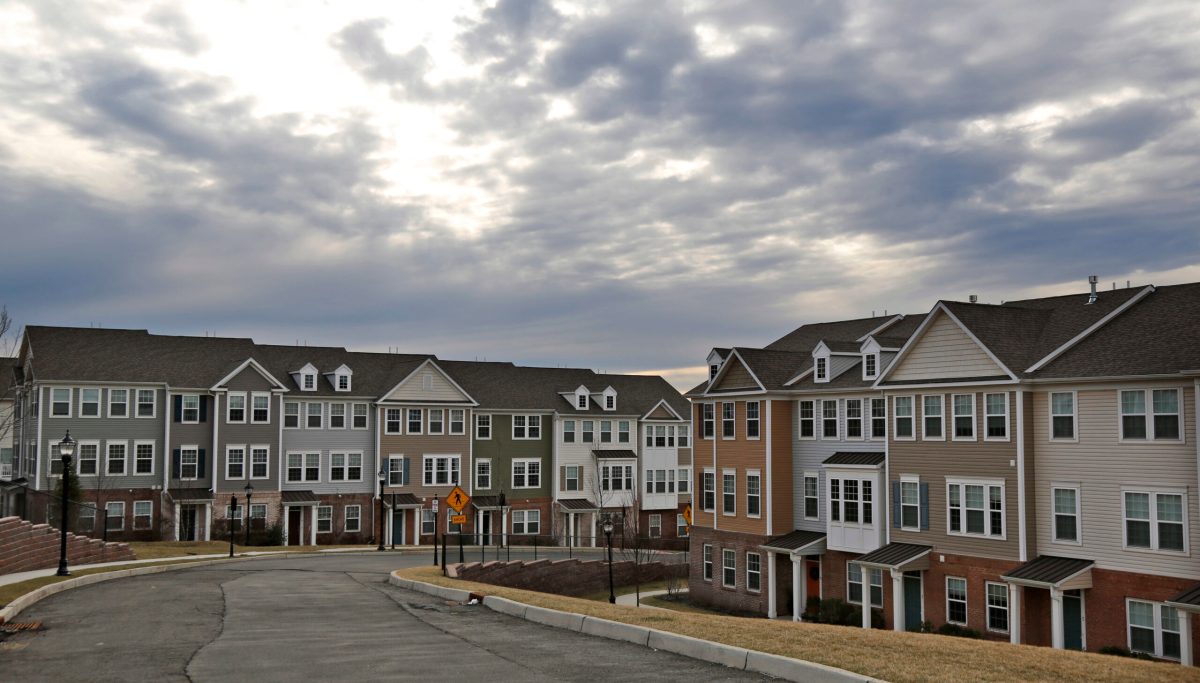
Inflation woes: Home buyers need 80% more income to buy than 4 years ago
(The Center Square) – The housing market is not immune from inflationary woes as buyer’s purchasing power has significantly diminished in four years. Home
Washington Examiner
91 points · by delichon · 2y ago · 94 comments
Investors are allowed to speculate. But speculation must be risk, sometimes you win and sometimes you lose.
It would require hundreds of thousands or even millions of construction workers to coordinate, and also have a way to prevent new builders from competing. If you really think it is true, you should go into construction, undercut the competition, and get rich quick.
The real answer is much more boring. High costs of land, labor, and regulation.
If you ignore these three things, you can build your own livable starter home for ~100k in materials.
Maybe we should just build more houses.
You just have to test before purchasing. And, of course, this costs more.
Or heck, more than 2 should basically be taxed at massive rates. Like, 40-50%.
At (inflation adjusted) price X in location Y + regulator time/cost Z, the number of housing units that can be legally built has decreased considerably. Part of this is we've exhausted undeveloped/raw land and haven't upzoned in most locations.
The fixed costs and regulatory hurdles for building housing units can certainly be reduced - if the political challenges can be overcome.
Even some relatively sane regulations like insulation and safety standards could be re-evaluated. The issue is we are not doing any cost-benefit analysis of these regulations; even a 10% increase in the average home price should logically have a large impact on overall quality of life; that extra 10% spent on housing (~$50,000) in young adulthood reduces retirement savings >$300,000 assuming 8% returns, 30-40 years of investment, etc.
Pass a regulation saying any building permit application that isn't reviewed in 10 days is default approved. Then defund the permit offices.
In tandem, gut the ability for anyone to file suits (I'm looking at you, CEQA) that block development.
source: two years in a professional US urban planning office
The supply of housing was unhealthy then also.
I think the above is true, but I'd welcome counterexamples.
So, the way to depress housing prices is to build more houses. _Most_ housing regulations, including making it illegal for people to own four houses, reshuffle the ownership of existing houses, and don't depress their prices. As regards that regulation: if the super-rich aren't able to own $many houses, the merely-rich will buy more, and thus housing prices would be the same.
We need more places to live, at the end of the day there's no way around that.
Regulation might help though. If we regulate it so that it's harder to profit from real estate, then people will find other investments instead. This is good, because as long as real estate is a favorite investment for the wealthy, there will be a "mysterious" resistance to any efforts to lower the prices by building more houses.
I'm not an expert here, but this makes sense to me. Did I miss anything?
You missed that it’s 10 families, with 20 houses. With one family owning 18 of them.
Pick any US jurisdiction (with the possible exception of Puerto Rico? I’m not very familiar with how taxation works there) and contemplate the tax implications of selling an appreciated property. Further contemplate how those implications are different for different potential buyers and sellers of that same property at the same price. Then say again that it’s perfectly competitive.
Hint: there are all manner of effects here. Capital gains. The basis step up at death. 1031 exchanges and their associated rules. Transfer fees, title fees (which is pretty close to being a tax).
(I’m not the one who downvoted you.)
>Further contemplate how those implications are different for different potential buyers and sellers of that same property at the same price.
Sure -- this is why I was asking for examples. "Rich people having more options than poor people" (which is what I think 1031 exchanges and your nod to capital gains refers to) is true across all domains without exception. It's true that I tend to discount that, acknowledging its unfairness. My point was prices are public(!), and historic sale-prices are public(!). A _particular_ (rich) buyer may have individual reasons for buying a house, but the market is almost perfectly competitive, because prices are public.
Based on the $343,000 house price, and the 3%/7% rate difference they mention between 2020 and 2024, the mortgage on a house the exact same price would've gone up from $1900/mo to $2650/mo. That alone is already a 40% increase.
Obviously houses prices have inflated along with everything else, but the pain is really mostly coming from the increased mortgage rates. Even a cheaper house would still be painfully more expensive today.
What I wonder is... when would it make sense to try to return to a low interest rate environment (if ever)? Is there a point where we think it will?
Sadly, in real estate, one can easily own a $1M house, prefer to live in a $800k house, and have a situation in which making that trade results in a net loss of cash.
Along with many of the places people keep building are in areas short of water. Since most of it is SFH larger water transport infrastructure has to be installed at great cost and though places that are already developed. Then you add more expensive road infrastructure that taxes on the SFHs won't fully pay for. You build a huge infrastructure debt trap that we're both paying for now (from the past) and the us in the future will have to pay even more for.
My point is that, if you remove distortions from a market, prices may go down.
This is some kind of memic impossibility. It's impossible to move into a city for a high paying job AND have a partner AND the partner earning a lot too. The closest I've ever been was when my job and the relationship disintegrated at the moment the partner got such job after over 5 years of searching, and I really don't feel like trying again ever.
People/sheep are renters.
Houses around the world are being sold to:
corporate mega landlords
"Mum and Dad" investors
international money laundering criminals
money fleeing countries like China where economies are collapsing and the government is becoming more authoritarian
Right now, it is at 65.7% - higher than the fabled 60s and 70s.
There are a lot of conspiratorial comments blaming everyone from investors and speculators to contractors and developers. The reality is that it's largely homeowners and the government to blame. The number of homes bought by investors is a rounding error. And developers will build homes as long as there is profit margin.
The government (and society) turned housing into a retirement plan. We decided to enact policies to push people onto the "housing ladder". We confused cause and effect, and the result is the largest misallocation of capital in human history. Blame NIMBYs and ZIRP. Want to get rid of speculators? Stop making houses an investable asset. People should not be relying on a commodity for their retirement.
https://www.reddit.com/r/canadahousing/comments/tose5z/landl...
When there wasnt regulatory capture in late 19th, entire US ended up getting owned by ~12 robber barons. The housing situation was the same back then: Barons would be buying up or building entire neighborhoods in which people would have to live like feudal tenants on knife's edge.
These futile attempts to redeem capitalism are making it difficult to address the problems that it creates.
I really can’t understand how people are so desperate to drive a new car that they’d go into debt to do it. Why would you sign up for years worth of payments on a $15k+ car when you could just buy a used one outright for like $4k, and not have to worry about it?
A house, sure, you then own real estate, you even can borrow money against the value you’ve already paid into your property, and when you’re ready you can sell it, likely for significantly more than you paid. Real estate is such a solid investment.
But a car??
https://www.iseecars.com/what-happened-to-affordable-cars-st...
https://site.manheim.com/en/services/consulting/used-vehicle...
Because I want my child to be in a relatively new car, with a proven safety record, no history of accidents, surrounded by airbags and all the other safety features we've come up with.
For $4k, she'd be sitting in the back seat of a 1992 Nissan Sentra, counting lane-changes through the rusted-out hole in the back-seat floor: "one... two... dad, the hole getting bigger!"
(Not 80% but you need to include that)
It's the second paragraph in the article.