407 points · by cjr · 1y ago · 883 comments
[2] https://www.congress.gov/119/bills/hr2591/BILLS-119hr2591ih....
Pilots deactivate the fuel cutoff at the end of the final taxi to the gate. This makes flipping these switches a practiced maneuver, capable of being performed without conscious thought, regardless of whether they came with safety locks installed.
Brain farts are a real phenomenon, and an accidental fuel cutoff most closely resembles the transcript from within the cockpit.
The report is actually a little cagey about whether the locks were properly installed on these switches. Said locks are supposedly optional. Until I receive a more direct confirmation that the switches were installed with their full safety features, I will assume that it is more likely for the plane to have had improperly installed switches than not, given that the shutoff was the reason for the crash, and if they turn out to have been installed, I will assume that simple pilot error is responsible until a motive for murder is found. The pilots lives are under quite a lot of scrutiny, and I do not believe that a motive for murder is likely to be found.
The locks/gates on the switches are definitely NOT optional. There was an SAIB about some switches that may have been installed improperly. It didn't result in an AD, which likely means the extent was limited or potentially even nil.
The switches were moved to cutoff with a one second delay between the first and second switch. That's pretty suggestive of deliberate movement. I've flown a Max9 simulator, which has the same switches. Moving one of them by accident would be impossible, let alone two of them.
I agree with not jumping to conclusions about the pilots and possible motives or circumstances, but I will bet a lot of money that the switches were just fine.
The CVR will likely have audio of the switch movement to confirm as well.
I second that it’s not an accidental motion, you must actively manipulate the switch. But just like your turn signal in your car, it is muscle memory when you use it. I just wonder what action the pilot mistook the fuel cutoff for. Looking around the cockpit shows just how unique those switches are and not something you mistake with another common activity.
Pretty sad day if this was an intentional action
did the report say a one second delay or that the two switches were turned off at consecutive seconds? The latter is what I remembered, but I'll check again.
Improbable, not impossible.
This is a bit like someone parking their car, pulling the handbrake, turning off the car and putting their keys in their pocket, then arguing that it’s a practiced maneuver because it happens at the end of every car ride.
This is like pulling the handbrake on the highway when you’re trying to use your high beams
Plenty of crashes have resulted from Pilots not acting 100% by the book.
> and as far as I know there were no callouts here (e.g. “gear up”)
Unfortunately we don't have a full CVR transcript.
I don't fly a lot of planes, but I do know what muscle memory is like, and sometimes it misfires. Misfires are rare, but then, so are plane crashes.
The emergency fuel cutoff should not be a practiced maneuver.
You say muscle memory. No muscle memory is involved in fuel cut off for both engines seconds after take off. There is no procedure remotely similar.
The report specifically mentions SAIB No. NM-18-33 which would be a very odd thing to do if the investigators didn't at least consider this to be a possibility.
> You say muscle memory. No muscle memory is involved in fuel cut off for both engines seconds after take off.
It doesn't matter when the action is normally done - muscle memory means that the complex action of flipping a guarded switch doesn't really need a bigger brain fart than any other input because once the action is initiated you're acting on autopilot.
I HAVE sometimes “lost” my phone in my own backpack though (lol).
Here’s my take as a non-pilot. Takeoff is a sequence of checklists and procedures that are repeated. Often. If it’s muscle memory, a brain fart seems very unlikely… that’s why i’m skeptical of your theory.
A better analogy would be “have you ever forgotten to put on shoes before leaving your house?” And no, i have not, even during emergencies or when i’m very tired (like when i had to rush my wife to the ER). Why? because that’s something i do daily, and is part of my checklist when departing my house.
Or “have you ever forgotten how to get to work?” that also is extremely unlikely, because one typically follows the same exact steps and route daily. And i don’t randomly turn off my engine while driving, even if i’m multitasking or im forced to take a slightly different route due to a detour.
To be clear, i’m not saying it’s physically impossible. I just find it inconceivable.
What transcript? We only got a few potentially re-phrased bits of what was said. That the preliminary report is very careful about not implicating either pilot is not evidence of anything except that the investigative team is not yet 100% sure on the matter.
Investigation and preliminary report is not showing critical evidence that would help clarify. Like the full transcript of pilot conversations that is clearly already available, and if these switches had any maintenance in the last year.
The fact that both pilots denied moving the switches, combined with the extremely short timeline, makes mechanical/electronic failure the most probable cause.
Note the Critical Sequence:
08:08:39 UTC: Aircraft lifts off (air/ground sensors transition)
08:08:42 UTC: Maximum airspeed of 180 knots reached
08:08:42 UTC: IMMEDIATELY after max speed, both fuel cutoff switches transition from RUN to CUTOFF (1 second apart)
08:08:47 UTC: Both engines below minimum idle, RAT deploys
08:08:52 UTC: Engine 1 switch returns to RUN
08:08:56 UTC: Engine 2 switch returns to RUN
So only 3 seconds between liftoff and fuel cutoff. Extremely short window for deliberate pilot action...
Well I'd Never sputter Good Ma'am or Sir, ARE you implying something like a "MAIN BATTERY EXHAUST"¹ retrofitted to a flagship product because management was impatient and wanted the lighter, better, faster, stronger lithium-ion-battery for their rushed 787-sized baby?
¹) https://media.cnn.com/api/v1/images/stellar/prod/14011413401...
Secondly, yes, it was likely a deliberate action to cut off the fuel switches, as you say.
You are absolutely right that there’s an epidemic in the airline industry that forces pilots to stay quiet rather than risk their careers if they’re dealing with mental health issues.
In a sibling comment: “shouldn’t they be given alternate career paths?” No. Perpetuating the myth that people with mental health issues are somehow broken beyond repair is mistaken. Current policy lead directly to that one fellow to lock the cockpit door and slam the plane into a hillside. If Air India 171 has any chance of being a mental health issue today, it should be highlighted and explored. You’re exactly right to be doing that, and thank you.
Anyone who disagrees with this should watch https://youtu.be/988j2-4CdgM?si=G39BwNy1zJEeUi2k. It’s a video from a well-respected pilot. The whole point of the video is that aviation forces people to conceal their problems instead of seek treatment, and that this has to change.
While obviously the incidents are terrible, do you really think he would self-report, voluntarily endure 6+ months of therapy and come back like new, if only the current policy didn't lead him to do what he did?
Totally armchair, but I think people like the German dude and allegedly (but who knows) the Malaysian Zaharie are far gone. The only thing that can help is mandatory health checks, and even then who knows if it's possible to screen for everything.
The problem is that many people in aviation imagine that they need to conceal their problems. And they point to videos like this one as proof of that, ignoring that the events of discussed in the video are actually proof of the opposite.
Emerson (the suicidal pilot in the video from Alaska Airlines Flight 2509) self-medicated himself using hallucinogenic substances and developed suicidal ideations, because he didn't seek treatment (like therapy) for his mental issues after the death of a friend. If he had sought treatment, he'd still be flying today because he wouldn't have tried to kill several dozen people, and he would have learned to cope with his depression.
I have no idea how this video’s chapter 6 can be titled "a call for change" and then you still deny that the video is saying there’s something desperately wrong with the aviation industry. All I can think of saying is that you’re mistaken. It’s proof of exactly what the video is saying needs to change.
We’ll have to agree to disagree. I feel bad for all the pilots who have to deal with this kind of attitude about mental health issues, as if suicidal ideation should somehow disqualify someone from working in their chosen profession. People in the military are allowed to feel suicidal. Your doctor is allowed to feel suicidal. The guy next to you on the road is allowed to feel suicidal. But pilots? Nope. It’s treated as this unspeakable awful thing, and you’re forcing people to get "treatment" where they report "yes, that totally worked" (a lie) or else suffer consequences. If you don’t see how backwards that is, no words of mine will persuade you otherwise.
Why argue so vehemently that treatment should be denied to people? That’s what you’re doing by saying there’s no problem and that nothing needs to change. I assure you, the pilot in the video likely knows far better than your friends. That’s why he made the video.
You have your facts wrong. Pilots can and do fly if they have mental health diagnoses, as long as they are well managed and there is no history of psychosis or suidical ideation. This is how it should be.
https://www.faa.gov/ame_guide/app_process/exam_tech/item47/a...
The whole reason a pilot made that video is because there’s a huge problem in the airline industry right now.
But a pilot with suicidal ideations, or taking hallucinogens, like Emerson from Alaska Airlines Flight 2509 (the flight discussed in the linked video), would not be allowed to fly. And that's exactly the way it should be...
The issue is that many pilots don't seek treatment for mental issues because they imagine that they'll be grounded if they do, even though FAA policy, and most airlines' policy, is to allow them to continue flying.
1. If the pilot hides his mental illness, a mentally ill person is flying the airplane.
2. If the pilot gets treatment for his mental illness, a mentally ill person is flying the plane.
P.S. When I was a teenager, I tried to join the Air Force to be a pilot like my dad. But since I wear glasses, there was no way. The AF was perfectly justified in not taking me, I understood that. I empathize with the rejected pilots, but that's the way it has to be. Life isn't fair. So I chose another career.
Pilots who develop a heart condition get their license revoked. Every pilot knows this. There's nothing fair about that, either.
Fun fact - my Air Force dad told me that when an airplane was overhauled, the chief mechanic went up on the check ride. That ensured the job was well done.
And to your other point, it's easier to give up on your dream job when young and start with a career that you are a fit for, than to be kicked out after a huge sunk cost and maybe even half way to retirement (illnesses might not be known until later in life). Just as disappointing, but not nearly as life destroying.
But I salute you, fellow four-eyes!
I was prescribed glasses when I was 5. Since then, they have preserved my eyes from damage from at least 3 incidents. I no longer mind them - I like the protection!
It looks like the FAA has within the last few years gotten chiller about some antidepressants, but that they still require an elaborate and complicated process to approve use of them.
You don't get to choose "no mental illness" because of the bad incentives of hiding them!
Wearing glasses still has issues. I have astigmatism, and so if I turn my eyes but not my head, I receive a warped view of the world. This is why I was simply terrible at baseball, tennis, etc. My brain could not adapt to this. I have difficulties with depth perception as a result, too.
I was more or less born to be a nerd. It's pointless to fight my fate :-)
Psychotherapy significantly reduces the risk of suicide. https://pmc.ncbi.nlm.nih.gov/articles/PMC6389707/
Personally, found it simultaneously one of the greatest and most insane seasons of television ever. YMMV.
It is known that the switches were set to "cut-off" because they were then later restored to "run", so it was not an electrical fault (i.e. switches pointing to run but reporting cut-off).
Pilot dialogue and engine telemetry confirms the cause of power loss was fuel cut-off.
The question I can't help but think is how did the pilot realize it was the cut-off switches?
I'm sure there's a warning message for them somewhere but in the few seconds of time when you're losing thrust right after rotate, and you're bombarded by a lot of warnings and errors on the screen and in the speakers: how likely are you to notice the fuel cut-off switches have been flipped?
Those switches are something you never, ever think about during operation because you're trained to only operate them when starting up and parking (and yes, in an emergency where you need to shut down the engine quick).
How long would it take for an average pilot to realize it's not one of the dozens of memory items pointing to more likely scenarios causing loss of thrust, ones that they've been training to check in case of an imminent emergency? And why didn't the first pilot who was recorded to notice the fuel cut-off didn't immediately flip the switches to "run" position first instead of asking the other pilot about it?
This is such a diabolical mind-game that it never occurred to me. Like, they would all die, why would he want to incriminate someone else? But yet, people are weird and crazy. And maybe he didn't go down as a killer and decided to incriminate the other pilot? Anyway, it is totally possible to have happen. Sadly there are no cameras the cockpit, and a camera in the cockpit would really have help to find who did what.
Based on the cutoffs for both engines being flipped 1 second apart, the above exchange being caught on the CVR, and then within 10 seconds the (presumably the other) pilot switching them back to Run, it's pretty clear that this was a deliberate act.
Note that in the checklist I am looking at the goal is to restart the engines rather than diagnose the failure and that involves these levers. I suspect you’d notice pretty quickly if they were not in the expected location.
I would think trying to restart engines one at a time would be preferred, over both of them at the same time - or maybe thats not how it works..?
Hopefully the timestamps tell if the engines lost power before switches were turned off? Or is there some time window that was not recorded due to the lost power to systems?
i.e. hypothetically, no one flipped the switches to cutoff initially, but a glitch in a computer component caused the same effect, including some indication (a status light?) that the switches were in cutoff state. One of the pilots saw the indication, and asked the other. The other (truthfully) said they hadn't. Ten seconds of confusion later, one of them flipped the switches off and back on to reset the state to what it should have been.
That assumes that the switches are part of a fly-by-wire system, of course. I am not an aircraft engineer, so maybe that's not a safe assumption. But if they're fly-by-wire, seems like there might not be a way to know for sure without cockpit video, because the logging system might only log an event when the switches cause the state to change from what the computer thinks the current state is, not necessarily when the switches change to the state the computer thinks they're already in.
Someone bumping the switches accidentally seems worthy of investigation as well, given the potential for an "Oops! No locking feature! Our bad!" scenario on the part of Boeing that's mentioned in the BBC article.
That seems like an important clue, bc it points at a possible glitch that could affect other aircraft.
It's extremely unlikely for a pilot to decide to react by shutting both switches off, then turning them on within seconds (this is not a failure mode they'd have expected, deciding to shut the engine off a couple hundred feet in the air would be... a fairly reckless decision).
That leaves both switches spontaneously turning off, then back on, a couple seconds after takeoff, which is a failure mode that's never been seen before once let alone twice. Also the pilots didn't make a statement about an incongruity between the report from the plane's systems about the switch being off vs the physical position, which they very likely would have in such a situation.
I think it's reasonable to rule that theory out.
The answer to this question is explained by a pilot in here https://youtu.be/00ooqCuRoU8?t=731
The pilots can hear engines spool down.
The fuel control switches are behind the throttle stalks above the handles to release the engine fire suppression agents. These switches are markedly smaller and have guards on each side protecting them from accidental manipulation. You need to reach behind and twirl your fingers around a bit to reach them. Actuating these switches requires pulling the knob up sufficiently to clear a stop lock before then rotating down. There are two switches that were activated in sequence and in short order.
The pilot monitoring is responsible for raising the gear in response to the pilot flyings' instruction.
I would find it very difficult to believe this was a muscle memory mistake. At the very least, I would want to more evidence supporting such a proposition.
This idea strikes me as even more unlikely than someone shifting their moving vehicle into reverse while intending to activate the window wipers.
I suspect you've never driven an older vehicle with the shifter on the steering column.
Or a new Mercedes ;)
On some aircraft types you also have to pull it towards you before moving it to avoid hitting it by mistake.
But I agree it's very unlikely to be a muscle memory mistake.
from this article: https://theaircurrent.com/aviation-safety/ai171-investigatio...
shows you the switches on a 787. They are protected and hard to futz around with by mistake.
This is exactly how the investigations are NOT conducted. You don't find the evidence that confirms your theory and call it a day when the pieces sorta fit together. You look solely at the evidence and listen to what they tell you leaving aside what you think could have happened.
The collection of comments on this post remind me it'll just be a brand new set of random guesses until the final report is released. Or worse - the final report reaches no further conclusions and it just has to fade out of interest naturally over time.
If hearing those guesses annoys you, nobody is forcing you to read through comments on a thread of people making them! (I hope - sorry if you are being forced after all.)
It’d be nice if we could only read insightful comments, and unread the wacko comments, but we can’t. This discussion has actually provided a lot of useful comments from people who seem to know what they’re talking about, but also a lot of really wild speculation.
That doesn't mean I will always agree with the comments (or that everyone will always agree with mine) and that's okay. It'd be a very limited value discussion if we could only ever comment when we agree. It seems exceedingly unlikely any of this has something to do with users being forced to be here though.
This was a really disappointing incident for aviation YouTube - I unsubscribed from at least three different channels because of their clickbait videos and speculation.
This is obviously an overstatement. Any two regularly performed actions can be confused. Sometimes (when tired or distracted) I've walked into my bathroom intending to shave, but mistakenly brushed my teeth and left. My toothbrush and razor are not similar in function or placement.
The other poster's correction: "it’s like brushing your teeth with razor" is apt. Touching the fuel cutoff switches is not part of any procedure remotely relevant to the takeoff, so there's no trigger present that would prompt the automatic behavior.
Weird mistakes can happen.
My partner got a good laugh out of it
Given a long enough span of time, every possible fuck up eventually will happen.
This is not what happened here at all. The actions needed to activate the fuel cutoff switches are not similar to any other action a pilot would want to make during takeoff.
Test your mental model against the real world. This is your opportunity.
Same goes for accidental acceleration instead of braking. Two of the same kind of lever right next to each other.
Accidental acceleration while intending to turn on the wipers would be a fitting example, I don't think that happens though.
Probably more training required to bake a cake than drive a car (hours wise).
If we had your typical driver fly a plane we'd be doomed to a lot of crashes.
The short answer is that they are _very_ different controls, that looks and operate in a completely different way, located in a different place, and it's completely unrealistic to think a pilot could have mistaken one for the other.
Different controls with different t shapes, operated in different ways, of different number, different size, and very different positions. One is down almost on the floor, and well rearward, the other is at stomach height and well forward.
The fuel cutoffs also require pulling the control out and over a guard.
If not there should be one as even my simple home wifi camera can record hours of hd video on the small sd card. And If there is, wouldn't that help to instantly identify such things?
I don’t think video is a bad idea. I assume there is a reason why it wasn’t done. Data wise black boxes actually store very little data (maybe a 100mbs), I don’t know if that is due to how old they are, or the requirements of withstanding extremes.
(Most media outlets also got this wrong and were slow to make corrections. )
Rather, it uses a EAFR (Enhanced airborne flight recorder) which basically combines the functions. They’re also more advanced than older systems and can record for longer. The 787 has two of them - the forward one has its own power supply too.
There should be video as well, but I’m not sure what was recovered. Not necessarily part of the flight data recording, but there are other video systems.
https://www.geaerospace.com/sites/default/files/enhanced-air...
I'm not in aviation. But my between-the-lines straightforward reading is that unions see it as something with downsides (legal liability) but not much upside. It could be that there are a million tiny regulations that are known by everyone to be nonsensical, perhaps contradictory or just not in line with reality and it's basically impossible to be impeccably perfect if HD high fps video observation is done on them 24/7. Think about your own job and your boss's job or your home renovation work etc.
Theoretically they could say, ok, but the footage can only be used in case the plane crashes or something serious happens. Can't use it to detect minor deviations in the tiniest details. But we know that once the camera is there, there will be a push to scrutinize it all the time for everything. Next time there will be AI monitoring systems that check for alertness. Next time it will be checking for "psychological issues". Next time they will record and store it all and then when something happens, they will in hindsight point out some moment and sue the airline for not detecting that psychological cue and ban the pilot. It's a mess. If there's no footage, there's no such mess.
The truth is, you can't bring down the danger from human factors to absolute zero. It's exceedingly rare to have sabotage. In every human interaction, this can happen. The answer cannot be 24/7 full-blown totalitarian surveillance state on everyone. You'd have to prove that the danger from pilot is bigger than from any other occupation group. Should we also put bodycam on all medical doctors and record all surgeries and all interactions? It would help with malpractice cases. How about all teachers in school? To prevent child abuse. Etc. Etc.
Regulation is always in balance and in context of evidence possibilities and jurisprudence "reasonableness". If the interpretation is always to the letter and there is perfect surveillance, you need to adjust the rules to be actually realistic. If observation is hard and courts use common sense, rules can be more strict and stupid because "it looks good on paper".
You also have to think about potential abuses of footage. It would be an avenue for aircraft manufacturers, airlines, FAA, etc to push more blame on the pilots, because their side becomes more provable but the manufacturing side is not as much. You could then mandate camera video evidence for every maintenance task like with door plugs.
I wonder how the introduction of police body cam footage changed regulations of how police has to act. Along the lines of "hm, stuff on this footage is technically illegal but is clearly necessary, let's update the rules".
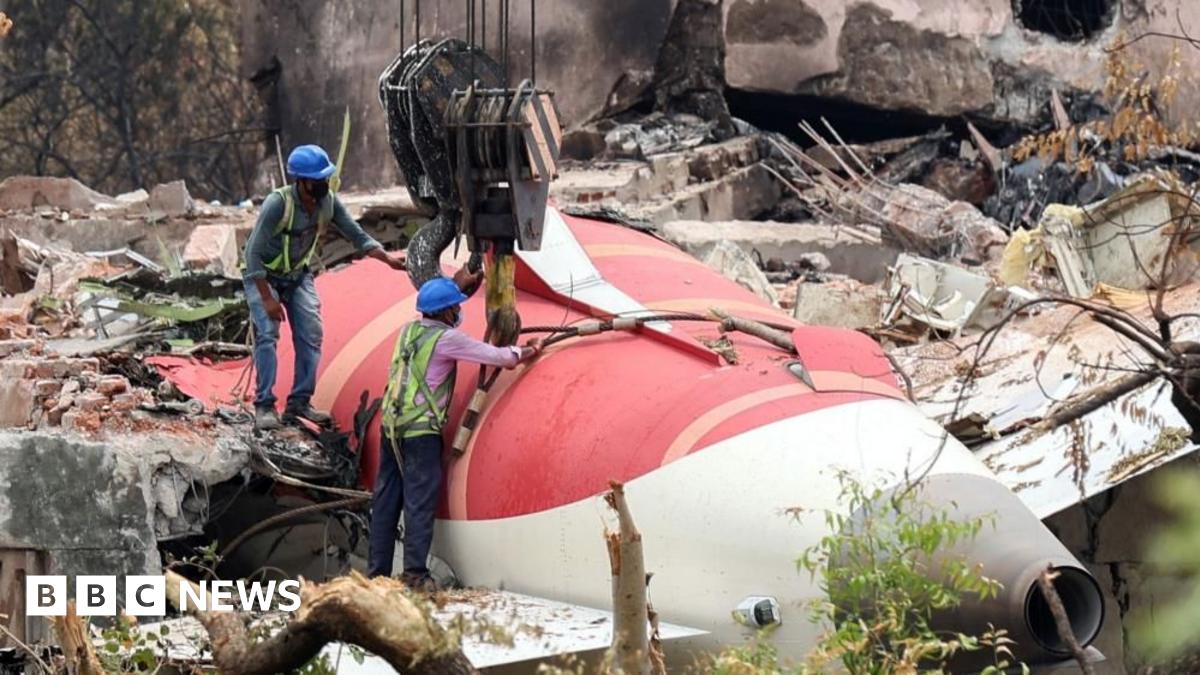
Heck they can make a back up directly to the cloud in addition to black box considering I'm able to watch YouTube in some flights nowadays.
In fact, you could add some AI to it, even, as an embedded system with a decent GPU can be bought for under $2000. It could help prevent issues from happening in the first place. Of course airgapped from the actual control system. But an AI can be very helpful in detecting and diagnosing problems.
It's very hard to solve one problem without creating another. At some point, you just gotta trust the pilot.
Not so much on a Boeing.
Instead, it's that because muscle memory allows you to do things without thinking about it, you can get mixed up about which action you meant to perform and go through the whole process without realizing it.
The only difference here is that the consequences are death instead of mere head shaking.
Murder needs more proof than just performing the wrong action. Until then we should apply Hanlon's Razor.
not all my passwords are up and to the left, some are down and to the right, but when i type the wrong one into the wrong place, i type it accurately, i'm just not supposed to be typing it.
"time to do that thing i've practiced, reach to the left". shuts two engines off by muscle memory.
https://www.nytimes.com/2025/07/11/world/asia/air-india-cras...
>>India's media report that the investigation is NOT focussing on a human action causing the fuel switches to appear in the CUTOFF position, but on a system failure. Service Bulletins by Boeing issued in year 2018 recommending to upgrade the fuel switches to locked versions to prevent inadvertent flip of the switches, as well as the FAA/GE issued Service Bulletin FAA-2021-0273-0013 Attachment 2 relating to loss of control issue (also see above) were NOT implemented by Air India.
> Recommendations The FAA recommends that all owners and operators of the affected airplanes incorporate the following actions at the earliest opportunity: 1) Inspect the locking feature of the fuel control switch to ensure its engagement. While the airplane is on the ground, check whether the fuel control switch can be moved between the two positions without lifting up the switch. If the switch can be moved without lifting it up, the locking feature has been disengaged and the switch should be replaced at the earliest opportunity. 2) For Boeing Model 737-700, -700C, -800, and -900ER series airplanes and Boeing Model 737- 8 and -9 airplanes delivered with a fuel control switch having P/N 766AT613-3D: Replace the fuel control switch with a switch having P/N 766AT614-3D, which includes an improved locking feature.
https://www.regulations.gov/document/FAA-2021-0273-0013
None of the attachments reference the fuel cutoff switches.
I know it's probably not worth the hazmat tradeoff for such a rare event, but the F-16 has an EPU powered by hydrazine that can spool up in about a second.
The 787 and nearly every other commercial aircraft with powered flight controls [1] (fly-by-wire or traditional) has emergency power available via RAT and/or APU, and any fly-by-wire aircraft has batteries to keep the flight control computers running through engine failure to power supply being restored by the RAT and/or APU. Due to its unusually high use of electrical systems, the 787 has particularly large lithium batteries for these cases. There is no need for an additional EPU because the emergency systems already work fine (and did their jobs as expected in this case). You just can't recover from loss of nearly all engine thrust at that phase of takeoff. [2]
1. The notable exceptions to having a RAT for emergency flight controls are the 737 and 747 variants prior to the 747-8. In the 747 case, the four engines would provide sufficient hydraulic power while windmilling in flight and thus no additional RAT would be necessary. The 737 has complete mechanical reversion for critical flight controls, and so can be flown without power of any kind. There is sufficient battery power to keep backup instruments running for beyond the maximum glide time from altitude - at which point the aircraft will have "landed" one way or another.
2. There is only one exception of a certified passenger aircraft with a system for separate emergency thrust. Mexicana briefly operated a special version of the early 727 which would be fitted with rocket assist boosters for use on particularly hot days to ensure that single-engine-out climb performance met certification criteria. Mexicana operated out of particularly "hot and high" airports like Mexico City, which significantly degrade aircraft performance. On the worst summer days, the performance degradation would have been severe enough that the maximum allowable passenger/baggage/fuel load would have been uneconomical without the margin provided by the emergency rockets. I'm not aware of them ever being used on a "real" flight emergency outside of the testing process, and I think any similar design today would face a much higher bar to reach certification.
Ah
Also we need more rocket thrust takeoff airplanes.
Your momma so fat…
But seriously, is there a commercial aircraft that can’t climb on only engine?
However, that answer is hiding a lot of complexity. In a multiengine turboprop, single-engine climb performance is dependent on fathering the propeller of the dead engine(s); if you don't (or can't), you will probably crash.
In all aircraft, different takeoff conditions (ambient temperature, pressure, runway length) will result in different performance (maximum takeoff weight, runway length and takeoff thrust required). In some extreme conditions (e.g. "hot and high" airports like Mexico City or Denver) this can result in a reduction of maximum takeoff weight to ensure that engine-out climb performance is maintained. Generally aircraft used in these airports are designed and/or acquired with these conditions in mind, and thus the aircraft are still profitable to operate with the reduced MTOW.
At least it worked for me on Kerbal Space Program. At least sometimes.
https://www.youtube.com/watch?v=2_8qCTAjsDg [30s]
https://www.youtube.com/watch?v=zT58pzY41wA [15m]
The Cirrus system is deployed by rockets, allowing it to function at a very low altitude. They say that you should deploy it no matter what altitude you are at, and it will add at least some friction. The system has a very impressive track record.
However, at this altitude, with an airplane this heavy, you might have to put the rockets on the plane to decelerate enough to save lives.
Edit: I recently saw an SF50 YT video. It's pretty awesome with the V/X tail.
- British Airways 5390: An incorrect repair causes the windshield of a plane to be blown out mid flight. A pilot is nearly sucked out. The head flight attendant holds onto his legs to keep him in the plane. The copilot and flight attendant think he is dead, but they keep the situation under control and land the plane.
Everyone survives - including the pilot.
https://www.youtube.com/watch?v=rGwHWNFdOvg
- United 232: An engine explodes in the tail of an MD-10. Due to rotten luck and weaknesses in the design, it takes out all three of the redundant hydraulic systems, rendering the control surfaces inoperable.
There's a pilot onboard as a passenger who, it just so happens, has read about similar incidents in other aircraft and trained for this scenario on his own initiative. He joins the other pilots in the cockpit and they figure out how to use the engines to establish rudimentary control.
They crash just short of the runway. 112 people die, but 184 people survive.
https://www.youtube.com/watch?v=pT7CgWvD-x4
- Pinnacle 3701: Two pilots mess around with an empty plane. They take it up to it's operational ceiling. While they're goofing off, they don't realize they're losing momentum. They try to correct too late and cannot land safely.
In their last moments they decide to sacrifice any chance they have to survive by not deploying their landing gear. They choose to glide for the maximum distance to avoid hitting houses, rather than maximizing how much impact is absorbed. They do hit a house but no one else is killed.
This one is a good illustration of how better design can help prevent accidents or make them less severe.
The error the maintenance people made was that when they replaced the window and the 90 screws that hold it on 84 of the screws they used were were 0.66 mm smaller in diameter than they should have been.
The window on that model plane was fitted from the outside, so the job of the screws was to hold it there against the force of the pressure difference at altitude. The smaller screws were too weak to do that.
If instead the designers of the plane had used plug type windows which are fitted from the inside then the pressure difference at altitude works to hold the window in place. Even with no screws it would be fine at altitude. Instead the job of the screws would be to keep gravity from making the window fall in when the plane is not high enough for the pressure difference to keep it in place.
My vague memory of the Air Emergency episode on this (AKA Air Crash Investigation, Air Disasters, Mayday, and maybe others depending on what country and channel you are watching it on) is that after this accident many aircraft companies switched to mostly using plug windows on new designs.
Most of these things were figured out over 100 years of carefully analysing accidents and near accidents to continuously improve safety.
Curious, is the pressure difference actually greater than the force of 800km/h wind pushing on the window? Or is it just for side windows?
At sea level p = 1.225 kg/m^3. It goes down as altitude goes up. At sea level the dynamic pressure at 800 km/hr would be about 4.4 PSI.
At 20000 ft the air density is about half that of sea level, so around 2.2 PSI wind pressure. It would be around 1.4 PSI at 35k ft.
At cruising altitude planes are typically about 8 PSI above the outside pressure.
It would be maybe an interesting project for someone more ambitious then me to get a speed vs altitude profile of a typical airline flight and an altitude vs cabin pressure profile and figure at what part of a typical flight the screws on a plug window are resisting the most force.
Surprisingly hard to search for this phrase
This article covers the topic though:
https://www.witpress.com/elibrary/wit-transactions-on-the-bu...
Air Canada 143
- Pilot calculated incorrect fuel due to metric/imperial unit mixup, and ran out of fuel midair.
- Said pilot performed an impossible glider-sideslip maneuver to rapidly bleed airspeed just-in-time for an emergency landing at an abandoned airfield, having to completely rely on eyeballing the approach.
- No fatalties or serious injuries.
Via wiki (but accident section is more detailed):
“ The accident was caused by a series of issues, starting with a failed fuel-quantity indicator sensor (FQIS). These had high failure rates in the 767, and the only available replacement was also nonfunctional. The problem was logged, but later, the maintenance crew misunderstood the problem and turned off the backup FQIS. This required the volume of fuel to be manually measured using a dripstick. The navigational computer required the fuel to be entered in kilograms; however, an incorrect conversion from volume to mass was applied, which led the pilots and ground crew to agree that it was carrying enough fuel for the remaining trip. ”
> On the Boeing 767, the control surfaces are so large that the pilots cannot move them with muscle power alone. Instead, hydraulic systems are used to multiply the forces applied by the pilots. Since the engines supply power for the hydraulic systems, in the case of a complete power outage, the aircraft was designed with a ram air turbine that swings out from a compartment located beneath the bottom of the 767,[10] and drives a hydraulic pump to supply power to hydraulic systems.
> As the aircraft slowed on approach to landing, the reduced power generated by the ram air turbine rendered the aircraft increasingly difficult to control.[16]
> The forward slip disrupted airflow past the ram air turbine, which decreased the hydraulic power available; the pilots were surprised to find the aircraft slow to respond when straightening after the forward slip.
But I did burn out on Mentour Pilot after a while, I just had my fill of tragedy.
At the time we operated some industry specific, but national scale, critical systems and were discussing the balance of the crucial business importance of agility and rapid release cycles (in our industry) against system fragility and reliability.
Turns out (and I take no credit for the underlying architecture of this specific system, though I’ve been a strong advocate for this model of operating) if you design systems around humans who can rapidly identify and diagnose what has failed, and what the up stream and down stream impacts are, and you make these failures predictable in their scope and nature, and the recovery method simple, with a solid technical operations group you can limit the mean-time-to-resolution of incidents to <60s without having to invest significant development effort into software that provides automated system recovery.
The issue with both methods (human or technical recovery) is that both are dependent on maintaining an organizational culture that fosters a deep understanding of how the system fails, and what the various predictable upstream and downstream impacts are. The more you permit the culture to decay the more you increase the likelihood that an outage will go from benign and “normal” to absolutely catastrophic and potentially company ending.
In my experience companies who operate under this model eventually sacrifice the flexibility of rapid deployment for an environment where no failure is acceptable, largely because of an lack of appreciation for how much of the system’s design is dependent on an expectation of the fostering of the “appropriate” human element.
(Which leads to further discussion about absolutely critical systems like aviation or nuclear where you absolutely cannot accept catastrophic failure because it results in loss of life)
Extremely long story short, I completely agree. Aviation (more accurately aerospace) disasters, nuclear disasters, medical failures (typically emergency care or surgical), power generation, and the military (especially aircraft carrier flight decks) are all phenomenal areas to look for examples of how systems can be designed to account for where people may fail in the critical path.
There's no real point to considering what happens if the pilot wants to murder people on board. Of course they will succeed....
The human brain can't take the idea that yeah an exceedingly rare thing happened and we're not going to do anything, because rare things do happen sometimes. And the medicine can be worse than the disease. We just accept that yeah, despite best efforts, some pilots will be hostile for whatever mental reasons. Not saying that is what happened in this case, but just saying that IF that happened.
We need more tradeoff thinking, instead of do something! thinking.
But they decided that based on the frequency of floods it was not the best place to spend money.
Still quite early in the investigation, and so many things to consider. I don't know why online communities have been so quick to gravitate towards the murder/suicide theory. I thought aviation enthusiasts of all people would want to keep an open mind until every other possibility is ruled out, however minuscule it might seem.
Because the hardware failure theories seem preposterously far-fetched and require an unnecessary multiplication of deities.
Your ghost in the machine needs to be “just so” so that it can cause both switches to be read in “cutoff” nearly simultaneously. Then, 10 seconds later one of the switches needs to be read in “run”, then 4 seconds after that the second one needs to read “run”. You also need to explain why there have been zero single engine failures of this type before this double failure.
The ghost also needs to explain why one pilot asked the other “why did you cutoff?” instead of something like “what happened to the engines?” (which is the more natural response, unless you already know the switches are in cutoff).
What the bbc says is truncated and omits the info about the failing part, so people can point towards murder suicide because they don't have all the info.
Which is why you should always read avherald first...
Air India was government owned company till 2020s when it was sold back to the TATA group from whom it was originally nationalized from in the 1960s.
Stakeholders like regulators, employees individually could have different PoV or interests in the change .
Regulatory leadership could just as easily want to prove why this de nationalization was bad if so inclined as they could be for not wanting embarrass the flag carrier.
So it would be hard to categorically say that regulator has vested interest in protecting the flag carrier
[1] https://ad.easa.europa.eu/blob/NM-18-33.pdf
[2] https://www.mouser.com/datasheet/2/187/honeywell_hwscs06627_...
If they had a credible indication of a technical failure that causes engines to randomly shut down, they would have already grounded 787 fleets, which hasn't happened.
So the fuel supply was cut off intentionally. The switches in question are also built so they cannot be triggered accidentally, they need to be unlocked first by pulling them out.
> In the cockpit voice recording, one of the pilots is heard asking the other why did he cutoff. The other pilot responded that he did not do so.
And both pilots deny doing it.
It's difficult to conclude anything other than murder-suicide.
well hold your horses there... from the FAA in their 2019 report linked above:
> The Boeing Company (Boeing) received reports from operators of Model 737 airplanes that the fuel control switches were installed with the locking feature disengaged. The fuel control switches (or engine start switches) are installed on the control stand in the flight deck and used by the pilot to supply or cutoff fuel to the engines. The fuel control switch has a locking feature to prevent inadvertent operation that could result in unintended switch movement between the fuel supply and fuel cutoff positions. In order to move the switch from one position to the other under the condition where the locking feature is engaged, it is necessary for the pilot to lift the switch up while transitioning the switch position. If the locking feature is disengaged, the switch can be moved between the two positions without lifting the switch during transition, and the switch would be exposed to the potential of inadvertent operation. Inadvertent operation of the switch could result in an unintended consequence, such as an in-flight engine shutdown. Boeing informed the FAA that the fuel control switch design, including the locking feature, is similar on various Boeing airplane models. The table below identifies the affected airplane models and related part numbers (P/Ns) of the fuel control switch, which is manufactured by Honeywell.
> If the locking feature is disengaged, the switch can be moved between the two positions without lifting the switch during transition, and the switch would be exposed to the potential of inadvertent operation. Inadvertent operation of the switch could result in an unintended consequence, such as an in-flight engine shutdown
Both of these extremely-experienced pilots say that there was near zero chance that the fuel switches were unintentionally moved. They were switched off within one second of each other, which rules out most failure scenarios.
If it was an issue with the switches, we also would have seen an air worthiness directive being issued. But they didn’t, because this was a mass murder.
I do not trust these air worthiness directives 100.0%. The 737 Max also required two catastrophic failures before it was grounded.
The other worker in the building was in absolute shambles and couldn't understand what had happened. The CCTV footage was then checked and showed that worker looking at the other while reaching for the power switch and turning on the machine. The switch was not locked out and tagged out, but it was the only switch like it on the whole panel, large and required significant force to turn. No way to accidentally bump it, and the video showed him clearly turning the handle.
He was obviously fired, but no criminal charges were ever brought against him. He had no plausible motive for wanting the other man dead, was severely distraught over the incident. It was simultaneously obvious that he had turned the lever deliberately and had not meant to turn the leaver. A near-lethal combination of muscle memory and a confusion caused the accident. If the lever had been locked and tagged out, that probably would have interrupted his muscle memory and prevented the accident, but it wasn't.
Point is, something can be simultaneously impossible to do inadvertently, but still done mistakenly. A switch designed to never be accidentally bumped, to require specific motions to move it, can still be switched by somebody making a mistake.
But here's the thing a "near zero chance" when we are talking about an actual event changes the math
Maybe there's a combination of vibration and manufacturing defect or assembly fault or "hammer this until it works" that can cause the switches to flip. Very unlikely? Yes. Still close to 0% but much more likely in the scenario of an accident
Of course AAIB/NTSB etc didn't have any time to investigate the mechanical aspects of this failure
So yeah it was probably done intentionally but the "switches turning off by themselves" should not be excluded
Doing it accidentally is impossible.
You are trying to draw parallels between the ignition switch in a 1974 Ford Pinto and a 2025 Ford Mustang as if there could be a connection. No.
"The FAA issued Special Airworthiness Information Bulletin (SAIB ) No. NM -18-33 on December 17, 2018, regarding the potential disengagement ofthe fuel control switch locking feature. This SAIB was issued based on reports from operators of Model 737 airplanes that the fuel control switches were installed with the locking feature disengaged. The airworthiness concern was not considered an unsafe condition that would warrant airworthiness directive (AD) by the FAA. The fuel control switch design , including the locking feature, is similar on various Boeing airplane models including part number 4TL837-3D which is fitted in B787-8 aircraft VT-ANB. As per the information from Air India, the suggested inspections were not carried out asthe SAIB was advisory and not mandatory. The scrutiny ofmaintenance records revealed that the throttle control module was replaced on VT-ANB in 2019 and 2023. However, the reason for the replacement was not linked to the fuel control switch. There has been no defect reported pertaining to the fuel control switch since 2023 on VT-ANB."
So while I agree that this being the cause sounds unlikely, referencing the switch issue is something relevant enough for the report itself.
Your argument of being "totally different" flight decks or fordy ignition switches aside (ignoring that one is allowed to to drive both mentioned cars using the same license, but not two different generations of airplanes, ignoring that the biological concept of generation implies kinship), this affair reminds me of https://en.m.wikipedia.org/wiki/General_Motors_ignition_swit...
Edit: It also seems like the engine cutoff is immediate after the toggle. I wonder if a built in delay would make sense for safety.
(Presumably delaying the amount of time before a raging engine fire stops receiving fuel would also have an impact on safety?)
And with how low and slow they were during takeoff, those would have been going off almost instantly.
You're leaping into the minds of others and drawing conclusions of their intent. One of them moved the levers. It could've been an unplanned reaction, a terrible mistake, or it could've been intentional. We may never know the intention even with a comprehensive and complete investigation. To claim otherwise is arrogance.
That's very hard to do by panic and mistake, if not impossible by design.
> impossible by design.
Deflecting that the human is the weakest part of the system. One or other may have panicked and made a mistake, made a mistake unintentionally, went crazy and doomed the flight, or intentionally doomed the flight for some socioeconomic reasons. These are speculative possibilities that we don't know yet, and may never know; we only know what has definitely happened from the evidence per the investigation. It's standing way out over one's feet to declare from an armchair that it was "definitely" X or Y before the investigation is complete.
Fuel levers are designed to only be moved deliberately; they cannot be mistaken for something else by a professional pilot. It's literally their job to know where these buttons are, what they do, and when to (not) push them.
It's not arrogance to assume the most likely conclusion is true, despite how uncomfortable that outcome may be.
Assumption. Big ass assumption.
Pilot are trained until actions are instinctual and certain memory items are almost unconscious. But pilots are still people and people are fallible and make mistakes, and sometimes act unreasonably. Intent cannot be determined without clear evidence or statements because that's now how thoughts locked away in people's minds work.
> It's not arrogance to assume the most likely conclusion is true
You don't know this. This is beyond the capability to know and is therefore pure speculation. That is the definition of arrogance.
Murder-suicide looks like the likely conclusion, given that flipping the cutoff switches requires a very deliberate action. That said, it's not entirely impossible that due to stress or fatigue the pilot had some kind of mental lapse and post-flight muscle memory (of shutting off the engines) kicked in when the aircraft lifted off.
Possible, and if so it is too early to conclude it was murder-suicide.
See also: https://www.thehindu.com/news/national/dgca-slaps-80-lakh-fi...
But why cutoff the fuel instead of flying into terrain? It's such a passive action
> As per the EAFR, the Engine 1 fuel cutoff switch transitioned from CUTOFF to RUN at about 08:08:52 UTC.
Damn. That's pretty quick to diagnose and take action.
Boeing's probably gonna have a big sigh of relief over this one.
The 787 is 15 years old, and this particular plane was 10 years old. It always seemed unlikely to be a major, new issue. My money was actually on maintenance.
I have to imagine that “You are flying” and “You just cut off all fuel to the engines” must generate a pretty obvious claxon of warnings.
Me: “The build is breaking right after you checked in. Why did you do that?” Him:”I did not do so.” Me: “The commit shows it as you. And when I rolled back everything builds.” Him:”It must have been someone else.”
That person was really annoying.
The weirdest thing was how often it worked for them. In each case their lying eventually caught up with them, but in some cases they’d get away with lying for years.
It’s amazing how often someone would have clear evidence against what they were saying, but the people in positions of authority just wanted to de-escalate the situation and move on. They could turn anything into an ambiguous he-said she-said situation, possibly make a scene, and then make everyone so tired of the drama that they just wanted to move on.
In that moment I realised he was just bare faced lying right infront of everyone, about a technical subject, only HE should be the expert in, and to this day I am perplexed why his contract kept being renewed.
Eventually I was let go ( he possibly suggested I be let go ) for an incident that was unrelated to me.
This is all fine, but i learnt 5 years on he was still being paid a top 1% salary at the same company.
I promise the point isnt that I am jealous, its that this guy, who was a sub par coder and liar, somehow managed to keep his job whilst everyone else lost theirs and earnt untold amount in England ( where salaries are always low).
My goodness - I just remembered he was found by police driving a vehicle seemingly under the influence on a motorway, work found out after the police called them, and somehow he turned up the next day at work , lied about it, and STILL kept his job.
I am only mentioning this guy , because he was NOT a nepotist hire, he was just some guy who would lie and somehow people were ok with it. I still think of him often and wish I could have learnt more from his abilities just out of interest.
The conversation would suggest that the switches were in CUTOFF position, but there is also a display that summarizes the engine status.
There is no conversation that mentions flipping the switch to RUN again.
EDIT: Why is there no Cockpit Video Recorder? The days of limited storage are over.
Pilots unions are dead against it.
Just allow cockpit video recorders, and if they're ever used for anything, the pilots (or their heirs) get $250k in cash.
This would leave accident investigators with a lot of work to do to try to figure out how a collision happened.
Cost is a big one (satellite data is still quite a bit more expensive than you think, especially with many stations)
And by stations, I mean aircraft. There are a TON. Current constellations probably wouldn’t even be able to handle half the current aircraft transmitting all at once. Bandwidth, in the physical sense, becomes a limiting factor
Coverage (different constellations have different coverage, which means planes would not have transmit guarantees depending on flight path). So you’d have huge gaps anyways
There have been alternative solutions posed, some of which are advancing forward. For example, GPS aware ELTs that only transmit below certain altitudes. But even that has flaws
Anyways I think we’ll see it in the next decade or two, but don’t hold your breath
FAA issued a Special Airworthiness Information Bulletin SAIB NM-18-33 in 2018 warning that on several Boeing models including the 787 the locking mechanism of the fuel switches could be inoperative.
https://www.aviacionline.com/recommended-versus-mandatory-th...
Per FAA the checks were recommended but not mandatory.
Remember that incident where a cop pulled out his taser and tased the suspect? Except he pulled out his pistol and fired it.
The taser looks nothing like a pistol, feels nothing like it, yet it is still possible to confuse the two in the heat of the moment.
No it’s not comparable to a cop that confuses things in the heat of the moment. Not anywhere close to be relatable.
If it was, planes would be crashing down the sky quite often (and it would have been fixed for decades already).
> Bright is the son of the United States Air Force pilot Charles D. Bright
> Bright graduated from Caltech in 1979 with a Bachelor of Science in Mechanical Engineering and a minor in Aeronautical Engineering
> He worked for Boeing for 3 years on the development of the 757 stabilizer trim system
Perhaps they were very very confused and thought they had just arrived at the terminal?
Agreed. The sequence of events also supports this.
I believe one of the pilots made a terrible muscle memory mistake and cutoff the fuel instead of raising the landing gear. This would explain why the landing gear was never raised, why the pilot who was accused of cutting off the fuel denied it (in his mind he had only retracted the landing gear) and why the engines were turned back on after presumably realizing the mistake.
The pilot denies shutting off the fuel, then realises he'd done it accidentally and quietly reenables them hoping there's enough time to save them
Hard to believe the other pilot wouldn’t have said anything.
Recovering the airplane and have some people survive the crash are two very different things.
Or more precisely, the signals which come from them were found to behave as such.
Without any audible record of turning the switches off, I wouldn't blame the pilots without first checking the wiring and switches themselves for faults. This reminds me of the glitches caused by tin whiskers.
In this case, it may be a moot distinction, particularly if no physical evidence of fault or tampering has been discovered in investigation. But, in theory, very important - there's a lot of potential grey-area between the two statements.
The proximity of the incident to the ground may also increase the possible attack vectors for simple remote triggers.
As an analogy, if you have a smart lock, you can remotely trigger the _effect_ of turning the key using (let's say a bluetooth control), but if a key is inserted into the keyhole, unless there is two-way mechanical linkage, that key _will not turn_.
You’re trying to prove a negative here.
I am not familiar with the 787 operations, but there are a few issues that need to be sorted out first: - altitude when pilots start the after takeoff checklist
- if there are any other switches that are operated in tandem in the general vicinity of where the engine cutoff switches are
- if the cutoff switches had the locking mechanisms present, and if not, if they could be moved inadvertently by the pilot flying hand
Discarding other possibilities in an investigation can have adverse consequences.
Did you ever always push the right buttons every time?
This is what I am debating.
There are too many variables you need to account for.
For example, I want an expert opinion about the tone in the cockpit when the other pilot said “No, I did not touch it” or what was said. Is it calm? Surprised? Cold?
A whole world full of 787’s is pushing the right buttons every single day. If we’re talking about accidentally pressing buttons it seems we’d have seen incidents before.
Well, of course I talk about an accidental touch of the wrong buttons.
Flying is very safe, but at the same time, you will never know how many near misses happen daily that don't become accidents.
The balance of probability might tend to support that hypothesis. However I'm wondering if it was just something involuntary. My ex for instance who learned to drive on a stick shift would randomly stall the engine after a few weeks driving an automatic.
Is it possible it could have been an accident or a mistake by one of the pilots? How intention-proofed are engine cutoffs?
I'd liken it to turning off the ignition by turning the key while driving your car. Possibly something that could happen if you're really fatigued, but requires quite a mental lapse.
That is, is it possible they flipped the switches over to RUN but did not seat the switches properly, and instead leaving them on top of the notch, with later vibration causing the switches to disengage?
Just trying to think of some semi-plausible non-active causes.
That said Boeing could take a page out of the Garmin GI275. When power is removed it pops up a "60s to shutdown dialog" that you can cancel. Even if you accidentally press SHUTDOWN it only switches to a 10s countdown with a "CANCEL" button.
They could insert a delay if weight on wheels is off. First engine can shutdown when commanded but second engine goes on 60s delay with EICAS warning countdown. Or just always insert a delay unless the fire handle is pulled.
Still... that has its own set of risks and failure modes to consider.
There's 0 reason to conclude murder-suicide, there's an infinitude of things that could have the same result, and both pilots denied it to eachother: how is that presented as proof?
I hope I don't need to explain why the fact no one knew in advance the Las Vegas shooter was going to shoot has ~0 similarities with the situation as we know it, and banal similarities with every murder.
Doesn’t mean the ones where you cannot determine the reason and have to speculate don’t suck.
What if there's another safety lesson to be learnt here?
This kind of attitude gets innocent people behind bars for life. Disgusting.
It's difficult to conclude anything until the investigation is finished and I hope the ones who are carrying it out are as levelheaded, neutral and professional as possible.
For instance, you might deliberately kill yourself by driving your car really fast into something solid, but you probably wouldn't try to do that while backing out of the garage.
You could have made the same assumptions after the first MCAS crash, much like boeing assumed pilot error. It's easy, comforting and sometimes kills people because it makes you stop looking.
The idea is to notify for crucial settings, replace vocal confirmation (probably) already in the SOP anyway, reducing mistakes in bad faith or otherwise.
Don't some planes already have an automated announcement for seatbelts on?
Only reason I can think of why it's not there yet is the cost (whether $$$ or design opportunity) of cramming that in the already-cramped cockpit.
Some problems that immediately come to mind:
- For which settings is there going to be a voice confirmation? Is their confirmation more important than all the other audio warnings?
- During emergency situations, when pilot workload is high, will these only add to that workload, making the emergency even worse?
- Will the pilots get so used to hearing these every day that their brains will simply tune them out as background noise?
Really though, if a pilot wishes to doom an aircraft, there's 1000 different ways they could do so. The solution to this problem likely lies in the pilot mental health management department, rather than the fuel cut off switch audio warning one.
Look at the timeline of the events. The switches were shut off, noticed to be shut off, and restored to the proper position within 10 seconds with the current system. Insufficient notification that the switches have been turned off was clearly not a problem in need of a solution. It would be slower and more challenging to understand an automated verbal announcement than the surely extremely obvious sudden lack of thrust and all engine dials rapidly dropping to zero.
So it wouldn't contribute at all to solving this particular case, would only be a slightly annoying distraction in the more normal case of normal aircraft shut-down after completing its flights, and would be a potentially hazardous distraction in the intended emergency case of engine is on fire and fuel must be cut off immediately, where there's probably a bunch of other extremely important and urgent things to pay attention to and do other than a silly automated warning telling you what you just did.
This sounds to me like an electronics issue - an intermittent, inadvertent state transition likely due to some PCB component malfunction
It’s worth noting that Premeditation or “intention” doesn’t have to factor into this.
Studies of survivors of impulse suicides (jumping off of bridges etc) indicate that many of them report having no previous suicidal ideation, no intention or plan to commit suicide, and in many cases no reported depression or difficulties that might encourage suicide.
Dark impulses exist and they don’t always get caught in time by the supervisory conscious process. Most people have experienced this in its more innocuous forms, the call of the void and whatnot, but many have also been witness to thoughtless destructive acts that defy reason and leave the perpetrator confused and in denial.
How so? It is just as likely to be an intermitted electronic malfunction.
The four Indian pilots on her show are clearly not convinced that the pilots are to blame.
As they mention, it's important to know what else was spoken in the cockpit. Quite possible that there's more, and that might have implicated the pilots. However, if that's not the case, this is a very poorly worded report.
Both pilots have a long history of flying, a lot of experience, so while there is a chance one of them did it unknowingly, it's a small one in my opinion. Because it's not just a small switch, but a multi step procedure. The reporting on such a sensitive issue has been shocking to say the very least,
> BREAKING Air India crash: Pilot cut off fuel to engines - no fault with plane | BBC
and then they changed it to:
> Fuel switches cut off before Air India crash, preliminary report says | BBC News
You can decide. I had noticed it then. It was also noticed by many others as the story started getting traction and there are many x accounts (and probably elsehwere too) which would corroborate the same.
Also, such complexity would introduce additional points of failure - as a sister comment mentions, a faulty altimeter (or whatever sensor) could prevent you from cutting off fuel when you need to.
What is on the ground below does not matter at that point - how far above that ground you are is what is important. More altitude is more time.
This flight was less than 200 meters up in the air. Sully's flight that you probably remember, that made a successful emergency landing on the river, was about 860 meters high, giving them much more time - about 3.5 minutes of glide time, vs. 32 seconds in the air, total, for the Air India flight.
If so I agree it's not a good enough reason.
The pilot's union opposes cockpit video recording for silly reasons.
https://www.ainonline.com/aviation-news/air-transport/2024-0...
Now pure speculation, both pilots have long record of flying, you have to literally pull up and move each fuel control switches to cut off. Either one of the pilots did this intentionally or control unit was faulty. Considering past history and pilot experience, my bet is on faulty controls but we will never know.
From the avherald link:
>Service Bulletins by Boeing issued in year 2018 recommending to upgrade the fuel switches to locked versions to prevent inadvertent flip of the switches, as well as the FAA/GE issued Service Bulletin FAA-2021-0273-0013 Attachment 2 relating to loss of control issue (also see above) were NOT implemented by Air India.
blancolrio puts its well: https://www.youtube.com/watch?v=wA_UZeHZwSw
If you see these three together, it becomes easy to deduce that based on point 2, switch was not human induced as the actions required take more than a second. Next the third point, advisory was for this exact scenario which played out, though rare but still it shouldn't have been just an advisory, but more than that.
IMO that looks like a spot that would be pretty difficult to hit accidentally even if the ward failed. You'd have to push them down and the throttles are in the way.
Doesn't mean the switch couldn't have failed in some other way- eg the switch got stuck on the ward but was still able to activate with a half-throw, and spring pressure pushed it back into off during a bump. But switches generally only activate when fully thrown, and failing suddenly at the exact same time is not really what you would expect.
[1]: https://www.reddit.com/r/indianaviation/comments/1lxra3g/b78...
This just isn’t correct at all. The evidence isn’t conclusive but if a human operated switch was flipped, and one of the humans present says to the other one hey why did you do that, then Ockham’s razor points to a human flipping the switch.
It’s not the only option, but it’s certainly the most likely.
Where do you get this from? You have to pull up the switch with two fingers and move it to the other position and put it back in. This doesn't seem to take more than a second if deliberate.
To me, it points to a Germanwings-style sabotage. And the "I didn't do it" seems to be a lie. Not very confident in it, just the likeliest to me. Though one can ask why not just push the nose down instead. Maybe he thought that's too easy for the other pilot to counteract. The fuel switches are more out-of-mind and more startling to change.
As has been pointed out elsewhere, even if one of the pilots did deliberately move the switches, it's not clear from the reporting so far if that's the same pilot who responded to the question. In other words, it's possible one pilot flipped the switches and then asked the other pilot why he cut off the fuel to misdirect and create more confusion.
Edit: Of course this is all speculation, we don't know if the switches were moved deliberately and if so which pilot did so and which pilot was which in the exchange. More investigation is clearly needed.
Not sure where this is asserted? These aren't complicated mechanisms, it's just a pull lock, right? Pilots flip the switches twice on every flight at startup/shutdown, it's a routine action.
The pilots were likely immediately trying to relight the engines which is the correct reponse but sadly they didn't have the altitude to see the process through.
My guess is the truth here (i.e. Boeing equipment malfunction) or at least the framing of it is being used as a chip in trade deal negotiations which are active and ongoing.
Also, you don't need multiple certifications and 1500 hours of experience to drive a car.
She was mad and said she has to jam it hard ( going for 5th and missed), but it went into reverse. And the gearbox literally hit the road when she let out the clutch.
There may be a good reason to cut fuel to one engine shortly after takeoff.
You could have a system that prevents both switches being thrown, and only in the specific window after takeoff, but you’ve also now added two additional things that can fail.
This is a rather odd comparison. You can slam the brakes, yank the steering week, and do all sorts of things to intentionally make the car crash.
The danger of a burning engine is irrelevant if you are heading into terrain.
Putting complex and fallible restrictions on safety-critical controls like fuel cutoff is usually a bad idea overall.
Not quite. When you hit the ground you do not want any fuel leaks or hot surfaces as much as possible. That is why for example engines are shutdown when doing an emergency belly landing, to try abd prevent the airplane from bursting into flames.
Engine oil leak has drained the oil completely and the engine is about to fail catastrophically (unlikely on takeoff but you never know).
Engine is on fire (out of all of the things that can go wrong with an engine during takeoff, this is very likely).
Engine has blown up (ditto).
Engine is missing from the aircraft (not likely, but engines have fallen from planes on takeoff before).
Debris / Ash / etc is in the engine (not likely).
Severe fuel leak (not something I'd worry about during takeoff).
Probably other reasons I can't think of.
Eventually, yes. Soon? Maybe.
Engine failure during takeoff.
Engine fire.
As we just reported, the report says that according to data from the flight recorder both the fuel control switches, which are normally used to switch the engines on or off when on the ground, were moved from the run to the cutoff position shortly after takeoff. This caused both engines to lose thrust.
The preliminary report suggests this is pilot error.But there was audio, too, and one pilot asked the other "why did you switch these off" and the second one said "I didn't".
Was there are third one in the jump seat?
> "Both pilots then saw Emerson grab on to the red fire handles, also known as the “T-handles,” which are used to extinguish engine fires and shut off all fuel to the engines, potentially turning the plane into a glider, the pilots told federal investigators."
> "“If the T-handle is fully deployed, a valve in the wing closes to shut off fuel to the engine. In this case, the quick reaction of our crew to reset the T-handles ensured engine power was not lost,” Alaska Airlines said in a statement."
> "One pilot struggled with Emerson for about 25 or 30 seconds before the off-duty pilot “quickly settled down,” according to the complaint."
https://www.latimes.com/california/story/2023-10-24/off-duty...
https://celsoazevedo.com/files/2025/Preliminary_Report_VT_AN...
This comment stream on HN is not a jury. We don’t have to refrain from making judgments right now about what happened. There is nothing wrong with rational people reaching a preliminary conclusion based on available evidence.
Rational people should also remain open to revising their judgments/conclusions if new information becomes available.
And we shouldn’t demand any specific consequences for anyone absent a trial.
My understanding is these switches are used routinely during the shutdown procedure or did I get that wrong?
The biggest problem with these theorising comment threads is the confidence people who know nothing about flying spout their theories
(I know nothing about flying)
I’d buy “mechanical defect” if it was only one switch. Two? At the exact same time? During takeoff? Nope.
And this can't possibly be all the audio if the other pilot noticed the switch position, I would expect a lot more cussing and struggle.
So they didn't notice the switch position? The switch was in the right position but not really? Is this a rarely used switch that one might not look at (or know where to look) during regular use?
10 seconds between OFF and ON.
It only takes a few seconds to completely screw everyone, but a bit longer for the consequences to occur.
The switches were re-engaged within 10 seconds so isn't it possible they quickly heard a warning alarm, realised the issue and fixed it? (Of course, not quick enough in this case)
Right after takeoff at low altitude is basically the worst place for this to happen. Speed and altitude are low so gliding is going to be a short distance and happen quickly.
If there had been a perfect empty long flat grass field in that location it may have been salvageable, but also right after takeoff the plane usually has a heavy fuel load which makes for a much riskier landing.
Edit: This article has a map showing the glide path:
https://www.theguardian.com/world/2025/jun/12/air-india-flig...
Yes of course the plane glided once the engines stopped, producing thrust, just like all planes do. But just like all planes, and all gliders, gliding means trading altitude for velocity - giving up precious height every second in order to maintain flight. At that stage in the flight, they just didn’t have enough to give. If the same thing had happened at 30,000 feet, it would be a non-event. They would glide down a few thousand feet as the engines spool back up and once they return to full power, everything will be back to normal. Or if for some reason, the engines were permanently cooked, you’d have maybe 20 to 30 minutes of glide time so you’ve got a lot of time to look around and find a flat spot. But you just don’t have enough time for all that to happen When you’re a few hundred feet off the ground.
Engine failure shortly after takeoff is a major cause of fatal accidents.
That being said ive flown plenty of times. My fear comes from lacking any control and just finding out mid-flight were going down through no fault of my own. I wouldn't want to know, but then again air France 447 is terrifying too.
We should all wait for the final report. Pilot error or Machine fault, either way it's a huge tragedy.
It's a fact that there are no recommendations to manufacturers or airlines yet. If they had found anything seriously suspicious they would already issue recommendations as soon as possible, not just in the final report, not even just at the prelim report, but as fast as possible. Grounding planes, forcing maintenance etc. That has not happened.
It's easy to fall in the other direction and jump on the Boeing hate bandwagon. It's become a trendy thing online.
It doesn’t rule out other options, and it doesn’t explain why they might have done that or if it was inadvertent but it’s still new information, and presenting new important information is what the news is for.
Dudes is extremely lucky or the character from Unbreakable.
This is a completely computer run plane, and it surely has enough information to know this is a disastrous thing to do.
I suppose you could have it attempt to run a full forward-looking flight simulation to predict but part of the reason for there being so many controls is to deal with situations where the plane isn't acting like it should be, situations which would invalidate the simulation.