China’s BEV Trucks and the End of Diesel’s Dominance - CleanTechnica
China’s electric heavy truck boom signals a freight transition as low cost BEVs outpace diesel and gas across short haul markets. Exports are rising.
CleanTechnica
130 points · by xbmcuser · 1y ago · 160 comments
So I'm actually a bit surprised by the BEV fraction in the plot. Maybe there are quite a few trucks between cities and in the countryside that I just wasn't seeing.
I'm curious if the batteries can be swapped. Vehicles (trucks and taxis) are generally used in shifts, so you don't want to have the car just sitting around charging half the time
See also my other comment at https://news.ycombinator.com/item?id=46075305#46076161
Most countries have duty hour limits for safety reasons, as having a trucker drive for 20 hours at a time is a really bad idea. Similarly, they usually have a mandatory mid-duty break.
Combined with the speed limit for heavy-duty vehicles, this provides a clear upper bound on the range any truck needs to have, and today's electric trucks are really close to it - or even exceed this already.
This reduces hydrogen trucks to multi-driver trips (incredibly rare due to the significant additional cost) and multi-day trips without rest stops (Australia?).
Considering that the market is going to be tiny: who's going to buy expensive hard-to-maintain trucks, and how are they going to refuel them? Wouldn't it make more sense to just build diesel-electric trucks and fuel that handful with carbon sequestered diesel?
It’s far too complicated and too expensive, and it’s only selling point (long distance per charge and slow charging) are things that BEVs are continuously getting better at.
Hydrogen continues to be a predatory delay strategy.
There's a difference with cars in that people want elegant things for their car. With a heavy truck you can just kind of load a large battery pack onto a platform with a fork lift, or similar.
Chengdu is more on the "developed" scale of China (China is big). My guess is that 3rd tier cities and below are still behind on electrification.
https://ourworldindata.org/data-insights/global-sales-of-com...
The propaganda machine in the US has tricked a huge number of Americans into sabotaging their own industrial future, merely to give fossil fuel infrastructure stocks a few more years of slightly higher profits.
When large corporations fail to adapt to changing technology, it gives smaller companies a chance to break in and take over markets.
We are seeing exactly the same thing happening right now with China catching up to the US economy. And by refusing to adapt to better technology that saves us money, we are seriously handicapping our future.
We are simultaneously witnessing the potential demise of the Western economic empire and the rise of the Eastern economic bloc (specifically China, Southeast Asia, and India), alongside the global shift to a new electricity age.
I frequently hear people argue that solar power isn't feasible for their specific location, but this perspective may soon render them economically uncompetitive. Trends clearly show that the production of almost everything is transitioning to electricity. Crucially, solar and battery storage are rapidly becoming the cheapest forms of electricity and continue to drop in price.
We will soon reach a critical inflection point where we produce new solar panels and batteries using the very solar energy they generate. At this stage, subsequent generations of panels and batteries will become cheaper purely through the energy input cost reduction, even without new technological breakthroughs. Consequently, countries lacking significant investment in solar or wind resources are highly likely to become energy poor and economically uncompetitive.
the exact same thing was said for japan when their economy boomed. Whether china falls to the same fate, or actually sustain and overtake the west, is yet to be determined. However, trump's policies aren't really helping (but in fact, is actually enabling them). By removing the US as a large consumer, the CCP could be forced to switch to internal consumption model instead, which both increases the standard of living of the people there, as well as decrease the reliance on exporting (so lower economic leverage).
Not to mention the west's economic policies are disparate between supposed allied countries - with friends like that, who needs enemies?
It's instructive to compare and contrast the countries, and I think the driving forces are actually quite simple.
Both countries desire energy independence and thriving domestic industry. Who doesn't?
But while the USA is a net fossil fuel exporter, China is a net importer. While the USA has a long-established automobile industry and shown willingness to bail it out more than once, China is a relative newcomer to this industry.
China is for better or worse prepared to set industrial strategy more rigorously and over longer time periods than others.
A while back China took a bet on non-fossil fuel technologies as a source of both energy independence and a way to get early into a new industry. This is now paying off hugely. It's not purely a green ideological choice, they still use coal heavily. It was strategic - to reduce dependence on imported oil, and "leapfrog" into being a major player in an emerging industry, rather than trying to catch up with ICE engines.
Meanwhile the USA continues to shore up the fossil-fuel chain from extraction to consumption in ICE automobiles. I find this short-sighted and unwise in many ways. And the negative consequences are likely coming soon. but it is not a very surprising choice given where they are and how they make such decisions.
The US is essentially embracing a delusion which happens to (arguably) financially benefit it _right now_, but will be dreadful for its future.
(It's broadly popular with fringe far-right groups like Reform and the AfD, granted)
Not only is an electrified economy powered by renewables a far cheaper future, it is also the difference between renting your energy infrastructure and owning it. With fuel based systems, the US is still susceptible to global fuel prices, as long as we participate in the global market, which leads to highly unstable prices. With renewables, you buy and then own, and don't have to worry about price instability; you have 30 years of stability from a solar panel. And when it reaches end of life, it continues working, giving more than a decade of opportunity to buy at the most convenient time and price.
Countries that switch earlier will have advantages. Countries that base their economy on being providers for panels and batteries may or may not see similar benefits, but renewables, even when purchased from other countries, give cheaper and more secure energy supply than even oil fields in your own country.
- EV trucks in China have less safety/comfort features and are therefore cheaper. The same would presumably true for diesel trucks. And that "extra" cost for that stuff would be the same elsewhere. It's not a reason EV trucks would be more expensive specifically anywhere.
- China is starting to export these things around the world. I think this is very disruptive because it means the EU/US are increasingly isolated with higher cost of transport locally.
- The ASP of EV trucks is dropping below those of diesel trucks. This is being driven by battery cost, which in China is of course closely following production cost of those and in any EV truck is (or was) the biggest cost component. Going from 150$/kwh to 50$ or lower is a big deal. Prices could be trending towards 10$/kwh mid term for some chemistries. At 150$ it's 90K, at 50$, 600kwh is 30K. at 10$ it's 6000$. It stops being the largest cost factor on the truck somewhere along that curve. That's going to happen everywhere. It's just economics and physics. There's no logical reason for an EV truck to be more expensive than a diesel truck long term.
- Diesel usage is in decline in China. That's a real world effect that's hard to ignore. In China that means less imports are needed. It's a big economic shift in their favor to be needing less diesel/oil. Road miles tend to be dominated by newer vehicles: this effect might be faster than market shares suggest.
The EU has very expensive diesel. Those effects would be exaggerated here. It also has very strictly enforced rest breaks every 4.5 hours. Ideally spaced to allow for a 45 minute charging break. 600kwh is all you need for long distance trucking in the EU.
IMHO, the EU will catch up much quicker than the US: it has a bigger economical incentive. The US is producing its own fuel. China and the EU are not. Unless they switch to electric.
I'd assume diesel usage is in decline throughout the developed world, tbh. Diesel vans and buses are gradually getting replaced with BEVs (and sometimes hybrids), diesel trains are being electrified (sometimes with batteries, now!), and while heavy BEV trucks are in their infancy outside China, they're beginning to show up in significant numbers in Europe.
China's certainly leading the way here, but Europe's not doing nothing.
yes, also for another reason: At one point, Diesel was promoted as being better due to less CO2. This was reversed when it was realised that it is dirtier- worse due to N02 and PM10 emissions.
See, for instance:
"2015-present: decline of diesel cars" https://en.wikipedia.org/wiki/History_of_the_diesel_car#2015...
"London must be ‘diesel-free’ by 2030" https://cleanair.london/health/diesel-free-by-2030/
The Chinese think in terms of expensive and cheap electricity rather than dirty and clean. The reason they have so much clean energy growth is because it's saving them money.
Subsidies are a very political/ideological talking point. But the traditional fossil fuel economy isn't exactly free from subsidies, incentives, tariffs, and other government instruments. The US having a dependence on oil and gas is hard to separate from its huge budgets for incentivizing and protecting that.
The Chinese have been very strategic about their R&D in the last few decades. It's paying off though. Demand for their clean tech exports is increasing and just when oil/gas markets are becoming increasingly volatile they are managing to be less dependent on those.
No. It's for both reasons, cheaper and cleaner. The pollution in cities was absolutely dire and a real health hazard as well as an embarrassment internationally. EVs including scooters and trucks are a large part of the reason the air is cleaner now.
the article does claim that even if chinese trucks are brought up to the same standards they will still be far cheaper
Electricity price for industry is 0.112 USD in China, 0.455 USD in the UK, 0.29 USD in Germany, 0.149 USD in the US. [2]
This definitely looks like starting to be competitive for various use cases and regions. Obviously it needs a charging infrastructure that can keep up with it.
Charging speed is currently 350KW, 1MW chargers are in development.
[1] https://www.auto-anders.de/eactros-600 [2] https://www.globalpetrolprices.com/map/electricity_industria...
Though I love the sound of a straight cut gear, I suspect they'll want to work on quieting that drivetrain a bit. Thankfully there is a lot of prior art.
It likely uses a transmission as a tradeoff between torque and RPM of the electric motor or because it's a simpler task to retrofit an existing truck driveline with an electric motor bolted onto it.
These are so noisy because of the use of straight cut gears, which you choose when preferring strength over noise and comfort. Most regular cars use helical gears which reduces the noise due to continuously meshing between gear teeth, whereas straight cut gears are like a paddle wheel, so the teeth are smacking into eachother head on each time they engage. That is also why they clunk when getting on and off throttle.
We have some similar trucks running around Australia at the moment and the sound is the same, I'm also familiar with the sound from motorsport!
Please don't sneer, including at the rest of the community.
Besides, I can't see many mentions of the word Tesla in this thread. Just seems more of a (false) stereotype than reality.
I don't know what voting does, other than produce a false air of approval around the administration. I think that if voter turnout was low enough, it would speak for itself and encourage more radical political strategy.
you vote mattered. It's just that there are more people who didn't vote the way you wanted them. But that's OK, because this is how it is supposed to work.
At least, in theory.
Imagine a boat has a hole in it, and is sinking. Some of the crew-members make a big deal about it, and run a campaign to plug the hole and bail the water out. In the end, it does not sink and the remaining crewmembers conclude that it was not a big deal and that the campaign was unnecessary. It is a survivor's bias.
Even a small hole, if left unplugged, will eventually sink a ship. Likewise, some types of systematic problems in a country (that are not self-solving or naturally limited) will eventually ruin it if not addressed directly.
Not necessarily. Whether it sinks depends on three things: hole location, rate of flooding, and watertight compartment design.
What’s an example of a systematic (systemic?) problem that will ruin a country if left unsolved?
Nobody forced the Soviet Union into anything. I think the soviet leaders knew that the system in the West AT THAT TIME was simply better in all ways imaginable and the comunism utterly failed at its mission -- the workers in the West were enjoying a much much better life that those in communism, and having lost that ideological space, they thought they could override common sense on the battle field -- surely, if you win the space race, more olympic gold medals or on the battlefield, then communism actually won?
So, for instance they just banned sports betting outright, as it's not productive or contributing to the economy.
The state runs the "commanding heights" of the economy, the banks, and directs investment, coordinates with industry. Of course it invests in infrastructure development.
First, China is nothing like the USSR economically and the West is NOTING like the old capitalist West in any regard. Second, the ideological capitalism of the West during the Cold War is not what actually brought prosperity to the masses, I think it was just the fear of comunism that kept the elites at bay and willing to give some scraps to the unwashed masses.
I would not call highly disposable and cheap heavy duty vehicles an "intelligent investment." It's headline chasing and there's always very little tying their touted efforts to any actual improvements in the environment our economic outcomes.
German version: https://youtube.com/@elektrotrucker
English: https://youtube.com/@electrictrucker this has fewer and shorter videos unfortunately.
It's for long distance/quick refill operations. I wonder how the BEV trucks handle this. Can they swap batteries or are limited to shorter distances?
Here's the award ceremony in German https://minily.org/gfp25-award-bosch-long-distance-truck-fce...
A truck, including its load, must not weigh more than 40 tons. Let's take two comparable trucks: one with a battery, the other with a fuel cell. It turns out that the fuel cell truck's drive system is four tons lighter. This means its payload capacity is greater. Therefore, up to 20 percent fewer trucks are needed to transport the same goods. Instead of five trucks, there are only four on the road.
In the best case you can save acquisition costs, driver wages and insurance for one truck per every four others. It's going to take a while until you make that up with saved energy costs.
I've also know some trucks used in mines that don't even need charging. The electricity generated when descending with a full load is enough to power the empty truck back uphill.
Mines tend to be underground, or then a big hole in the ground, so the truck would be going uphill when fully loaded and down empty, no?
Unless we're talking about a mine up on a mountain?
Hydrogen doesnt deem scalable.
Sodium batteries won't help here as they are even more heavy.
For the infrastructure, for long-distance transport, we need approximately 140 filling stations across all of Europe. That's a completely different scale than for battery-electric cars. In other words, there isn't that much to do.
In Germany alone there are about 14000 gas stations, 350 at the Autobahn; housing some of the 160000 charging points.
And I'm glad they are using EVs, but also wondering if it's not mainly the tax writedown rules (in our country EVs are written down as investment to lower your taxes in 2 years vs. the standard 4 I think, and this can dramatically lower your tax base). But perhaps I'm overly cynical.
This one I'm always a bit dubious of, because, well, they're likely to have a lot of emergency callouts after a blackout. How are they charging their van?
ESB Networks, the Irish state grid operator, increasingly uses electric vans. I suppose maybe they have a backup generator wherever they keep them? On the face of it, it seems like they'd be the _last_ thing you'd want to electrify.
Then, the other 99.9% of the time you get cheaper, quieter driving.
There's plenty of info about that show, with real pictures.[1] BYD has a full range of electric trucks, but what they're pushing seems to be the T3 and T4 trucks. The new T4 is a straight truck, available as a box truck, flatbed, or open top truck. Or they'll sell the chassis for custom jobs. Claimed range is "up to 250km". It's intended for city use with once daily charging. The T3, which has been out for a few years, is an ordinary electric van, comparable to a Ford Transit or a Mercedes Sprinter. These are high-volume commercial products. Light and medium electric trucks are taking over fleet operations.
BYD has a new line of heavy electric trucks, launched in April.[2] This isn't BYD's first try at heavy electric trucks. They delivered some (at least hundreds, but not tens of thousands) in 2022. The 2025 model is at least their third try. They don't claim to have cracked long-haul trucking. "BYD Tractor Q3: Focusing on Short – Haul Transportation and Breaking Through Medium – and Long – Haul Transportation" is their marketing pitch. There are multiple battery options, and for charging, the Q3 can be plugged into up to four chargers at once. Long-haul operation is possible, but it's not yet the target market.
So the BYD heavy trucks aren't mainstream in China yet, but they're a lot closer than Tesla's Semi (yet another re-announcement: [3]) or the Nikola (only works going downhill and required a Trump pardon for the CEO).
Volvo has a range of electric trucks, mostly sold in Europe.
[1] https://www.chinatrucks.org/news/2025/1110/article_11304.htm...
[2] https://www.ctinsa.com/ccnes/5550
[3] https://elonbuzz.com/the-tesla-semi-2026-update-is-here/
Speaking of which, I don’t know why would anyone still wait for Tesla Semi or any other up-and-comers. Promised better efficiency sounds good on paper, but means nothing if the product doesn’t exist or is an unreliable prototype with no service support.
Now Chinese want to enter the market with cheaper trucks, but - as the article clearly mentions - these are not yet ready to be used in Europe or the States, and making them ready will increase the price.
> Even with big breakthroughs in battery technology, electric vehicles will probably never be a practical solution for things like 18-wheelers, cargo ships, and passenger jets. Electricity works when you need to cover short distances, but we need a different solution for heavy, long-haul vehicles.
https://www.gatesnotes.com/moving-around-in-a-zero-carbon-wo...
Cargo ships and passenger jets are another matter, of course, and we won't be seeing battery ships (except for regional ferries) or battery planes of any sort anytime soon, but he was wrong about trucks.
Well, rockets are even worse, of course. :)
Although the cost calculation for this would be totally different—hundreds of billions up-front for world-crossing tunnels and infrastructure and rolling stock, but then nearly no running cost.
The Chuō Shinkansen will be an interesting small-scale experiment in proper high-speed maglev in regular, long-distance passenger service.
I think such a plane would be around 5x as expensive today to operate due to fuel costs, and have otherwise pretty comparable performance specs. There would probably be a separate front and rear cabin, though.
If you tax the CO2 enough you'd trigger such or similar to be put into production.
https://www.luftfartstilsynet.no/en/about-us/news/news-2025/...
Industries like car manufacturing, textile, farming and so on are just too old, everybody can join without much difficulty, not fancy ones, just usable.
The competition is too intensive they just don't make much money and they are not the future. Investing too much in these industries are meaningless. Just use tariff walls to keep some local factories/farms open for strategic reasons(in case of war) and employment.
---
Climate change and carbon emission is another story. For most people money for next bill is much more important.
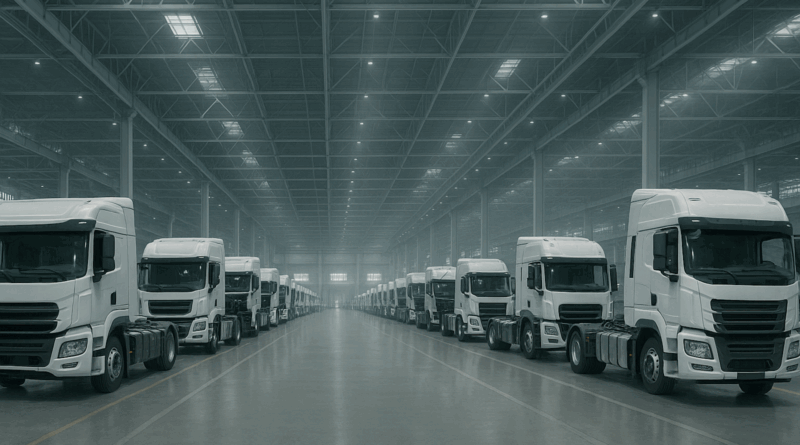
So, in other words, the leading image is a lie. When people say false things that purport to be true in text we call it lying or fraud. I don't understand why when they do it with an image it's not the same thing. Putting teeny, easily missed font that says "ChatGPT generated" doesn't make it OK. I might feel less strongly if the author put a disclaimer, in larger font, that said (more accurately IMO), "The above image is fake."
Go hunt stories which don't declare it's a GPT masthead and excoriate them.